Overview
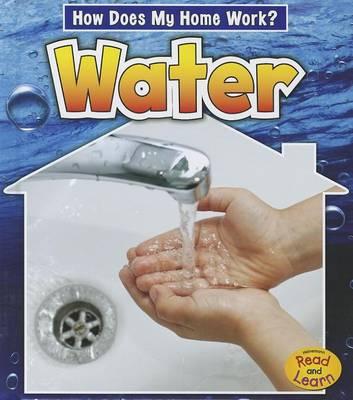
Each book in this series examines a key utility used by the average household. This book looks at water, and examines how we use it, how it gets to our homes, what happens to dirty water, and environmental issues arising from the ways we use water in our homes.
Full Product Details
Author: Chris Oxlade
Publisher: Heinemann Educational Books
Imprint: Heinemann Educational Books
Dimensions:
Width: 19.60cm
, Height: 1.00cm
, Length: 22.10cm
Weight: 0.295kg
ISBN: 9781432965679
ISBN 10: 1432965670
Pages: 24
Publication Date: 01 July 2012
Recommended Age: From 5 to 7 years
Audience:
Children/juvenile
,
Children / Juvenile
Format: Hardback
Publisher's Status: Active
Availability: Available To Order

We have confirmation that this item is in stock with the supplier. It will be ordered in for you and dispatched immediately.
Reviews
"These simple texts look at how resources are brought into our homes. Each double-page spread opens with a question (""Where Do We Get Water?""); two stock photos and a few easy-to-read sentences provide brief answers. The books touch (superficially) on overuse and conservation. An activity encourages readers to be more aware of their consumption.-- ""Horn Book, Nonfiction Notes"" This series examines the resources that enter and leave our homes. Each title covers where the utilities and items come from, how they arrive at residences, and how they are used. The texts emphasize why we should conserve natural resources and reduce waste, though Garbage neglects to mention composting. Information is presented in a question-and-answer format and follows a logical order. The few sentences on each page are enhanced by color photos or charts. Picture glossaries aid with the comprehension of unfamiliar words, and each title has an activity that students can use to track and reduce their energy use or increase recycling. These volumes lend themselves easily to curriculum use. -- Jackie Partch, Multnomah County Library, Portland, OR School Library Journal, ""Series Made Simple"" 11/1/2012-- ""School Library Journal"""
These simple texts look at how resources are brought into our homes. Each double-page spread opens with a question (""Where Do We Get Water?""); two stock photos and a few easy-to-read sentences provide brief answers. The books touch (superficially) on overuse and conservation. An activity encourages readers to be more aware of their consumption.-- ""Horn Book, Nonfiction Notes"" This series examines the resources that enter and leave our homes. Each title covers where the utilities and items come from, how they arrive at residences, and how they are used. The texts emphasize why we should conserve natural resources and reduce waste, though Garbage neglects to mention composting. Information is presented in a question-and-answer format and follows a logical order. The few sentences on each page are enhanced by color photos or charts. Picture glossaries aid with the comprehension of unfamiliar words, and each title has an activity that students can use to track and reduce their energy use or increase recycling. These volumes lend themselves easily to curriculum use. -- Jackie Partch, Multnomah County Library, Portland, OR School Library Journal, ""Series Made Simple"" 11/1/2012-- ""School Library Journal""
These simple texts look at how resources are brought into our homes. Each double-page spread opens with a question (""Where Do We Get Water?""); two stock photos and a few easy-to-read sentences provide brief answers. The books touch (superficially) on overuse and conservation. An activity encourages readers to be more aware of their consumption.-- ""Horn Book, Nonfiction Notes"" This series examines the resources that enter and leave our homes. Each title covers where the utilities and items come from, how they arrive at residences, and how they are used. The texts emphasize why we should conserve natural resources and reduce waste, though Garbage neglects to mention composting. Information is presented in a question-and-answer format and follows a logical order. The few sentences on each page are enhanced by color photos or charts. Picture glossaries aid with the comprehension of unfamiliar words, and each title has an activity that students can use to track and reduce their energy use or increase recycling. These volumes lend themselves easily to curriculum use. -- Jackie Partch, Multnomah County Library, Portland, OR School Library Journal, ""Series Made Simple"" 11/1/2012-- ""School Library Journal""
Author Information
Chris Oxlade is an experienced author of non-fiction books for children. He has written more than 200 titles on science, technology, sports and hobbies, from encyclopedia articles to fun activity books.