|
|
|||
|
||||
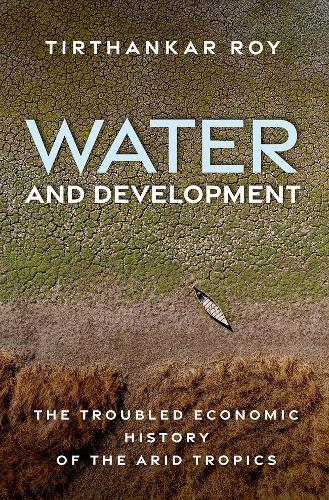
OverviewFrom the early twentieth century, a big part of the world--the arid tropics--began extracting, storing, and recycling vast quantities of water to sustain population growth and economic development. These regions worked on water to deal with seasonality, or the rotation between extreme aridity for a part of the year and a concentrated period of rain. The idea of storing water in the wet season to use it in the dry season was not a new one in this geography. Indeed, it was an intrinsic part of ancient culture, statecraft, and technology. Most ancient projects, however, were local and small in scale. The capability of water extraction on a scale large enough to transform whole regions and create new cities improved in the early twentieth century. The process gave rise to a sharp break in the long-term population and economic growth pattern from the mid-twentieth century.The world knows that rapid economic growth must take a toll on the environment. The tropics were no exception. However, the economic emergence of the arid tropics reinforces the message differently from how climate activists imagine. The geography of the arid tropics makes transforming landscapes to extract and recycle large quantities of water damaging to the environment and disputatious. The book is about that troubled history of economic emergence. Full Product DetailsAuthor: Tirthankar Roy (Professor, Professor, London School of Economics)Publisher: Oxford University Press Inc Imprint: Oxford University Press Inc Dimensions: Width: 15.50cm , Height: 2.50cm , Length: 22.90cm Weight: 0.590kg ISBN: 9780197802397ISBN 10: 0197802397 Pages: 312 Publication Date: 19 August 2025 Audience: Professional and scholarly , Professional & Vocational Format: Hardback Publisher's Status: Active Availability: To order Stock availability from the supplier is unknown. We will order it for you and ship this item to you once it is received by us. Table of ContentsAcknowledgements Introduction The history of a concept The arid regions Dry seasons and disastrous ones Ancient assets The colonial era: Property rights Dams and drills The big push Paying for green revolutions Inequality and discord Tropical pastoralism The future of the trade-off Conclusion ReferencesReviewsAuthor InformationTirthankar Roy is a professor of economic history at the London School of Economics. He has published extensively on the history and development of South Asia, global history, empires, and environmental history, and is the author of Monsoon Economies: India's History in a Changing Climate (2022), Law and the Economy in Colonial India (with Anand Swamy, 2016), and Law and the Economy in a Young Democracy (with Anand Swamy). Tab Content 6Author Website:Countries AvailableAll regions |
||||