Overview
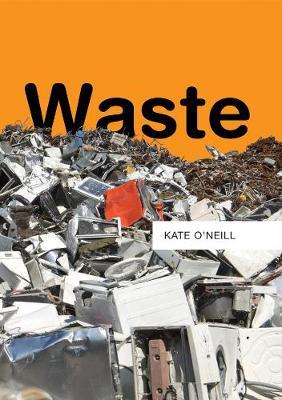
Waste is one of the planet’s last great resource frontiers. From furniture made from up-cycled wood to gold extracted from computer circuit boards, artisans and multinational corporations alike are finding ways to profit from waste while diverting materials from overcrowded landfills. Yet beyond these benefits, this “new” resource still poses serious risks to human health and the environment. In this unique book, Kate O’Neill traces the emergence of the global political economy of wastes over the past two decades. She explains how the emergence of waste governance initiatives and mechanisms can help us deal with both the risks and the opportunities associated with the hundreds of millions – possibly billions – of tons of waste we generate each year. Drawing on a range of fascinating case studies to develop her arguments, including China’s role as the primary recipient of recyclable plastics and scrap paper from the Western world, “Zero-Waste” initiatives, the emergence of transnational waste-pickers’ alliances, and alternatives for managing growing volumes of electronic and food wastes, O’Neill shows how waste can be a risk, a resource, and even a livelihood, with implications for governance at local, national, and global levels.
Full Product Details
Author: Kate O'Neill (UC Berkeley)
Publisher: John Wiley and Sons Ltd
Imprint: Polity Press
Dimensions:
Width: 14.20cm
, Height: 1.80cm
, Length: 21.10cm
Weight: 0.363kg
ISBN: 9780745687407
ISBN 10: 0745687407
Pages: 240
Publication Date: 19 July 2019
Audience:
General/trade
,
General
Format: Paperback
Publisher's Status: Active
Availability: Out of stock

The supplier is temporarily out of stock of this item. It will be ordered for you on backorder and shipped when it becomes available.
Reviews
'In this important book, Kate O'Neill expertly traces the complex international trade flows behind the prodigious volumes of waste generated by global consumer society. A valuable and illuminating contribution to current debates about if and how we make the shift to more sustainable lifestyles.' Maurie Cohen, New Jersey Institute of Technology
Kate O'Neill's latest work takes us on an eye-popping journey through rich case studies of wastes and their movement around the planet. Josh Lepawsky, Memorial University of Newfoundland A marvelously crafted and grippingly written book about one of the most pressing challenges facing our planet. The sooner you read it, the more you will learn about the ways in which we systematically fail to use so much of what we extract and how governments, businesses, and individuals can turn to this expanding `global resource frontier' to reduce our impact. Ben Cashore, Yale University In this important book, Kate O'Neill expertly traces the complex international trade flows behind the prodigious volumes of waste generated by global consumer society. A valuable and illuminating contribution to current debates about if and how we make the shift to more sustainable lifestyles. Maurie Cohen, New Jersey Institute of Technology
'In this important book, Kate O'Neill expertly traces the complex international trade flows behind the prodigious volumes of waste generated by global consumer society. A valuable and illuminating contribution to current debates about if and how we make the shift to more sustainable lifestyles.' Maurie Cohen, New Jersey Institute of Technology In Kate O'Neill's latest work, waste is a new resource frontier. But for whom? Where? And under what conditions? Take this eye popping journey through rich case studies of wastes and their movement around the planet. O'Neill shows readers how waste presents one of the most challenging problems of global environmental politics imaginable. Josh Lepawsky, Memorial University A marvelously crafted and grippingly written book about one of the most pressing challenges facing our planet. Do not waste your time: the sooner you read this book the more you will not only learn about the ways in which humans systematically fail to use so much of the resources they have extracted to produce stuff, but also ways in which governments, the private sector, non-governmental organizations and individuals can turn to this expanding 'global resource frontier' to reduce our impact Ben Cashore, Yale University
Author Information
Kate O’Neill is Associate Professor in the Department of Environmental Science, Policy, and Management at UC Berkeley.