Overview
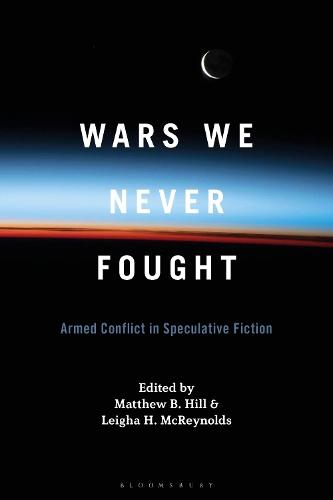
A collection of essays examining how armed conflict functions as a subject, theme, metaphor, symbol, or plot device in popular works of speculative fiction, including novels, films, television, and video games. Speculative fiction – genres such as science fiction, fantasy, utopian/dystopian, apocalyptic/post-apocalyptic, supernatural, horror, superhero, and alternative history – is, at this particular cultural moment, incontrovertibly popular. Despite the fact that war and its social, cultural, political, and moral consequences are often a driving force in speculative fiction narratives, exerting outsized influence on character development, structuring plot and conflict, and serving as a vehicle to explore various themes, there has been little critical attention given specifically to the intersection of these concepts. Wars We Never Fought remedies this problem, as contributors analyze such popular texts as the Star Wars franchise, Ann Leckie’s Imperial Radch trilogy, Dune, Mary Doria Russell’s The Sparrow and Children of God, The Expanse series, Captain Marvel, and the Fallout game franchise. These essays offer accessible and wide-ranging critical insight into how and why creators of speculative fiction use war as a device within the diegetic worlds of their stories. They also look at what the depictions of war and warriors within these texts suggest regarding notions such as race, class, gender, sexuality, difference, sociopolitical power, and other cultural values. Contextualizing the culture in which these narratives are created and consumed, Wars We Never Fought demonstrates how the textual dramatization of entirely fictitious wars might reflect, interrogate, and even structure understanding of warfare in the “real world.”
Full Product Details
Author: Matthew B. Hill (Coppin State University, USA) , Dr. or Prof. Leigha H. McReynolds (University of Maryland, USA)
Publisher: Bloomsbury Publishing Plc
Imprint: Bloomsbury Academic
ISBN: 9798765121535
Pages: 320
Publication Date: 11 December 2025
Audience:
College/higher education
,
Professional and scholarly
,
Tertiary & Higher Education
,
Professional & Vocational
Format: Hardback
Publisher's Status: Active
Availability: Manufactured on demand 
We will order this item for you from a manufactured on demand supplier.
Table of Contents
Acknowledgments Introduction: The Narrative Functions of Armed Conflict in Speculative Fiction Matthew B. Hill, Coppin State University, USA & Leigha H. McReynolds, University of Maryland College Park, USA Part I: Imagining History 1. “Preview of the War We Do Not Want”: Optimistic Apocalypse in the Early Cold War Mike Davis, Lees-McRae College, USA 2. Unite the Right: Recruiting and Coalition Building in Patriot Militia Fiction Johann Pautz, Florida State College at Jacksonville, USA Part II: War and Space Opera 3. Just ""simple men making their way through the galaxy""? Frontier Identities and Liminal Spaces in The Mandalorian and The Book of Boba Fett John Quinn and Colin Atkinson, University of West Scotland, UK 4. ""I am as She Made Me"": Ancillary Atrocities in Leckie’s Imperial Radch Trilogy Ryan Morrison, Flinders University, Australia 5. The Future’s Wounds: Exploring the Moral Injury in Ann Leckie’s Ancillary Trilogy Halilcan Sap, Istanbul Dogus University, Turkey Part III: War and Social Crises 6. Tyranny and Terraforming: Exploring Oppression, Peace, and Ecological Dynamics in the Dune Saga Willow DiPasquale, Philadelphia University & Thomas Jefferson University, USA 7. Demon Ascendants: Traitors of the Apocalypse Matthew Konerth, University of Denver & School of Illiff, USA 8. The Politics of Knowing, Depicting, and Conducting War in The Sparrow and Children of God Katarina Kušic, University of Bremen, Germany, and Jakub Záhora, University of New York in Prague, Czechia Part IV: War and Gender 9. The Posthuman Patriarchal Villain as Absolute Military Threat: Winston Duarte in The Expanse Novel Series Sara Martín, Universitat Autònoma de Barcelona, Spain 10. War Is a Universal Language: Gender and the Work of War in Captain Marvel (2019) and The Marvels (2023) Erin Casey-Williams, Nichols College, USA 11. Never Stop Fighting: Portrayals of Female War Veterans in Video Games Ragnhild Solberg, Norwegian University of Science and Technology, Norway 12. Gender Essentialist Zombies and Trans Survival: Apocalyptic Conflict in Manhunt Sarah Nolan-Brueck, University of Southern California, USA Part V: Wargames, Nation, and Community 13. ""Secession from Sodom Below"": Bioshock Infinite’s Civil War over National and Individual Identity Justin Cosner, University of Iowa, USA 14. Life After War in The Quiet Year Tim Bryant, SUNY Buffalo State University, USA 15. No War But the Class War: Rancière, Class Conflict, and the Total War Franchise Guillaume Lacombe-Kishibe, University of Ottawa, Canada Bibliography Index
Reviews
This collection gives us unique insight into how often war has been imagined since the 19th century. It clearly shows how speculative war can be used right across media as an important means of social and cultural commentary. * David Seed, Professor of English, University of Liverpool, UK * If you are interested in war you should read this collection. Wars always start in the imaginations of people and these fascinating essays explore one of the most important places in human culture where this happens. This is not only delightfully readable scholarship, but important as well. For it isn’t just wars that start in the stories we tell ourselves, peace also starts there. * Chris Hables Gray, Continuing Lecturer, Crown College, University of California at Santa Cruz, USA *
Author Information
Matthew B. Hill is Professor of English in the Humanities Department at Coppin State University, USA. His previous books include Dystopian States of America: Apocalyptic Visions and Warnings in Literature and Film (ABC-CLIO, 2022), Unconventional Warriors: The Fantasy of the American Resistance Fighter in Film and Television (Praeger, 2018), and The War on Terror and American Popular Culture (2009; with Andrew Schopp). Leigha H. McReynolds is Assistant Clinical Professor at University of Maryland, USA, and teaches literature classes for the local D.C. bookstore, Politics and Prose. Her most recent publication is the chapter “Locations of Deviance: A Eugenics Reading of Dune” in Discovering Dune (2022).
Tab Content 6
Author Website:
Countries Available
All regions
|