Overview
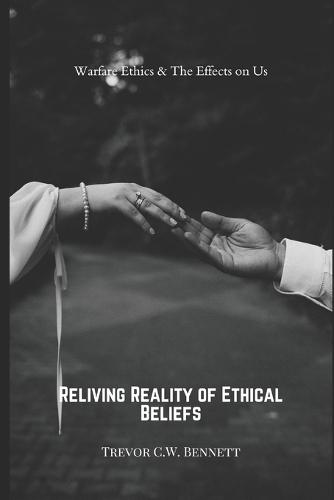
Warfare Ethics & The Effects on Us is a compelling exploration of the moral and psychological dimensions of war, analyzing not only how conflicts are conducted but also how they reverberate through societies and individuals long after the battles have ended. The book emphasizes that warfare is not solely a matter of strategy and politics; it is deeply intertwined with ethical decision-making, cultural values, and the human capacity for both destruction and empathy. It frames the discussion around two central questions: What constitutes ethical behavior in war, and how do the consequences of conflict affect societies, governments, and individual lives? The book begins by examining historical frameworks of war ethics, drawing on examples from classical to modern conflicts. It explores the evolution of moral codes in battle, from the chivalric codes of medieval knights to the more structured rules codified in the Geneva Conventions and other international treaties. The author highlights the tension between military necessity and humanitarian considerations, illustrating how commanders and governments often face difficult choices between achieving strategic objectives and minimizing harm to civilians and noncombatants. Ethical dilemmas, such as the justification for collateral damage, the treatment of prisoners, and the use of emerging technologies like drones and AI in warfare, are discussed in depth, showing how the landscape of warfare is constantly changing, yet the ethical questions remain pressing and complex. The book then shifts focus to the psychological and societal effects of warfare. Soldiers, civilians, and even policymakers are shown to experience profound moral and emotional consequences. Post-traumatic stress disorder (PTSD), survivor guilt, and moral injury are explored as consequences of ethical compromises in combat situations. On a societal level, warfare leaves enduring scars: displacement, cultural destruction, and the erosion of trust between communities and institutions. The author underscores that these effects are not confined to the battlefield; they ripple through generations, affecting social cohesion, economic stability, and political structures. Another critical aspect covered is the influence of propaganda, media, and public perception on wartime ethics. The book argues that the framing of a war-through news outlets, political rhetoric, or historical narratives-can shape moral judgments and societal reactions. Public support for military actions often hinges on perceived ethical justifications, which can sometimes conflict with on-the-ground realities, leading to disillusionment and ethical questioning post-conflict. Importantly, the book does not present a purely theoretical perspective. It integrates case studies from both major global conflicts and regional wars, including World Wars, the Vietnam War, and contemporary conflicts in the Middle East. These examples illustrate how ethical principles are applied-or ignored-in practice, and how individuals and institutions respond to ethical pressures under extreme circumstances. It also highlights instances of moral courage and humanitarian action, demonstrating that ethical behavior, even in war, can profoundly impact outcomes and foster reconciliation.
Full Product Details
Author: Trevor Bennett
Publisher: Independently Published
Imprint: Independently Published
Volume: 2
Dimensions:
Width: 15.20cm
, Height: 1.20cm
, Length: 22.90cm
Weight: 0.349kg
ISBN: 9798275569452
Pages: 184
Publication Date: 01 December 2025
Audience:
General/trade
,
General
Format: Paperback
Publisher's Status: Active
Availability: Available To Order

We have confirmation that this item is in stock with the supplier. It will be ordered in for you and dispatched immediately.