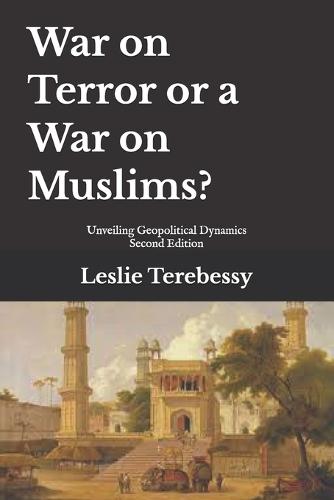
Overview
The umma is experiencing turbulence and violence. The past was full of fitnas. What changed? The umma is trying to adjust while remain rooted in its heritage. But is it confronting challenges. Its knowledge was corrupted. The politicization of revelation distanced Muslims from the Book of Allah. Hawkish ulama re-articulated Islam as a teaching of war. This transpired through the weaponization of revelation. Traditionalism emphasized rituals rather than ethics. There are few books on ethics but plenty on rituals. Under political pressure, there was a reorientation from revelation to tradition. The umma turned from the Book of Allah to traditions. This was a catastrophe. Empire building required a justification for wars of aggression. But no justification for aggression is available in revelation. Hence, hawkish rulers turned to traditions, the ways of the predecessors. The turn from the Book of Allah was reinforced by in the recording of traditions. After their recording, traditions began to supersede revelation. The turn from revelation to traditions was assisted by the repression of reason. Rationality was associated with kufr. There was also political repression. The murder of the rationalists by Musa al-Hadi in 786, in the Inquisition (mihna) was a brutal expression of repression. This was followed by the persecution of the rationalists by Mutawakkil in 852. The mihna predated the Reign of Terror in revolutionary France, in 1792, by a millennium. The Inquisition suggests that the enforcement of uniformity transpired by recourse to the force of arms rather than arguments. The repression of reason enabled the treatment of tradition as ""revelation from Allah."" This is an expression of scriptural shirk, as treating traditions as ""revelation from God"" treats traditions as equal to, and a ""part of"" the Book of Allah. Then tradition became a ""judge"" of revelation. This relegated revelation under the jurisdiction of tradition. Tradition would ""explain"" and ""detail"" all purportedly ""unclear"" and ""incomplete"" parts of revelation. These mischaracterizations defy the Book of Allah. For the Book says it is ""clear"" and ""fully detailed."" Then the verses of reconciliation were ""abrogated"" by the verse of the sword. This was tantamount to tampering with the teaching of revelation. The final phase entailed the treatment of jihad al-talab as a sixth pillar of Islam. Waging war on non-Muslims every year, even if they were at peace with Muslims, became a requirement of the faith. The articulation of aggressive jihad as the sixth pillar of Islam represented a corruption of the teaching of revelation. It transformed the teaching of reconciliation into a manifesto for war. How did this transpire? Mercenary ulama weaponized exegesis and jurisprudence to justify the empire-building of their rulers. Providing a ""religious"" justification for waging wars of aggression required a rearticulation of the teaching of revelation to render lawful what Allah prohibited: wars of aggression. Unlawful wars of aggression would be waged under the rubric of Islam, touted as a ""propagation of Islam by the sword,"" proscribed in revelation. The resulting aggression brought the umma into wars with non-Muslims. The umma was not invariably triumphant. Extremism is a residue of the teachings of the separation of the globe into dar al-Islam and dar al-harb as well as traditions which teach that ""the blood of the kafir is halal for the believer."" Tradition was incorporated as a part of Islam rather than as a part of its history. Reform accordingly requires the re-education of the umma. It also requires the rehabilitation and de-weaponization of exegesis and jurisprudence and the de-politicization of Islam. This requires a return to the Book of Allah and reengaging reason to understand revelation. Perceptions that the Book of Allah is ""unclear"" and ""insufficiently detailed,"" require being rejected. The teachings of predestination and abrogation also require being set aside.
Full Product Details
Author: Leslie Terebessy
Publisher: Independently Published
Imprint: Independently Published
Dimensions:
Width: 15.20cm
, Height: 1.20cm
, Length: 22.90cm
Weight: 0.304kg
ISBN: 9798258080301
Pages: 224
Publication Date: 19 April 2026
Audience:
General/trade
,
General
Format: Paperback
Publisher's Status: Active
Availability: Available To Order

We have confirmation that this item is in stock with the supplier. It will be ordered in for you and dispatched immediately.