Overview
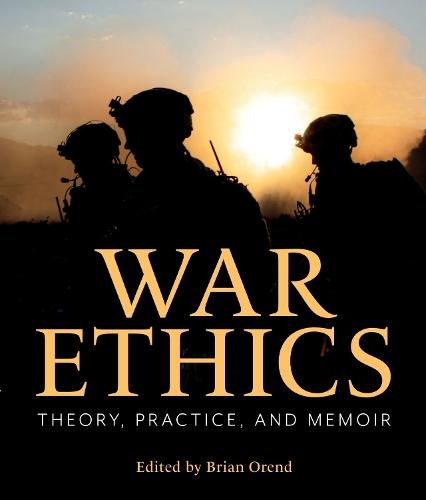
War Ethics: Theory, Practice and Memoir is an extraordinarily diverse collection of over ninety readings on the ethics, law, morality, and justice of armed conflict. Each of the foundational theories of war ethics—realism, pacifism, just war theory, and international law—is examined in depth, as are challenging alternative perspectives from feminist thinkers and the world’s major religions. A substantial section on contemporary issues covers topics ranging from cyberwar, A.I., terrorism, and drones to torture, war’s environmental impacts, and the rights of soldiers and veterans. Also included is an extensive collection of riveting first-person accounts from soldiers, civilians, and observers, which powerfully convey the personal impacts of war. Introductory discussions and summary articles from Brian Orend are integrated throughout the text, including a closing essay on new technologies and the future of war.
Full Product Details
Author: Brian Orend
Publisher: Broadview Press Ltd
Imprint: Broadview Press Ltd
Dimensions:
Width: 19.70cm
, Height: 2.60cm
, Length: 23.50cm
Weight: 0.951kg
ISBN: 9781554813612
ISBN 10: 1554813611
Pages: 528
Publication Date: 26 May 2025
Audience:
College/higher education
,
Tertiary & Higher Education
Format: Paperback
Publisher's Status: Active
Availability: Available To Order 
We have confirmation that this item is in stock with the supplier. It will be ordered in for you and dispatched immediately.
Table of Contents
Introduction Part I: Theory: The Big Three Theories, and Two Added Perspectives Introduction I.1: Realism 1. Thucydides, “Melian Dialogue” (circa 404 BCE) 2. Thomas Hobbes, from Leviathan (1651) 3. Carl von Clausewitz, from On War (1832) 4. Jo Jakobsen, “Neorealism in International Relations – Kenneth Waltz” (2013) 5. Nicholas Ross Smith & Grant Dawson, “Mearsheimer, realism, and the Ukraine war” (2022) 6. Brian Orend, “Evaluating the Realist Alternative” (2025) Reflection Questions I.2: Pacifism and Non-Violence 7. William Penn, from “An essay towards the present and future peace of Europe” (1693) 8. Mahatma Gandhi, “On Satyagraha” (1920–1946) 9. Martin Luther King Jr., Letter from Birmingham Jail (1963) 10. Erica Chenoweth & Maria Stefan, “Drop Your Weapons: When and Why Civil Resistance Works” (2014) 11. Andrew Fiala, “The Pacifist Tradition and Pacifism as Transformative and Critical Theory” (2019) 12. Brian Orend, “Evaluating the Pacifist Alternative” (2025) Reflection Questions I.3: Just War Theory (and International Law & Policy) Jus ad Bellum / Start of War 13. Thomas Aquinas, from Summa Theologiæ (1270) 14. The United Nations, Charter (1945) 15. Michael Walzer, “Law and Order in International Society” (1977) 16. United States Congress, Authorization to Use Military Force (2001) 17. Executive Office of the President, The National Security Strategy of the United States of America (2002) 18. Neta C. Crawford, “The slippery slope to preventive war” (2003) 19. Jeff McMahan, “Unjust War in Iraq” (2004) 20. Mark Landler, “20 Years On, the War on Terror Grinds Along, With No End in Sight” (2021) 21. United Nations General Assembly, Aggression against Ukraine (2022) Reflection Questions Jus in Bello / Conduct During War 22. Hugo Grotius, from On The Law of War and Peace (1625) 23. Francis Lieber, “Lieber’s Code” (1863) 24. Second International Peace Conference, Hague IV Convention respecting the Laws and Customs of War on Land (1907) 25. International Committee of the Red Cross, Geneva Convention III Relative to the Treatment of Prisoners of War (1949) 26. Michael Walzer, “War’s Means, and the Importance of Fighting Well” (1977) 27. Jeff McMahan, “The Source and Status of Just War Principles” (2007) 28. Dan Zupan, “The Logic of Community, Ignorance, and the Presumption of Moral Equality: A Soldier’s Story” (2007) 29. United Nations Office of the High Commissioner for Human Rights, “Türk deplores human cost of Russia’s war against Ukraine as verified civilian casualties for last year pass 21,000” (2023) 30. Steven Feldstein & (Chun Hey) Kot, “Two Deeply Troubling Trends From Ukraine’s Year of War” (2023) 31. Andrew Sullivan, “Bomb First, Ask Questions Later” (2024) Reflection Questions Jus post Bellum / After War 32. Immanuel Kant, from On Perpetual Peace: A Philosophical Sketch (1795) 33. International Military Tribunal at Nuremberg, Charter (1945) 34. International Military Tribunal at Nuremberg, Judgment against Hermann Goering (1946) 35. International Criminal Court, Rome Statute (1998) 36. Brian Orend, “Just War Theory and International Law: End-of-War” (2025) 37. David Rohde, “Biden’s Chaotic Withdrawal from Afghanistan Is Complete” (2021) 38. Luke Hartig, “Five Principles to End the Forever War” (2021) 39. Government of Ukraine, “What is Zelensky’s Ten-Point Peace Plan?” (2023) 40. Joseph Biden, “Remarks by President Biden on the Middle East” (2024) Reflection Questions I.4: Feminism, Gender, and War 41. Virginia Woolf, from Three Guineas (1938) 42. Jean Said Makdisi, “War and Peace: Reflections of a Feminist” (2008) 43. Amina Mama, “Where we must stand: African women in an age of war” (2012) 44. Camilla Maybee, “9 Hard Truths About Being a Woman In The Military” (2014) 45. Devin Dwyer, “‘I’m still here’: Transgender troops begin new era of open military service” (2021) Reflection Questions I.5: Religious and Non-Western Perspectives 46. from the Hebrew Bible or Tanakh / Old Testament 47. from the New Testament of the Christian Bible 48. from the Quran 49. Lao Tzu, from Tao Te Ching 50. Sun Tzu, from The Art of War 51. from the Mahābhārata 52. Lawrence Ogbo Ugwuanyui, from “Towards an African Theory of Just War” 53. from Kayanerehkowa: The Great Law of Peace Reflection Questions Part II: Practice Introduction II.1: Humanitarian Intervention / Responsibility to Protect (R2P) 54. International Commission on Intervention and State Sovereignty, The Responsibility to Protect (2001) 55. Catherine Renshaw, “R2P: An idea whose time never comes” (2021) 56. Brian Orend, “Armed Humanitarian Intervention and R2P” (2025) II.2: Asymmetrical / Hybrid Conflict 57. William S. Lind, et al., “The Changing Face of War: Into the Fourth Generation” (1989) 58. Arsalan Bilal, “Hybrid Warfare – New Threats, Complexity, and ‘Trust’ as the Antidote” (2021) II.3: Business of War 59. Vladimir Lenin, from “Imperialism, the Highest Stage of Capitalism” (1916) 60. Dwight Eisenhower, from his Farewell Address as U.S. President (1961) 61. Peter W. Singer, “Outsourcing War” (2005) II.4: Cyberconflict 62. John Arquilla, “Twenty Years of Cyberwar” (2013) 63. Michael Schmitt (ed.), Tallinn Manual 2.0 on the International Law Applicable to Cyber Operations (2017) 64. Susan Landau, “Cyberwar in Ukraine: What You See Is Not What’s Really There” (2022) 65. Brian Orend, “Cyberwarfare” (2025) II.5: Drones and Targeted Killings 66. Daniel Byman, “Why Drones Work: The Case for Washington’s Weapon of Choice” (2013) 67. Daniel Bell, Jr., “The Drone Wars and Just War” (2014) 68. Eric Schmidt, “The Future of War Seen on the Battlefields of Ukraine” (2023) 69. Nathan Gardels, “From Mass To Distributed Weapons Of Destruction: Networks of connectivity are the battleground of the future” (2024) II.6: Environmental Impact of War 70. Rachel Ruiqi, “Amid war, Ukrainians are tracking Russia’s crimes against the environment” (2022) 71. International Law Commission, Draft principles on protection of the environment in relation to armed conflicts (2022) II.7: Terrorism & Torture 72. David Luban, “The War on Terrorism and the End of Human Rights” (2002) 73. Alan Dershowitz, “A choice of evils: Should democracies use torture to protect against terrorism?” (2014) 74. United States Senate, Report of the Senate Select Committee on Intelligence (2014) 75. United Nations Office of the High Commissioner of Human Rights, “Ukrainian and Russian POWs tortured and ill-treated” (2022) II.7: Soldier Issues 76. United States President Dwight Eisenhower, Executive Order 10631—Code of Conduct for members of the Armed Forces of the United States (1955) 77. Thom Nickels, “My Time as a Vietnam War-era Conscientious Objector” (2014) 78. Former U.S. Secretaries of Defence plus Former Chairmen of the Joint Chiefs of Staff, Open Letter: “To Support and Defend: Principles of Civilian Control and Best Practices of Civil-Military Relations” (2022) 79. Ashley Burke, “5% of women at military colleges report being sexually attacked” (2024) 80. Philip Carter, “What America Owes Its Veterans” (2017) 81. Brian Orend, “Rights of Soldiers and Veterans” (2025) Reflection Questions Part III: Memoir Introduction III.1: Soldier Experiences 82. J. Glenn Gray, “The Ache of Guilt” (1959) 83. Various, from Letters from Vietnam (1965–1966) 84. Kayla Williams (with Michael Staub), from Love My Rifle More Than You: Young and Female in the U.S. Army (2005) 85. Sean Parnell (with John Bruning), from Outlaw Platoon: Heroes, Renegades, Infidels, and The Brotherhood of War in Afghanistan (2018) 86. Danielle DeSimone, “3 Stories of Bravery that Help Show What a Purple Heart Means” (2021) 87. Pavlo Kazarin, “A year ago I volunteered as a soldier in the Ukrainian army” (2023) Reflection Questions III.2: Civilians in War 88. Various, from Senso: The Japanese Remember the Pacific War: Letters to the Editor of “Asahi Shimbun” (1980s) 89. Anonymous, from A Woman in Berlin: Eight Weeks in the Conquered City: A Diary (2006) 90. Ishmael Beah, from A Long Way Gone (2013) 91. Evelyn Amony, from I Am Evelyn Amony: Reclaiming My Life from the Lord’s Resistance Army (2015) 92. Christy Turner, “A Ukrainian refugee taught me what an incredible gift it is to help others” (2022) Reflection Questions III.3: Reporters and Observers 93. Svetlana Alexievich, from The Unwomanly Face of War: An Oral History of Women in World War II (1985) 94. Hannah Arendt, from Eichmann in Jerusalem: A Report on The Banality of Evil (1963) 95. Marie Colvin, “The Shot Hit Me” (2001) 96. Shaili A., “I was scared to death. I knew I was going to die.” (2024) 97. James Elder, “First-hand Account: No safety for children in Gaza” (2023) 98. ICC Prosecutor Karim A.A. Khan, “Applications for arrest warrants in the situation in the State of Palestine” (2024) Reflection Questions Conclusion: War Ethics, New Technology, and The Future of Conflict
Reviews
“The many insights provided throughout this thoughtfully crafted anthology are trenchant and highly relevant to our time. The sources range from classical to contemporary scholarship—but also include searing firsthand accounts of the carnage and moral cost of armed conflict. War Ethics goes even further, exploring the ways new technologies challenge current ideas about how to wage and cope with the aftermath of ‘just wars.” — John Arquilla, Distinguished Professor Emeritus, U.S. Naval Postgraduate School “This remarkable book collects together judicious selections of writings on a wide range of topics by thinkers of all sorts: ancient and modern, secular and religious, legal and philosophical, Western and non-Western, realist and pacifist, left-wing and right-wing. It is hard to imagine how there could be a more comprehensive range of thought about the ethics of war in a single volume.” — Jeff McMahan, Sekyra and White’s Professor of Moral Philosophy (emeritus), Oxford University, and author of Killing in War “The ambition demonstrated by this volume is impressive—and it delivers! It is an exploration of war ethics writ large, covering the theory, practice, and experience of war from multiple perspectives, including those which are too often overlooked or marginalised.” — David Whetham, Director of King's Centre for Military Ethics, King's College London
Author Information
Brian Orend is Professor of Philosophy at the University of Waterloo. He has published numerous books and articles on the ethics of war, including The Morality of War (Broadview), War and Political Theory (Polity), On War: A Dialogue (Rowman & Littlefield), and War and International Justice: A Kantian Perspective (Wilfrid Laurier University Press).
Tab Content 6
Author Website:
Countries Available
All regions
|