Overview
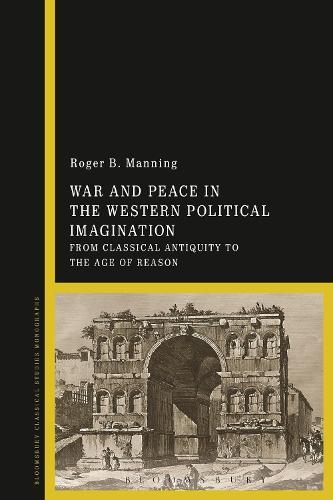
The study of war in all periods of prehistory and recorded history has always commanded the attention of historians, dramatists, poets and artists. The study of peace has, however, not yet gained a comparable readership, and the subject is attracting an increasing amount of scholarly research. This open access volume presents the first work of academic research to tackle this imbalance head on. It looks at war and peace through the ages, from the Classical world through to the 18th century. It considers the nature and advocacy of war and peace both from an historical perspective but also a philosophical one, particularly looking at how universal peace, which began as a personal philosophy, became over the centuries a political philosophy that underpins much of modern society’s attitudes towards warfare and militarism. Roger Manning begins his journey through history by looking at the Greek martial ethos and philosophical concepts of peace and war in the ancient world; moving through the Roman empire’s military advances, he explores the concepts of war and peace in the medieval world and the Renaissance, with the writing of Machiavelli and Erasmus; finally, his account of the search for a science of peace in the 17th and 18th centuries brings the book to its conclusion. The ebook editions of this book are available open access under a CC BY-NC-ND 4.0 licence on bloomsburycollections.com. Open access was funded by the Knowledge Unlatched programme.
Full Product Details
Author: Dr Roger Manning (Cleveland State University, USA)
Publisher: Bloomsbury Publishing PLC
Imprint: Bloomsbury Academic
Dimensions:
Width: 15.40cm
, Height: 2.40cm
, Length: 23.20cm
Weight: 0.600kg
ISBN: 9781474258692
ISBN 10: 1474258697
Pages: 392
Publication Date: 21 September 2017
Audience:
College/higher education
,
Tertiary & Higher Education
Format: Paperback
Publisher's Status: Active
Availability: Manufactured on demand

We will order this item for you from a manufactured on demand supplier.
Reviews
In this smart and tightly argued book Professor Manning offers a compelling explanation for why war and a martial ethos became so entrenched in the western imagination since antiquity, and why a peace alternative had such difficulty taking hold, at least until the seventeenth and eighteenth centuries. Anyone interested in learning about the history of war and peace ideas will find this well-researched and richly contextualized work indispensable. * Ben Lowe, Professor of History, Florida Atlantic University, USA and author of Imagining Peace: A History of Early English Pacifist Ideas, 1340-1560 * An important work on a crucial aspect of political thought. Manning ranges widely to offer a coherent, interesting and engaged account. Deserves much attention. * Jeremy Black, Professor of History, University of Exeter, UK * The intelligent observer of current world tensions can neither avoid hearing nebulous phrases such as holy war and just war, nor fully understand a discussion of limited war given the unquestioned acceptance of a temporally unbound war on terror. This book, whose appearance may be adventitious, is nevertheless indispensable by providing a cogent historical context for understanding how Western thinkers-from the ancient through the early modern periods-conceptualized war and peace. Manning (emer., history, Cleveland State Univ.) accomplishes this in what is (mostly) a chronological narrative of the conflicts themselves, as well as a discussion of how Western intellectuals thought about violence (intrastate and interstate). The author discusses every major political thinker, from Hesiod through Kant, with a view toward understanding the development of each thinker's ideas through his interaction with contemporaneous conflicts, other intellectuals, and an understanding of past wars. As an example of the latter, Manning argues that Hobbes developed his analysis of how and why societies go to war from translating Thucydides's Peloponnesian War. The author's reliance on both primary and secondary sources, coupled with a scholarly and balanced perspective, goes a long way towards contextualizing current political rhetoric. Summing Up: Highly recommended. Upper-division undergraduates and above. * CHOICE *
In this smart and tightly argued book Professor Manning offers a compelling explanation for why war and a martial ethos became so entrenched in the western imagination since antiquity, and why a peace alternative had such difficulty taking hold, at least until the seventeenth and eighteenth centuries. Anyone interested in learning about the history of war and peace ideas will find this well-researched and richly contextualized work indispensable. Ben Lowe, Professor of History, Florida Atlantic University, USA and author of Imagining Peace: A History of Early English Pacifist Ideas, 1340-1560 An important work on a crucial aspect of political thought. Manning ranges widely to offer a coherent, interesting and engaged account. Deserves much attention. Jeremy Black, Professor of History, University of Exeter, UK The intelligent observer of current world tensions can neither avoid hearing nebulous phrases such as holy war and just war, nor fully understand a discussion of limited war given the unquestioned acceptance of a temporally unbound war on terror. This book, whose appearance may be adventitious, is nevertheless indispensable by providing a cogent historical context for understanding how Western thinkers-from the ancient through the early modern periods-conceptualized war and peace. Manning (emer., history, Cleveland State Univ.) accomplishes this in what is (mostly) a chronological narrative of the conflicts themselves, as well as a discussion of how Western intellectuals thought about violence (intrastate and interstate). The author discusses every major political thinker, from Hesiod through Kant, with a view toward understanding the development of each thinker's ideas through his interaction with contemporaneous conflicts, other intellectuals, and an understanding of past wars. As an example of the latter, Manning argues that Hobbes developed his analysis of how and why societies go to war from translating Thucydides's Peloponnesian War. The author's reliance on both primary and secondary sources, coupled with a scholarly and balanced perspective, goes a long way towards contextualizing current political rhetoric. Summing Up: Highly recommended. Upper-division undergraduates and above. CHOICE
This is a valuable work of political thought, a subject that tends to place insufficient weight on such issues. Manning's sound knowledge of texts and his skillful use of them deserve considerable praise. * Journal of World History * [An] important achievement in its ambition to trace peace thinking through the ages ... Manning's book is full of interesting observations and learned reflections. It is a pleasure to read ... [This] is a timely volume which should find its place in any syllabus on peace, or on war, for that matter. * The Review of Politics * In this smart and tightly argued book Professor Manning offers a compelling explanation for why war and a martial ethos became so entrenched in the western imagination since antiquity, and why a peace alternative had such difficulty taking hold, at least until the seventeenth and eighteenth centuries. Anyone interested in learning about the history of war and peace ideas will find this well-researched and richly contextualized work indispensable. * Ben Lowe, Professor of History, Florida Atlantic University, USA and author of Imagining Peace: A History of Early English Pacifist Ideas, 1340-1560 * An important work on a crucial aspect of political thought. Manning ranges widely to offer a coherent, interesting and engaged account. Deserves much attention. * Jeremy Black, Professor of History, University of Exeter, UK * The intelligent observer of current world tensions can neither avoid hearing nebulous phrases such as holy war and just war, nor fully understand a discussion of limited war given the unquestioned acceptance of a temporally unbound war on terror. This book, whose appearance may be adventitious, is nevertheless indispensable by providing a cogent historical context for understanding how Western thinkers-from the ancient through the early modern periods-conceptualized war and peace. Manning (emer., history, Cleveland State Univ.) accomplishes this in what is (mostly) a chronological narrative of the conflicts themselves, as well as a discussion of how Western intellectuals thought about violence (intrastate and interstate). The author discusses every major political thinker, from Hesiod through Kant, with a view toward understanding the development of each thinker's ideas through his interaction with contemporaneous conflicts, other intellectuals, and an understanding of past wars. As an example of the latter, Manning argues that Hobbes developed his analysis of how and why societies go to war from translating Thucydides's Peloponnesian War. The author's reliance on both primary and secondary sources, coupled with a scholarly and balanced perspective, goes a long way towards contextualizing current political rhetoric. Summing Up: Highly recommended. Upper-division undergraduates and above. * CHOICE *
[An] important achievement in its ambition to trace peace thinking through the ages ... Manning's book is full of interesting observations and learned reflections. It is a pleasure to read ... [This] is a timely volume which should find its place in any syllabus on peace, or on war, for that matter. * The Review of Politics * In this smart and tightly argued book Professor Manning offers a compelling explanation for why war and a martial ethos became so entrenched in the western imagination since antiquity, and why a peace alternative had such difficulty taking hold, at least until the seventeenth and eighteenth centuries. Anyone interested in learning about the history of war and peace ideas will find this well-researched and richly contextualized work indispensable. * Ben Lowe, Professor of History, Florida Atlantic University, USA and author of Imagining Peace: A History of Early English Pacifist Ideas, 1340-1560 * An important work on a crucial aspect of political thought. Manning ranges widely to offer a coherent, interesting and engaged account. Deserves much attention. * Jeremy Black, Professor of History, University of Exeter, UK * The intelligent observer of current world tensions can neither avoid hearing nebulous phrases such as holy war and just war, nor fully understand a discussion of limited war given the unquestioned acceptance of a temporally unbound war on terror. This book, whose appearance may be adventitious, is nevertheless indispensable by providing a cogent historical context for understanding how Western thinkers-from the ancient through the early modern periods-conceptualized war and peace. Manning (emer., history, Cleveland State Univ.) accomplishes this in what is (mostly) a chronological narrative of the conflicts themselves, as well as a discussion of how Western intellectuals thought about violence (intrastate and interstate). The author discusses every major political thinker, from Hesiod through Kant, with a view toward understanding the development of each thinker's ideas through his interaction with contemporaneous conflicts, other intellectuals, and an understanding of past wars. As an example of the latter, Manning argues that Hobbes developed his analysis of how and why societies go to war from translating Thucydides's Peloponnesian War. The author's reliance on both primary and secondary sources, coupled with a scholarly and balanced perspective, goes a long way towards contextualizing current political rhetoric. Summing Up: Highly recommended. Upper-division undergraduates and above. * CHOICE *
Author Information
Roger B. Manning is Emeritus Professor of History, Cleveland State University, USA. He has published widely on British and military history, including An Apprenticeship in Arms (2006) and Swordsmen: The Martial Ethos in the Three Kingdoms (2003).