Overview
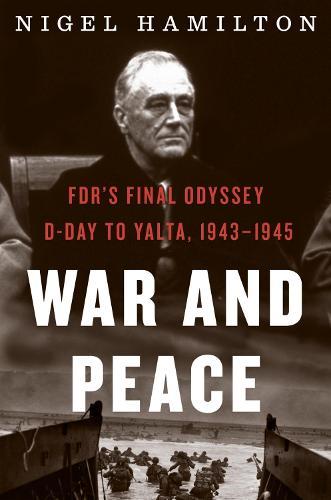
To mark the 75th Anniversary of D-Day, the stirring climax to Nigel Hamilton's three-part saga of FDR at war--proof that he was WWII's key strategist, even on his deathbed. ""A first-class, lens-changing work."" --James N. Mattis, former United States Secretary of Defense Nigel Hamilton's celebrated trilogy culminates with a story of triumph and tragedy. Just as FDR was proven right by the D-day landings he had championed, so was he found to be mortally ill in the spring of 1944. He was the architect of a victorious peace that he would not live to witness. Using hitherto unpublished documents and interviews, Hamilton rewrites the famous account of World War II strategy given by Winston Churchill in his memoirs. Seventy-five years after the D-day landings we finally get to see, close-up and in dramatic detail, who was responsible for rescuing, and insisting upon, the great American-led invasion of France in June 1944, and why the invasion was led by Eisenhower. As FDR's D-day triumph turns to personal tragedy, we watch with heartbreaking compassion the course of the disease, and how, in the months left him as US commander in chief, the dying president attempted at Hawaii, Quebec, and Yalta to prepare the United Nations for an American-backed postwar world order. Now we know: even on his deathbed, FDR was the war's great visionary.
Reviews
A first class, lens-changing work. --James N. Mattis, former United States Secretary of Defense Significant study...of considerable interest to students of presidential and American military history. --Kirkus With deft storytelling and impeccable scholarship Nigel Hamilton completes his essential trilogy of FDR and World War II with a bang. War and Peace is a masterful reevaluation of D-Day, Hitler's demise, and the Yalta Conference. A stunning achievement! --Douglas Brinkley, author of Rightful Heritage: Franklin D. Roosevelt and the Land of America On the occasion of the 75th anniversary of D-Day, War and Peace is the dramatic culmination of Nigel Hamilton's magnificent trilogy of FDR's wartime leadership as commander in chief. It is also a vivid example of the critical importance of presidential leadership in times of national crisis. This sweeping narrative of Roosevelt's triumphs and the tragedy of his untimely death in 1945 is history and biography at its very finest. --Carlo D'Este, author of Patton: A Genius for War and Warlord: A Life of Winston Churchill at War, 1874-1945 PRAISE FOR COMMANDER IN CHIEF Ably dramatizes Roosevelt's wranglings with Churchill during World War II ... Provocative ... It is stimulating to follow Hamilton as he lays out his argument. --Thomas E. Ricks, New York Times Book Review Superb. --Fareed Zakaria A detailed look at Franklin Roosevelt's role in the Allied strategy midway through World War II, with an emphasis on his relations with Winston Churchill. Hamilton shows Roosevelt's clear vision of how to win the war and how to create a postwar society that would prevent such wars from recurring . . . [COMMANDER IN CHIEF] presents a convincing portrait of its main subject, strengthening readers' confidence in the author's conclusions. The book is strongly pro-Roosevelt, but Hamilton gives a solid inside view of the strategic thinking that went into the campaign against Hitler as America laid the groundwork for the D-Day invasion the following year. --Kirkus Reviews (starred) PRAISE FOR MANTLE OF COMMAND The Mantle of Command is splendid: It's the memoir Roosevelt didn't get to write. --New York Times Book Review Masterly. --Wall Street Journal FDR has frequently been underestimated as a military leader, yielding, in the historical imagination, to George Marshall and Winston Churchill, among others. Nigel Hamilton attacks this view with his characteristic verve, portraying a president with the reins of war fully, if often subtly, in his hands. The conventional wisdom will never be the same. --H.W. Brands, author of Traitor to His Class: The Privileged Life and Radical Presidency of Franklin Delano Roosevelt Nigel Hamilton's Mantle of Command is a stirring and noteworthy book about Roosevelt's crucial role as commander-in-chief during World War II. Hamilton writes with insight, passion, and a great grasp of history. I believe this book will become the standard by which other books about FDR's role in World War II will be measured. --Carlo D'Este, author of Patton: A Genius for War and Warlord: A Life of Churchill at War, 1874-1945 This is not the Roosevelt (or Churchill) you'd expect. From the start, an aggressive, in-charge FDR emerges from a wonderful weaving of established scholarship and the fascinating bits and pieces that make history live. Churchill is an inspirational nag, with a busy, unfocused strategic vision. A key entry into the ongoing debate over who made grand strategy in the early war years--Roosevelt or Churchill? --Warren F. Kimball, author of Forged in War: Roosevelt, Churchill, and the Second World War Nigel Hamilton in Mantle of Command presents a very different wartime Franklin Delano Roosevelt than the one we are used to seeing. Whether or not one agrees with all his conclusions, Hamilton clearly shows that FDR was an extremely strong and effective commander-in-chief. This volume should go a long way to dispelling popular myths about Roosevelt as a na ve and weak war leader. --Mark Stoler, editor of the George C. Marshall Papers & Professor Emeritus of History, University of Vermont Nigel Hamilton has written a spirited and thoughtful 'revisionist' study of Franklin Delano Roosevelt as commander-in-chief during the first phase of U.S. involvement in the Second World War. Hamilton's narrative skill brings alive the human dramas, logistic hurdles, and strategic debates to show how FDR's indispensable drive and forward-looking leadership tamed his own 'team of rivals' and set the United States and its Allies on the road to victory over the Axis. The books enlivens the often murky worlds of bureaucratic struggle and military detail to demonstrate how important it was for the United States to 'get it right' early in the war and how FDR accomplished this. --Michael Schaller, author of Douglas MacArthur & Regents Professor of History, University of Arizona
""A first-class, lens-changing work."" -- James N. Mattis, former US secretary of defense ""If history belongs to the best and latest writer, Nigel Hamilton has won the war for Roosevelt's legacy from Churchill.""-- Wall Street Journal ""Compelling...as gripping and powerfully argued as the first two."" -- New York Times Book Review ""Thorough and deliberate . . . Vividly recreates FDR's decline and makes his accomplishments all the more impressive. Like its predecessors in the trilogy, this volume will reward readers of World War II and presidential history."" -- Publishers Weekly ""Significant study . . . of considerable interest to students of presidential and American military history."" -- Kirkus Reviews ""With deft storytelling and impeccable scholarship, Nigel Hamilton completes his essential trilogy of FDR and World War II with a bang. War and Peace is a masterful reevaluation of D-day, Hitler's demise, and the Yalta Conference. A stunning achievement!"" -- Douglas Brinkley, author of Rightful Heritage: Franklin D. Roosevelt and the Land of America ""On the occasion of the 75th anniversary of D-day, War and Peace is the dramatic culmination of Nigel Hamilton's magnificent trilogy of FDR's wartime leadership as commander in chief. It is also a vivid example of the critical importance of presidential leadership in times of national crisis. This sweeping narrative of Roosevelt's triumphs and the tragedy of his untimely death in 1945 is history and biography at its very finest."" -- Carlo D'Este, author of Patton: A Genius for War and Warlord: A Life of Winston Churchill at War, 1874-1945 PRAISE FOR COMMANDER IN CHIEF ""Ably dramatizes Roosevelt's wranglings with Churchill during World War II . . . Provocative . . . It is stimulating to follow Hamilton as he lays out his argument."" -- Thomas E. Ricks, New York Times Book Review ""Superb."" -- Fareed Zakaria ""A detailed look at Franklin Roosevelt's role in the Allied strategy midway through World War II, with an emphasis on his relations with Winston Churchill. Hamilton shows Roosevelt's clear vision of how to win the war and how to create a postwar society that would prevent such wars from recurring . . . [Commander in Chief] presents a convincing portrait of its main subject, strengthening readers' confidence in the author's conclusions. The book is strongly pro-Roosevelt, but Hamilton gives a solid inside view of the strategic thinking that went into the campaign against Hitler as America laid the groundwork for the D-day invasion the following year."" -- Kirkus Reviews, starred review PRAISE FOR MANTLE OF COMMAND ""The Mantle of Command is splendid: It's the memoir Roosevelt didn't get to write."" -- New York Times Book Review ""Masterly."" -- Wall Street Journal ""FDR has frequently been underestimated as a military leader, yielding, in the historical imagination, to George Marshall and Winston Churchill, among others. Nigel Hamilton attacks this view with his characteristic verve, portraying a president with the reins of war fully, if often subtly, in his hands. The conventional wisdom will never --
War and Peace is the third and final volume in Hamilton's F.D.R. at War trilogy and certainly as gripping and powerfully argued as the first two . . . Hamilton's case for Roosevelt is a compelling one. Even in decline, the president had a vision that eluded others, including his closest partner [Churchill]. --The New York Times Book Review If history belongs to the best and latest writer, Nigel Hamilton has won the war for Roosevelt's legacy from Churchill. --The Wall Street Journal A first class, lens-changing work. --James N. Mattis, former United States Secretary of Defense Thorough and deliberate...vividly recreates FDR's decline and makes his accomplishments all the more impressive. Like its predecessors in the trilogy, this volume will reward readers of WWII and presidential history. --Publishers Weekly Significant study . . . of considerable interest to students of presidential and American military history. --Kirkus Reviews With deft storytelling and impeccable scholarship Nigel Hamilton completes his essential trilogy of FDR and World War II with a bang. War and Peace is a masterful reevaluation of D-Day, Hitler's demise, and the Yalta Conference. A stunning achievement! --Douglas Brinkley, author of Rightful Heritage: Franklin D. Roosevelt and the Land of America On the occasion of the 75th anniversary of D-Day, War and Peace is the dramatic culmination of Nigel Hamilton's magnificent trilogy of FDR's wartime leadership as commander in chief. It is also a vivid example of the critical importance of presidential leadership in times of national crisis. This sweeping narrative of Roosevelt's triumphs and the tragedy of his untimely death in 1945 is history and biography at its very finest. --Carlo D'Este, author of Patton: A Genius for War and Warlord: A Life of Winston Churchill at War, 1874-1945 PRAISE FOR COMMANDER IN CHIEF Ably dramatizes Roosevelt's wranglings with Churchill during World War II ... Provocative ... It is stimulating to follow Hamilton as he lays out his argument. --Thomas E. Ricks, New York Times Book Review Superb. --Fareed Zakaria A detailed look at Franklin Roosevelt's role in the Allied strategy midway through World War II, with an emphasis on his relations with Winston Churchill. Hamilton shows Roosevelt's clear vision of how to win the war and how to create a postwar society that would prevent such wars from recurring . . . [COMMANDER IN CHIEF] presents a convincing portrait of its main subject, strengthening readers' confidence in the author's conclusions. The book is strongly pro-Roosevelt, but Hamilton gives a solid inside view of the strategic thinking that went into the campaign against Hitler as America laid the groundwork for the D-Day invasion the following year. --Kirkus Reviews (starred) PRAISE FOR MANTLE OF COMMAND The Mantle of Command is splendid: It's the memoir Roosevelt didn't get to write. --New York Times Book Review Masterly. --Wall Street Journal FDR has frequently been underestimated as a military leader, yielding, in the historical imagination, to George Marshall and Winston Churchill, among others. Nigel Hamilton attacks this view with his characteristic verve, portraying a president with the reins of war fully, if often subtly, in his hands. The conventional wisdom will never be the same. --H.W. Brands, author of Traitor to His Class: The Privileged Life and Radical Presidency of Franklin Delano Roosevelt Nigel Hamilton's Mantle of Command is a stirring and noteworthy book about Roosevelt's crucial role as commander-in-chief during World War II. Hamilton writes with insight, passion, and a great grasp of history. I believe this book will become the standard by which other books about FDR's role in World War II will be measured. --Carlo D'Este, author of Patton: A Genius for War and Warlord: A Life of Churchill at War, 1874-1945 This is not the Roosevelt (or Churchill) you'd expect. From the start, an aggressive, in-charge FDR emerges from a wonderful weaving of established scholarship and the fascinating bits and pieces that make history live. Churchill is an inspirational nag, with a busy, unfocused strategic vision. A key entry into the ongoing debate over who made grand strategy in the early war years--Roosevelt or Churchill? --Warren F. Kimball, author of Forged in War: Roosevelt, Churchill, and the Second World War Nigel Hamilton in Mantle of Command presents a very different wartime Franklin Delano Roosevelt than the one we are used to seeing. Whether or not one agrees with all his conclusions, Hamilton clearly shows that FDR was an extremely strong and effective commander-in-chief. This volume should go a long way to dispelling popular myths about Roosevelt as a naive and weak war leader. --Mark Stoler, editor of the George C. Marshall Papers & Professor Emeritus of History, University of Vermont Nigel Hamilton has written a spirited and thoughtful 'revisionist' study of Franklin Delano Roosevelt as commander-in-chief during the first phase of U.S. involvement in the Second World War. Hamilton's narrative skill brings alive the human dramas, logistic hurdles, and strategic debates to show how FDR's indispensable drive and forward-looking leadership tamed his own 'team of rivals' and set the United States and its Allies on the road to victory over the Axis. The books enlivens the often murky worlds of bureaucratic struggle and military detail to demonstrate how important it was for the United States to 'get it right' early in the war and how FDR accomplished this. --Michael Schaller, author of Douglas MacArthur & Regents Professor of History, University of Arizona
A first class, lens-changing work. --James N. Mattis, former United States Secretary of Defense With deft storytelling and impeccable scholarship Nigel Hamilton completes his essential trilogy of FDR and World War II with a bang. War and Peace is a masterful reevaluation of D-Day, Hitler's demise, and the Yalta Conference. A stunning achievement! --Douglas Brinkley, author of Rightful Heritage: Franklin D. Roosevelt and the Land of America On the occasion of the 75th anniversary of D-Day, War and Peace is the dramatic culmination of Nigel Hamilton's magnificent trilogy of FDR's wartime leadership as commander in chief. It is also a vivid example of the critical importance of presidential leadership in times of national crisis. This sweeping narrative of Roosevelt's triumphs and the tragedy of his untimely death in 1945 is history and biography at its very finest. --Carlo D'Este, author of Patton: A Genius for War and Warlord: A Life of Winston Churchill at War, 1874-1945 PRAISE FOR COMMANDER IN CHIEF Ably dramatizes Roosevelt's wranglings with Churchill during World War II ... Provocative ... It is stimulating to follow Hamilton as he lays out his argument. --Thomas E. Ricks, New York Times Book Review Superb. --Fareed Zakaria A detailed look at Franklin Roosevelt's role in the Allied strategy midway through World War II, with an emphasis on his relations with Winston Churchill. Hamilton shows Roosevelt's clear vision of how to win the war and how to create a postwar society that would prevent such wars from recurring . . . [COMMANDER IN CHIEF] presents a convincing portrait of its main subject, strengthening readers' confidence in the author's conclusions. The book is strongly pro-Roosevelt, but Hamilton gives a solid inside view of the strategic thinking that went into the campaign against Hitler as America laid the groundwork for the D-Day invasion the following year. --Kirkus Reviews (starred) PRAISE FOR MANTLE OF COMMAND The Mantle of Command is splendid: It's the memoir Roosevelt didn't get to write. --New York Times Book Review Masterly. --Wall Street Journal FDR has frequently been underestimated as a military leader, yielding, in the historical imagination, to George Marshall and Winston Churchill, among others. Nigel Hamilton attacks this view with his characteristic verve, portraying a president with the reins of war fully, if often subtly, in his hands. The conventional wisdom will never be the same. --H.W. Brands, author of Traitor to His Class: The Privileged Life and Radical Presidency of Franklin Delano Roosevelt Nigel Hamilton's Mantle of Command is a stirring and noteworthy book about Roosevelt's crucial role as commander-in-chief during World War II. Hamilton writes with insight, passion, and a great grasp of history. I believe this book will become the standard by which other books about FDR's role in World War II will be measured. --Carlo D'Este, author of Patton: A Genius for War and Warlord: A Life of Churchill at War, 1874-1945 This is not the Roosevelt (or Churchill) you'd expect. From the start, an aggressive, in-charge FDR emerges from a wonderful weaving of established scholarship and the fascinating bits and pieces that make history live. Churchill is an inspirational nag, with a busy, unfocused strategic vision. A key entry into the ongoing debate over who made grand strategy in the early war years--Roosevelt or Churchill? --Warren F. Kimball, author of Forged in War: Roosevelt, Churchill, and the Second World War Nigel Hamilton in Mantle of Command presents a very different wartime Franklin Delano Roosevelt than the one we are used to seeing. Whether or not one agrees with all his conclusions, Hamilton clearly shows that FDR was an extremely strong and effective commander-in-chief. This volume should go a long way to dispelling popular myths about Roosevelt as a na ve and weak war leader. --Mark Stoler, editor of the George C. Marshall Papers & Professor Emeritus of History, University of Vermont Nigel Hamilton has written a spirited and thoughtful 'revisionist' study of Franklin Delano Roosevelt as commander-in-chief during the first phase of U.S. involvement in the Second World War. Hamilton's narrative skill brings alive the human dramas, logistic hurdles, and strategic debates to show how FDR's indispensable drive and forward-looking leadership tamed his own 'team of rivals' and set the United States and its Allies on the road to victory over the Axis. The books enlivens the often murky worlds of bureaucratic struggle and military detail to demonstrate how important it was for the United States to 'get it right' early in the war and how FDR accomplished this. --Michael Schaller, author of Douglas MacArthur & Regents Professor of History, University of Arizona A first class, lens-changing work. -James N. Mattis, former secretary of defense With deft storytelling and impeccable scholarship Nigel Hamilton completes his essential trilogy of FDR and World War II with a bang. War and Peace is a masterful reevaluation of D-Day, Hitler's demise, and the Yalta Conference. A stunning achievement! --Douglas Brinkley, author of Rightful Heritage: Franklin D. Roosevelt and the Land of America On the occasion of the 75th anniversary of D-Day, War and Peace is the dramatic culmination of Nigel Hamilton's magnificent trilogy of FDR's wartime leadership as commander in chief. It is also a vivid example of the critical importance of presidential leadership in times of national crisis. This sweeping narrative of Roosevelt's triumphs and the tragedy of his untimely death in 1945 is history and biography at its very finest. --Carlo D'Este, author of Patton: A Genius for War and Warlord: A Life of Winston Churchill at War, 1874-1945 PRAISE FOR COMMANDER IN CHIEF Ably dramatizes Roosevelt's wranglings with Churchill during World War II ... Provocative ... It is stimulating to follow Hamilton as he lays out his argument. --Thomas E. Ricks, New York Times Book Review Superb. -- Fareed Zakaria A detailed look at Franklin Roosevelt's role in the Allied strategy midway through World War II, with an emphasis on his relations with Winston Churchill. Hamilton (The Mantle of Command: FDR at War, 1941-1942, 2015, etc.) shows Roosevelt's clear vision of how to win the war and how to create a postwar society that would prevent such wars from recurring. Defeating and disarming Germany and Japan was just the first step; creating an international structure to prevent them from rearming was the only way to ensure a peaceful future. To achieve this, Roosevelt had to convince his own allies--even his own generals--that his approach would achieve the desired outcome. Stalin understandably wanted a second front to force Hitler to commit troops elsewhere. Churchill thought the way to attack Germany was through Italy or the Balkans, the soft underbelly. The U.S. Chiefs of Staff wanted to launch an invasion through France before their troops were battle-hardened or to put America's main effort into defeating Japan. Hamilton is particularly hard (perhaps too hard) on Churchill, who had the advantage of writing a postwar history that justified his actions. Except for the U.S. interception of Japanese Adm. Yamamoto's plane, there is almost nothing on the action in the Pacific theater. But Hamilton nicely documents his account with contemporary sources ranging from Roosevelt's cousin (and confidante) Daisy Suckley and Canadian Prime Minister Mackenzie King to Joseph Goebbels, as well as official documents from the major players. The author offers plenty of colorful period detail, including the kinds of cocktails Roosevelt served Churchill and his family and the furnishings of the lavish private home Roosevelt occupied in Casablanca while attending the Allied summit during the North African campaign. As a result, the book presents a convincing portrait of its main subject, strengthening readers' confidence in the author's conclusions. The book is strongly pro-Roosevelt, but Hamilton gives a solid inside view of the strategic thinking that went into the campaign against Hitler as America laid the groundwork for the D-Day invasion the following year. --Kirkus Reviews (starred) PRAISE FOR MANTLE OF COMMAND The Mantle of Command is splendid: It's the memoir Roosevelt didn't get to write. --New York Times Book Review Masterly. --Wall Street Journal FDR has frequently been underestimated as a military leader, yielding, in the historical imagination, to George Marshall and Winston Churchill, among others. Nigel Hamilton attacks this view with his characteristic verve, portraying a president with the reins of war fully, if often subtly, in his hands. The conventional wisdom will never be the same. --H.W. Brands, author of Traitor to His Class: The Privileged Life and Radical Presidency of Franklin Delano Roosevelt Nigel Hamilton's Mantle of Command is a stirring and noteworthy book about Roosevelt's crucial role as commander-in-chief during World War II. Hamilton writes with insight, passion, and a great grasp of history. I believe this book will become the standard by which other books about FDR's role in World War II will be measured. -- Carlo D'Este, author of Patton: A Genius for War and Warlord: A Life of Churchill at War, 1874-1945 This is not the Roosevelt (or Churchill) you'd expect. From the start, an aggressive, in-charge FDR emerges from a wonderful weaving of established scholarship and the fascinating bits and pieces that make history live. Churchill is an inspirational nag, with a busy, unfocused strategic vision. A key entry into the ongoing debate over who made grand strategy in the early war years -- Roosevelt or Churchill? -- Warren F. Kimball, author of Forged in War: Roosevelt, Churchill, and the Second World War Nigel Hamilton in Mantle of Command presents a very different wartime Franklin Delano Roosevelt than the one we are used to seeing. Whether or not one agrees with all his conclusions, Hamilton clearly shows that FDR was an extremely strong and effective commander-in-chief. This volume should go a long way to dispelling popular myths about Roosevelt as a na ve and weak war leader. -- Mark Stoler, editor of the George C. Marshall Papers & Professor Emeritus of History, University of Vermont Nigel Hamilton has written a spirited and thoughtful 'revisionist' study of Franklin Delano Roosevelt as commander-in-chief during the first phase of U.S. involvement in the Second World War. Hamilton's narrative skill brings alive the human dramas, logistic hurdles, and strategic debates to show how FDR's indispensable drive and forward-looking leadership tamed his own 'team of rivals' and set the United States and its Allies on the road to victory over the Axis. The books enlivens the often murky worlds of bureaucratic struggle and military detail to demonstrate how important it was for the United States to 'get it right' early in the war and how FDR accomplished this. --Michael Schaller, author of Douglas MacArthur & Regents Professor of History, University of Arizona
PRAISE FOR COMMANDER IN CHIEF Ably dramatizes Roosevelt's wranglings with Churchill during World War II ... Provocative ... It is stimulating to follow Hamilton as he lays out his argument. --Thomas E. Ricks, New York Times Book Review Superb. -- Fareed Zakaria A detailed look at Franklin Roosevelt's role in the Allied strategy midway through World War II, with an emphasis on his relations with Winston Churchill. Hamilton (The Mantle of Command: FDR at War, 1941-1942, 2015, etc.) shows Roosevelt's clear vision of how to win the war and how to create a postwar society that would prevent such wars from recurring. Defeating and disarming Germany and Japan was just the first step; creating an international structure to prevent them from rearming was the only way to ensure a peaceful future. To achieve this, Roosevelt had to convince his own allies--even his own generals--that his approach would achieve the desired outcome. Stalin understandably wanted a second front to force Hitler to commit troops elsewhere. Churchill thought the way to attack Germany was through Italy or the Balkans, the soft underbelly. The U.S. Chiefs of Staff wanted to launch an invasion through France before their troops were battle-hardened or to put America's main effort into defeating Japan. Hamilton is particularly hard (perhaps too hard) on Churchill, who had the advantage of writing a postwar history that justified his actions. Except for the U.S. interception of Japanese Adm. Yamamoto's plane, there is almost nothing on the action in the Pacific theater. But Hamilton nicely documents his account with contemporary sources ranging from Roosevelt's cousin (and confidante) Daisy Suckley and Canadian Prime Minister Mackenzie King to Joseph Goebbels, as well as official documents from the major players. The author offers plenty of colorful period detail, including the kinds of cocktails Roosevelt served Churchill and his family and the furnishings of the lavish private home Roosevelt occupied in Casablanca while attending the Allied summit during the North African campaign. As a result, the book presents a convincing portrait of its main subject, strengthening readers' confidence in the author's conclusions. The book is strongly pro-Roosevelt, but Hamilton gives a solid inside view of the strategic thinking that went into the campaign against Hitler as America laid the groundwork for the D-Day invasion the following year. --Kirkus Reviews (starred) PRAISE FOR MANTLE OF COMMAND The Mantle of Command is splendid: It's the memoir Roosevelt didn't get to write. --New York Times Book Review Masterly. --Wall Street Journal FDR has frequently been underestimated as a military leader, yielding, in the historical imagination, to George Marshall and Winston Churchill, among others. Nigel Hamilton attacks this view with his characteristic verve, portraying a president with the reins of war fully, if often subtly, in his hands. The conventional wisdom will never be the same. --H.W. Brands, author of Traitor to His Class: The Privileged Life and Radical Presidency of Franklin Delano Roosevelt Nigel Hamilton's Mantle of Command is a stirring and noteworthy book about Roosevelt's crucial role as commander-in-chief during World War II. Hamilton writes with insight, passion, and a great grasp of history. I believe this book will become the standard by which other books about FDR's role in World War II will be measured. -- Carlo D'Este, author of Patton: A Genius for War and Warlord: A Life of Churchill at War, 1874-1945 This is not the Roosevelt (or Churchill) you'd expect. From the start, an aggressive, in-charge FDR emerges from a wonderful weaving of established scholarship and the fascinating bits and pieces that make history live. Churchill is an inspirational nag, with a busy, unfocused strategic vision. A key entry into the ongoing debate over who made grand strategy in the early war years -- Roosevelt or Churchill? -- Warren F. Kimball, author of Forged in War: Roosevelt, Churchill, and the Second World War Nigel Hamilton in Mantle of Command presents a very different wartime Franklin Delano Roosevelt than the one we are used to seeing. Whether or not one agrees with all his conclusions, Hamilton clearly shows that FDR was an extremely strong and effective commander-in-chief. This volume should go a long way to dispelling popular myths about Roosevelt as a na ve and weak war leader. -- Mark Stoler, editor of the George C. Marshall Papers & Professor Emeritus of History, University of Vermont Nigel Hamilton has written a spirited and thoughtful 'revisionist' study of Franklin Delano Roosevelt as commander-in-chief during the first phase of U.S. involvement in the Second World War. Hamilton's narrative skill brings alive the human dramas, logistic hurdles, and strategic debates to show how FDR's indispensable drive and forward-looking leadership tamed his own 'team of rivals' and set the United States and its Allies on the road to victory over the Axis. The books enlivens the often murky worlds of bureaucratic struggle and military detail to demonstrate how important it was for the United States to 'get it right' early in the war and how FDR accomplished this. --Michael Schaller, author of Douglas MacArthur & Regents Professor of History, University of Arizona
Author Information
NIGEL HAMILTON is a best-selling and award-winning biographer of President John F. Kennedy, General Bernard Montgomery, and President Bill Clinton, among other subjects. His book The Mantle of Command: FDR at War, 1941-1942 was long-listed for the National Book Award.