Overview
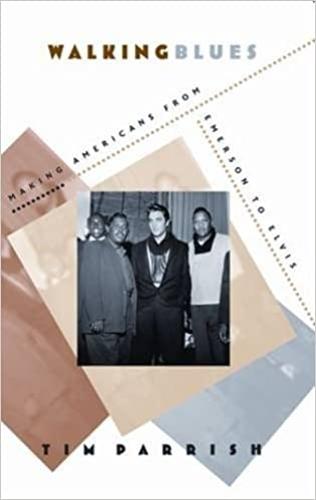
Who or what is an American? Many scholars have recently argued that in a country of such vast cultural and ethnic diversity as the United States it is not useful or even possible to talk of a single national identity. Are people right to suggest that the very idea of ""Americanness"" is merely a myth designed to obscure the divisions among us? This is the central question addressed by Tim Parrish in this imaginative interdisciplinary study. Working in the tradition of the blues, an art form based on the adaptation of cultural past to present, Parrish seeks to show what happens when we think of American identity not as some transcendental entity or essence, but as an ongoing process. At the core of his analysis is an appreciation of the rich legacy of pragmatism, a distinctly American frame of mind that sees truth as an act rather than an object, as a matter of doing rather than being. While the philosophical roots of pragmatism can be found in the writings of Ralph Waldo Emerson, William and Henry James, and Horace Kallen, the same intellectual approach informs the work of writers such as Ralph Ellison, Mary Antin, and Philip Roth as well as creative artists such as Son House, Elvis Presley, and James Brown. What all of these figures share, according to Parrish, is a recognition of the intrinsic connection between thought and action that has allowed Americans to define who they are through what they do. Walking Blues accounts for our cultural diversity without either insisting that we are all the same or denying that we have anything in common. Far from glossing over difference, Parrish shows how our American social, racial, and ethnic conflicts often mark the starting point for the various acts of creation through which we make--and remake--ourselves as Americans.
Full Product Details
Author: Tim Parrish
Publisher: University of Massachusetts Press
Imprint: University of Massachusetts Press
Dimensions:
Width: 15.20cm
, Height: 1.70cm
, Length: 22.80cm
Weight: 0.456kg
ISBN: 9781558497818
ISBN 10: 1558497811
Pages: 300
Publication Date: 29 February 2012
Audience:
College/higher education
,
Undergraduate
,
Postgraduate, Research & Scholarly
Format: Paperback
Publisher's Status: Inactive
Availability: Out of stock

Reviews
The great strengths of this book are the scope of its argument, the unpredictable mix of subjects it considers under one heading, the clarity of its prose, and the fact that it contributes to an emerging project--a neo-pragmatist reconsideration of possibilities of 'universalism'--that is exciting and important.--Nicholas K. Bromell, author of Tomorrow Never Knows: Rock and Psychedelics in the 1960sA most worthy entry into the growing field of scholarship assessing, or reassessing, the legacy of Emerson and William James, suggesting a broadening of that field beyond the already richly conceived territory of Cornel West, James Kloppenberg, Stanley Cavell, and others.--Charles E. Mitchell, author of Individualism and Its Discontents: Appropriations of Emerson, 1880-1950
The great strengths of this book are the scope of its argument, the unpredictable mix of subjects it considers under one heading, the clarity of its prose, and the fact that it contributes to an emerging project--a neo-pragmatist reconsideration of possibilities of 'universalism'--that is exciting and important.--Nicholas K. Bromell, author of Tomorrow Never Knows: Rock and Psychedelics in the 1960s A most worthy entry into the growing field of scholarship assessing, or reassessing, the legacy of Emerson and William James, suggesting a broadening of that field beyond the already richly conceived territory of Cornel West, James Kloppenberg, Stanley Cavell, and others.--Charles E. Mitchell, author of Individualism and Its Discontents: Appropriations of Emerson, 1880-1950
Author Information
TIM PARRISH is assistant professor English at the University of North Texas.