Overview
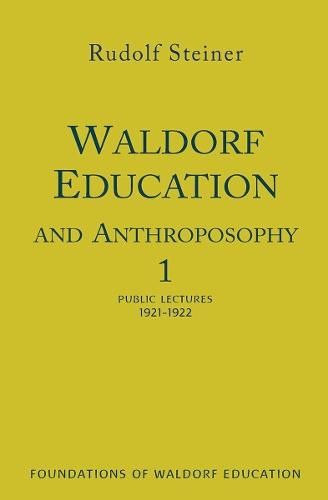
9 lectures, various cities, February 23, 1921-September 16, 1922 (CW 304) This is the first of two previously untranslated volumes of Steiner's public lectures on Waldorf education. Readers familiar with Steiner's lectures for teachers will discover here how Steiner presented his ideas to the general public with surprising directness. Teaching, Steiner says, should be artistic, creative, and improvisational--not dogmatic. Nonetheless, he is clear that ""the great battle"" has to do with the spiritual nature of children. He discusses themes such as understanding the role of health and illness in education, as well as the three major phases in child development: imitation, authority, and freedom. Also included are also two lectures Rudolf Steiner gave in England on Shakespeare and new ideals in education. German source: Erziehungs- und Unterrichtsmethoden auf Anthroposophischer Grundlage (GA 304).
Full Product Details
Author: Rudolf Steiner ,
Rene M Querido
Publisher: SteinerBooks, Inc
Imprint: SteinerBooks, Inc
Volume: 13
Weight: 0.354kg
ISBN: 9781621483694
ISBN 10: 162148369
Pages: 276
Publication Date: 01 October 1995
Audience:
General/trade
,
General
Format: Paperback
Publisher's Status: Active
Availability: Available To Order

We have confirmation that this item is in stock with the supplier. It will be ordered in for you and dispatched immediately.
Author Information
Rudolf Steiner (1861-1925) was born in the small village of Kraljevec, Austro-Hungarian Empire (now in Croatia), where he grew up. As a young man, he lived in Weimar and Berlin, where he became a well-published scientific, literary, and philosophical scholar, known especially for his work with Goethe's scientific writings. At the beginning of the twentieth century, he began to develop his early philosophical principles into an approach to systematic research into psychological and spiritual phenomena. Formally beginning his spiritual teaching career under the auspices of the Theosophical Society, Steiner came to use the term Anthroposophy (and spiritual science) for his philosophy, spiritual research, and findings. The influence of Steiner's multifaceted genius has led to innovative and holistic approaches in medicine, various therapies, philosophy, religious renewal, Waldorf education, education for special needs, threefold economics, biodynamic agriculture, Goethean science, architecture, and the arts of drama, speech, and eurythmy. In 1924, Rudolf Steiner founded the General Anthroposophical Society, which today has branches throughout the world. He died in Dornach, Switzerland. René M. Querido, LLD, was a seminal figure in Waldorf education for a half century. He was educated in Holland, Belgium, France, and England and studied mathematics and physics at London University. Mr. Querido lectured throughout the world on historical and educational topics and was director of Rudolf Steiner College (Fair Oaks, California). He was also Secretary of the Anthroposophical Society in America.