Overview
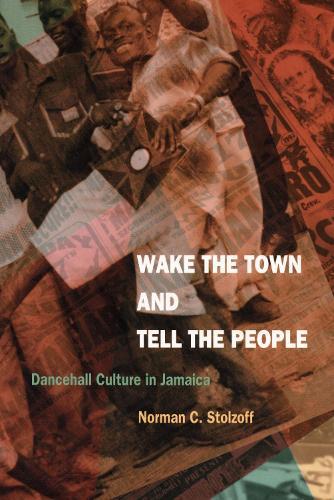
A nuanced and comprehensive view of the musical and cultural phenomenon of the Jamaican dancehall. It examines its growth and historical role within Jamaican society, its economy of star-making, its technology of production, its performative practices, and its capacity to channel political beliefs through popular culture in ways that are urgent, tangible and lasting. The book includes extensive interviews, original photographs and anthropological analysis from 18 months of fieldwork in Kingston. Norman C. Stolzoff argues that this popular musical genre expresses deep conflicts within Jamaican society, not only along lines of class, race, gender, sexuality and religion but also between different factions struggling to gain control of the island nation's political culture. As his argument unfolds, Stolzoff traces the history of Jamaican music from its roots in the late-18th century to 1945, from the addition of sound systems and technology during the mid-forties to early sixties, and finally through the post-independence years from the early sixties to the end of the 20th century.
Full Product Details
Author: Norman C. Stolzoff
Publisher: Duke University Press
Imprint: Duke University Press
Dimensions:
Width: 15.60cm
, Height: 2.40cm
, Length: 23.50cm
Weight: 0.494kg
ISBN: 9780822325147
ISBN 10: 0822325144
Pages: 328
Publication Date: 23 June 2000
Audience:
Professional and scholarly
,
Professional & Vocational
Format: Paperback
Publisher's Status: Active
Availability: In Print

This item will be ordered in for you from one of our suppliers. Upon receipt, we will promptly dispatch it out to you. For in store availability, please contact us.
Reviews
Arguing that dancehall music is steeped in the Jamaican slave culture of 200 years ago and is not just a recent form of expression by volatile ghetto youth, Norman C. Stolzoff, an anthropologist at the University of California-Irvine, puts forth the first comprehensive study of a largely misunderstood and underestimated phenomenon. [He] reveals that the lingo, dress code, power structure (including sexism and violence), sound and expression of dancehall not only reflect the struggle between Jamaica's haves and have-nots but also represent an intra-class (though not insular) battleground among the nation's poor. --Publishers Weekly Wake the Town and Tell the People offers valuable insights into dancehall's enduring power--and into the reasons so many international critics have missed the point entirely. Stolzoff deserves our thanks, for, as any DJ knows, the record must be set straight. --Vibe This is the first sustained study of Jamaican dancehall music and culture in all of its aspects. Everyone interested in the island music, and in popular music in general, will find something useful in this book. --Andrew Ross, author of The Celebration Chronicles Norman Stolzoff has gone where many fear to tread - to the very heart of the dancehall milieu in the depths of the Kingston ghetto, emerging with the first full, objective look at this fertile birthing ground of Jamaican music. Wake the Town introduces us to many of the prime figures in DJ culture--producers, promoters, selectors and artists--and traces their history back hundreds of years. It is a remarkable work. --Roger Steffens, co-author of Bob Marley: Spirit Dancer and Old Fire Sticks: The Autobiography of Bunny Wailer (forthcoming)_ Wake The Town And Tell The People is an admirable attempt to change the terms of the debate engaged in by foreign journalists and tastemakers who have dominated the discourse on Jamaican music... Stolzoff's historical analyses of the rise of dancehall culture, patricularly how it grew out of the gang rivalry sponsored by Jamaica's two main political parties, effectively maps the socio-political onto the music ... his fieldwork and reportage of numerous yard dances is a crucial contribution to the literature. --The Wire, January 2001
Dancehall is not just about music, it is about a way of life. Norman Stolzoff clearly understands this. I would tell anyone who wants to get a picture of reggae and the Jamaican people to take a read of Wake the Town and Tell the People-it's worth it. 'Blessed.' -Beenie Man, reigning king of the dancehall and two-time reggae Grammy nominee for Many Moods of Moses and The Doctor Norman Stolzoff has gone where many fear to tread - to the very heart of the dancehall milieu in the depths of the Kingston ghetto, emerging with the first full, objective look at this fertile birthing ground of Jamaican music. Wake the Town introduces us to many of the prime figures in DJ culture-producers, promoters, selectors and artists-and traces their history back hundreds of years. It is a remarkable work. -Roger Steffens, co-author of Bob Marley: Spirit Dancer and Old Fire Sticks: The Autobiography of Bunny Wailer Stolzoff's comprehensive analysis will unquestionably be an important contribution to the growing field of Latin American/Caribbean popular music studies. But beyond its importance as the 'first' study of dancehall, this book is outstanding because of its theoretical sophistication, its comprehensive scope, and its firm grounding in extensive fieldwork among dancehall participants. -Deborah Pacini-Hernandez, author of Bachata: A Social History of Dominican Popular Music This is the first sustained study of Jamaican dancehall music and culture in all of its aspects. Everyone interested in the island music, and in popular music in general, will find something useful in this book. -Andrew Ross, author of The Celebration Chronicles
"""Arguing that dancehall music is steeped in the Jamaican slave culture of 200 years ago and is not just a recent form of expression by volatile ghetto youth, Norman C. Stolzoff, an anthropologist at the University of California-Irvine, puts forth the first comprehensive study of a largely misunderstood and underestimated phenomenon. [He] reveals that the lingo, dress code, power structure (including sexism and violence), sound and expression of dancehall not only reflect the struggle between Jamaica's haves and have-nots but also represent an intra-class (though not insular) battleground among the nation's poor.""--Publishers Weekly ""Wake the Town and Tell the People offers valuable insights into dancehall's enduring power--and into the reasons so many international critics have missed the point entirely. Stolzoff deserves our thanks, for, as any DJ knows, the record must be set straight.""--Vibe ""This is the first sustained study of Jamaican dancehall music and culture in all of its aspects. Everyone interested in the island music, and in popular music in general, will find something useful in this book.""--Andrew Ross, author of The Celebration Chronicles ""Norman Stolzoff has gone where many fear to tread - to the very heart of the dancehall milieu in the depths of the Kingston ghetto, emerging with the first full, objective look at this fertile birthing ground of Jamaican music. Wake the Town introduces us to many of the prime figures in DJ culture--producers, promoters, selectors and artists--and traces their history back hundreds of years. It is a remarkable work.""--Roger Steffens, co-author of Bob Marley: Spirit Dancer and Old Fire Sticks: The Autobiography of Bunny Wailer (forthcoming)_ ""Wake The Town And Tell The People is an admirable attempt to change the terms of the debate engaged in by foreign journalists and tastemakers who have dominated the discourse on Jamaican music... Stolzoff's historical analyses of the rise of dancehall culture, patricularly how it grew out of the gang rivalry sponsored by Jamaica's two main political parties, effectively maps the socio-political onto the music ... his fieldwork and reportage of numerous yard dances is a crucial contribution to the literature.""--The Wire, January 2001"
""Arguing that dancehall music is steeped in the Jamaican slave culture of 200 years ago and is not just a recent form of expression by volatile ghetto youth, Norman C. Stolzoff, an anthropologist at the University of California-Irvine, puts forth the first comprehensive study of a largely misunderstood and underestimated phenomenon. [He] reveals that the lingo, dress code, power structure (including sexism and violence), sound and expression of dancehall not only reflect the struggle between Jamaica's haves and have-nots but also represent an intra-class (though not insular) battleground among the nation's poor.""--Publishers Weekly ""Wake the Town and Tell the People offers valuable insights into dancehall's enduring power--and into the reasons so many international critics have missed the point entirely. Stolzoff deserves our thanks, for, as any DJ knows, the record must be set straight.""--Vibe ""This is the first sustained study of Jamaican dancehall music and culture in all of its aspects. Everyone interested in the island music, and in popular music in general, will find something useful in this book.""--Andrew Ross, author of The Celebration Chronicles ""Norman Stolzoff has gone where many fear to tread - to the very heart of the dancehall milieu in the depths of the Kingston ghetto, emerging with the first full, objective look at this fertile birthing ground of Jamaican music. Wake the Town introduces us to many of the prime figures in DJ culture--producers, promoters, selectors and artists--and traces their history back hundreds of years. It is a remarkable work.""--Roger Steffens, co-author of Bob Marley: Spirit Dancer and Old Fire Sticks: The Autobiography of Bunny Wailer (forthcoming)_ ""Wake The Town And Tell The People is an admirable attempt to change the terms of the debate engaged in by foreign journalists and tastemakers who have dominated the discourse on Jamaican music... Stolzoff's historical analyses of the rise of dancehall culture, patricularly how it grew out of the gang rivalry sponsored by Jamaica's two main political parties, effectively maps the socio-political onto the music ... his fieldwork and reportage of numerous yard dances is a crucial contribution to the literature.""--The Wire, January 2001
Author Information
Norman C. Stolzoff, Ph.D. is president of Ethnographic Insight, Inc., a consumer anthropology and marketing research firm in Bellingham, Washington.