Overview
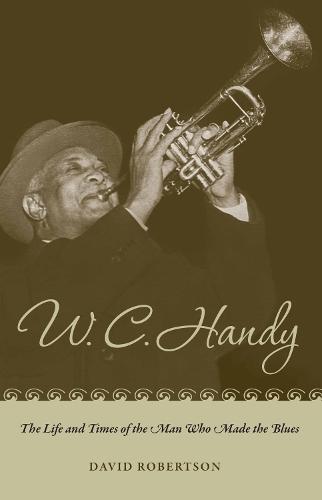
David Robertson charts W. C. Handy's rise from a rural-Alabama childhood in the last decades of the nineteenth century to his emergence as one of the most celebrated songwriters of the twentieth century. The child of former slaves, Handy was first inspired by spirituals and folk songs, and his passion for music pushed him to leave home as a teenager, despite opposition from his preacher father. Handy soon found his way to St. Louis, where he spent a winter sleeping on cobblestone docks before lucking into a job with an Indiana brass band. It was in a minstrel show, playing to racially mixed audiences across the country, that he got his first real exposure as a professional musician, but it was in Memphis, where he settled in 1905, that he hit his full stride as a composer. At once a testament to the power of song and a chronicle of race and black music in America, W. C. Handy's life story is in many ways the story of the birth of our country's indigenous culture - and a riveting must read for anyone interested in the history of American music.
Full Product Details
Author: David Robertson
Publisher: The University of Alabama Press
Imprint: The University of Alabama Press
Dimensions:
Width: 14.70cm
, Height: 2.20cm
, Length: 22.60cm
Weight: 0.488kg
ISBN: 9780817356965
ISBN 10: 0817356967
Pages: 312
Publication Date: 30 September 2011
Audience:
General/trade
,
General
Format: Paperback
Publisher's Status: Active
Availability: Awaiting stock

The supplier is currently out of stock of this item. It will be ordered for you and placed on backorder. Once it does come back in stock, we will ship it out for you.
Reviews
<p> Robertson . . . casts overdue light on Handy's essential role in establishing the blues as a popular art. --David Hadju, New York Times Book Review
An overdue and highly readable account of the man known as the Father of the Blues. Los Angeles Times Robertson s work is a fascinating look at not only Handy s life but the history and business of American music. Publishers Weekly Robertson . . . casts overdue light on Handy s essential role in establishing the blues as a popular art. David Hadju, New York Times Book Review Normal0falsefalsefalseMicrosoftInternetExplorer4 An overdue and highly readable account of the man known as the Father of the Blues. Los Angeles Times Normal 0 false false false MicrosoftInternetExplorer4 An overdue and highly readable account of the man known as the Father of the Blues. -- Los Angeles Times Robertson . . . casts overdue light on Handy's essential role in establishing the blues as a popular art. --David Hadju, New York Times Book Review An overdue and highly readable account of the man known as the Father of the Blues. -- Los Angeles Times Robertson's work is a fascinating look at not only Handy's life but the history and business of American music. -- Publishers Weekly
""An overdue and highly readable account of the man known as the Father of the Blues.""--Los Angeles Times ""Robertson . . . casts overdue light on Handy's essential role in establishing the blues as a popular art.""--David Hadju, New York Times Book Review ""Robertson's work is a fascinating look at not only Handy's life but the history and business of American music.""--Publishers Weekly
Normal0falsefalsefalseMicrosoftInternetExplorer4 An overdue and highly readable account of the man known as the Father of the Blues. Los Angeles Times
Normal0falsefalsefalseMicrosoftInternetExplorer4 An overdue and highly readable account of the man known as the Father of the Blues. -- Los Angeles Times
Author Information
David Robertson is the author of three previous biographies - of the slave rebel Denmark Vesey, the former U.S. secretary of state James F. Byrnes, and the bishop James A. Pike - and of a historical novel about John Wilkes Booth. His poetry has appeared in the Sewanee Review and other journals, and he has provided political and literary commentary to ABC News and the Washington Post. He was educated in Alabama and lives in Ohio.