Overview
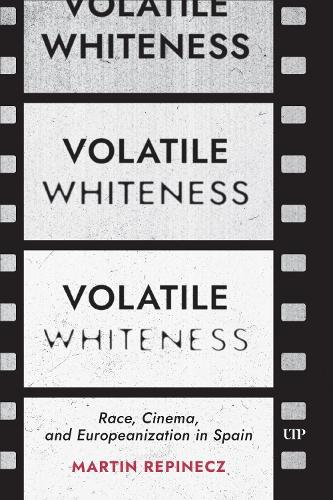
The decades spanning from the 1960s to the 1980s in Spain were marked by a series of significant changes: a flourishing economy fuelled by tourism, widespread migration from rural areas to cities, the dissolution of the African empire, evolving gender and sexual norms, and a political transition from dictatorship to democracy. Volatile Whiteness argues that throughout this period, popular film genres such as comedies, crime thrillers, musicals, and religious cinema aimed to erode the racialized image of Spain as an ""Africa of Europe"" and establish the nation's belonging in global whiteness. The book explores how popular films shaped the attitudes of Spanish audiences towards racialized groups even before the onset of mass immigration in the 1990s and traces the construction of the Roma community as an internal threat to the nation's upward mobility during late Francoism and the subsequent Transition. The book examines films that have retained popularity among contemporary Spanish audiences due to their continued circulation on television and other platforms. In doing so, Volatile Whiteness reflects not only on the meanings that popular films of the past may have had for their original audiences, but also on the ways they may shape the lived experiences of racial minorities in Spain today.
Full Product Details
Author: Martin Repinecz
Publisher: University of Toronto Press
Imprint: University of Toronto Press
Volume: 94
Dimensions:
Width: 15.50cm
, Height: 2.30cm
, Length: 23.40cm
Weight: 0.540kg
ISBN: 9781487539238
ISBN 10: 1487539231
Pages: 294
Publication Date: 24 March 2025
Audience:
College/higher education
,
Professional and scholarly
,
Tertiary & Higher Education
,
Professional & Vocational
Format: Hardback
Publisher's Status: Active
Availability: Manufactured on demand

We will order this item for you from a manufactured on demand supplier.
Reviews
“Meticulously theorized and expertly researched, Volatile Whiteness offers pathbreaking scholarship on whiteness and visual culture in Spain. Noting that Spanish whiteness is a volatile construct, Repinecz situates Spain’s conceptualizations of race and national identity in relation to logics of global whiteness, particularly constructions of Europe. Highly recommended for scholars of Spain and cinema studies.” -- N. Michelle Murray, Associate Professor of Spanish, Vanderbilt University “Martin Repinecz’s Volatile Whiteness is a crucial contribution to the field of Iberian Studies, offering an innovative perspective on how popular culture from to the late-Franco era set the stage for racial attitudes and anxieties that would become increasingly pronounced during subsequent decades of mass migration and demographic change. Of particular note is Repinecz’s genre-crossing analysis of different categories of popular film, as well as his attention to how a range of populations in the Iberian Peninsula have been racialized in contrast to whiteness in these works. This book is necessary reading for scholars of contemporary Spanish culture, providing exceptional insight into how today’s racial anxieties have been informed by the discursive trends of decades-past.” -- Catalina Iannone, Assistant Professor of Iberian Studies, The Ohio State University “Eloquently written and impeccably researched, Volatile Whiteness makes an important scholarly intervention and is likely to become an indispensable reference for scholars and students of Spanish cinema. It examines a wide corpus of popular cinema from the 1960s to the mid-1980s to demonstrate the significance of race in the socio-political discourse and the cultural imaginary of Spain. While previous studies of popular cinema of this period have shown the need to interpret these films vis-à-vis Spain’s project of modernity and belonging in the global North, Repinecz is the first one to prove that race played a key role in those national narratives.” -- Jorge Pérez, Peter T. Flawn Centennial Professor of Spanish, University of Texas at Austin “An impressive critical examination showcasing how a variety of popular films, decades earlier than the onset of mass immigration in 1990s Spain, influenced the attitudes of Spanish audiences towards racialized groups and were instrumental in establishing the country as a ‘European’ nation within the paradigms of global whiteness.” -- Silvia Bermúdez, Professor of Literature and Iberian Studies, University of California, Santa Barbara
Author Information
Martin Repinecz is an associate professor of Spanish at the University of San Diego.