Overview
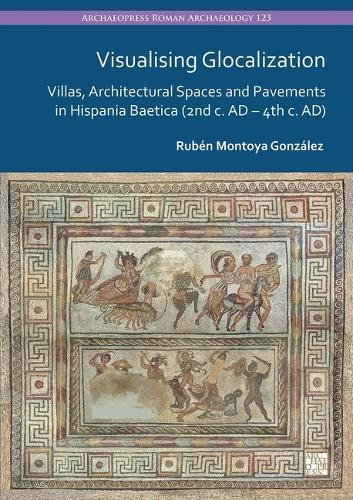
Glocalization, which can be defined as globalization refracted through the local, has been proposed as one of the most potent and innovative theoretical frameworks in the humanities and social sciences at this moment. However, its full application to and potential for archaeological studies has yet to be realized. For instance, in a debate on interdisciplinary perspectives on the growing use of the glocalization framework across social sciences, held in Cambridge in February 2018, V. Roudometof argued that the specific issue of how the concept should be applied to archaeological research, though, is best left to the people in the field, as they are far more knowledgeable about their own field than outsiders. This book aims to contribute to this debate by applying the glocalization framework to an archaeological dataset composed of a selection of partially and fully excavated villas, their associated architectural spaces, and pavements from Hispania Baetica between the 2nd and the 4th centuries AD. This book is one of the first ones exclusively focusing on glocalization and its application to an archaeological dataset in Roman archaeology. It also constitutes a novel approach to the study of Roman villa spaces, associated architecture, and their pavements. Furthermore, it presents an analytical model which allows other scholars to assess global phenomena across scales in specific territories.
Full Product Details
Author: Rubén Montoya González
Publisher: Archaeopress Publishing
Imprint: Archaeopress Publishing
Dimensions:
Width: 20.60cm
, Height: 1.80cm
, Length: 28.60cm
Weight: 1.089kg
ISBN: 9781803278957
ISBN 10: 1803278951
Pages: 336
Publication Date: 12 December 2024
Audience:
Professional and scholarly
,
Professional & Vocational
Format: Paperback
Publisher's Status: Active
Availability: Available To Order

We have confirmation that this item is in stock with the supplier. It will be ordered in for you and dispatched immediately.
Language: Spanish
Author Information
Dr. Ruben Montoya Gonzalez received his PhD in Archaeology at the University of Leicester, where he specialized in Classical Art History, Archaeology, and Global Studies. He completed his BA in History at Universidad Complutense de Madrid and a specialization in Classical Archaeology at Universita degli Studi La Sapienza di Roma. Throughout his academic career, he has been awarded international grants and scholarships to conduct research in the U.K., U.S., Italy, and Spain. He regularly publishes scholarly articles and books on Roman art, archaeology, and social theory, as well as science-dissemination articles in National Geographic, Historia y Vida, and La Vanguardia. He has recently been a Margarita Salas Researcher at Universidad de Alcala. Currently, he serves as an Associated Researcher at the Royal Netherlands Institute in Rome and an Adjunct Professor in Humanities at IE University (Spain), where he teaches courses in archaeology and research methodology.