Overview
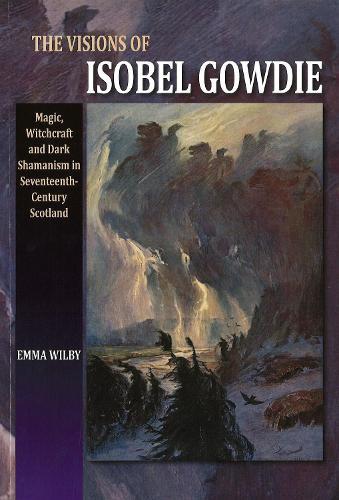
The confessions of Isobel Gowdie are widely recognised as the most extraordinary on record in Britain. Their descriptive power and vivid imagery have attracted considerable interest on both academic and popular levels. Among historians, the confessions are celebrated for providing a unique insight into the way fairy beliefs and witch beliefs interacted in the early modern mind; more controversially, they are also cited as evidence for the existence of Shamanistic visionary traditions, of pre-Christian origin, in Scotland in this period. On a popular level the confessions of Isobel Gowdie have, above any other British witch-trial records, influenced the formation of the ritual traditions of Wicca. The author's discovery of the original trial records (currently being authenticated by the National Archives of Scotland), deemed lost for nearly 200 years, provides a starting point for an interdisciplinary look at the confessions and the woman behind them. Using historical, psychological, comparative religious and anthropological perspectives this book sets out to separate the voice of Isobel Gowdie from that of her interrogators, and to determine the experiences and beliefs which may have generated her confessions. The book explores: How far did those accused of witchcraft self-consciously practice harmful magic? Did they really believe themselves to have made a Pact with an envisioned Devil? Did they ever participate in ecstatic cult rituals? The author argues that close analysis of Isobel's testimony supports the view that in seventeenth-century Britain popular spirituality was shaped by a deep interaction between Christian teachings and shamanistic visionary traditions, of pre-Christian origin. These findings confirm the value of witchcraft confessions as unique windows into the complexities of the early modern religious imagination.
Full Product Details
Author: Emma Wilby
Publisher: Liverpool University Press
Imprint: Liverpool University Press
Dimensions:
Width: 24.60cm
, Height: 3.80cm
, Length: 17.20cm
Weight: 1.200kg
ISBN: 9781845191795
ISBN 10: 184519179
Pages: 604
Publication Date: 04 June 2010
Audience:
General/trade
,
General
Format: Hardback
Publisher's Status: Out of Print
Availability: Awaiting stock

Reviews
This is in my opinion the finest reconstruction of the thought-world of somebody accused in an early modern witch trial yet made, making sense of elements that most people would find wholly fantastic. (Ronald Hutton, Pomegranate) Wilby's book is immensely engaging and rich with the promise of allowing us a better understanding of witches and their craft, particularly in the north of Scotland ... this book makes an invaluable contribution to its field of study, and everyone involved in writing about witches and witchcraft should be sure to read it. (Peter Maxwell-Stuart, Journal of British Studies) Wilby's study constitutes a major contribution and advance in witchcraft studies in general she has resurrected one form of witchcraft, and by implication witchcraft in general, from being an invention of maniacal Christian inquisitors into a credible form of spirituality which must be considered by any researcher in the field of comparative religion. (Clive Tolley, Shaman: Journal of the International Society for Shamanistic Research) Wilby restores agency and vitality to those individuals who are so often portrayed as the passive victims of a state or patriarchy-driven witch hunt, and offers a significant contribution to the field of witchcraft studies. (Sierra Dye, International Review of Scottish Studies) In the end, this book does what good research should: provide us with provocative, original interpretations and raise questions for further exploration. (Sabina Magliocco, Journal of Folklore Research)
This is in my opinion the finest reconstruction of the thought-world of somebody accused in an early modern witch trial yet made, making sense of elements that most people would find wholly fantastic. (Ronald Hutton, Pomegranate) Wilby's book is immensely engaging and rich with the promise of allowing us a better understanding of witches and their craft, particularly in the north of Scotland ... this book makes an invaluable contribution to its field of study, and everyone involved in writing about witches and witchcraft should be sure to read it. (Peter Maxwell-Stuart, Journal of British Studies) Wilby's study constitutes a major contribution and advance in witchcraft studies in general she has resurrected one form of witchcraft, and by implication witchcraft in general, from being an invention of maniacal Christian inquisitors into a credible form of spirituality which must be considered by any researcher in the field of comparative religion. (Clive Tolley, Shaman: Journal of the International Society for Shamanistic Research) Wilby restores agency and vitality to those individuals who are so often portrayed as the passive victims of a state or patriarchy-driven witch hunt, and offers a significant contribution to the field of witchcraft studies. (Sierra Dye, International Review of Scottish Studies) In the end, this book does what good research should: provide us with provocative, original interpretations and raise questions for further exploration. (Sabina Magliocco, Journal of Folklore Research)
Author Information
Emma Wilby is an Honorary Fellow in History at the University of Exeter. Her Cunning Folk and Familiar Spirits: Shamanistic Visionary Traditions in Early Modern British Witchcraft and Magic, and The Visions of Isobel Gowdie: Magic, Witchcraft and Dark Shamanism in Seventeenth-Century Scotland, were extensively reviewed and are excerpted on the press website.