Overview
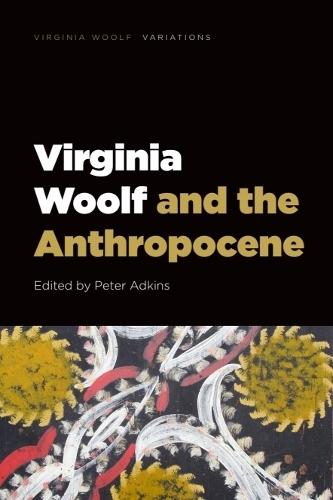
The first half of the twentieth century was a period of accelerated resource extraction, industrial intensification and tipping points in pollution levels, hastening the emergence of an epoch in which humans are the key drivers of planetary change. Virginia Woolf and the Anthropocene situates Woolf's oeuvre as an important body of work within the literary history of our new planetary period, showing how her fiction and non-fiction engages with questions around climate change, environmental politics, imperial extractivism, eco-philosophy, species difference, natural history and extinction. Bringing together leading and emergent scholars, this collection recognises Woolf as a writer who was profoundly influenced by ecological and environmental questions throughout her life. It brings to light how Woolf responded to the environmental changes of her time and illuminates how her literary innovations continue to offer compelling ways of imagining the nonhuman and the planetary in our present moment.
Full Product Details
Author: Peter Adkins (Lecturer in Modernist Literature, University of Edinburgh)
Publisher: Edinburgh University Press
Imprint: Edinburgh University Press
ISBN: 9781399516693
ISBN 10: 1399516698
Pages: 296
Publication Date: 31 January 2026
Audience:
College/higher education
,
Postgraduate, Research & Scholarly
Format: Paperback
Publisher's Status: Forthcoming
Availability: Not yet available

This item is yet to be released. You can pre-order this item and we will dispatch it to you upon its release.
Language: English
Reviews
This valuable collection assesses Woolf's potential to address the environmental crisis of the Anthropocene through her distinct feminist modernism. Essays from both veteran and more recent critics address useful angles, including climate change, extraction of resources, materialist visions of extinction, and new sources for interspecies, planetary communication and collaboration. -- Bonnie Kime Scott, San Diego State University These rich, intensive and impressive pieces of work force us to recognise how much more radical and prophetic Virginia Woolf’s work really is than has been understood. This excellent collection explores how Woolf anticipated present concerns, setting humans against the planet’s deep history and entangled within vast nonhuman forces that haunt our pretensions and threaten disaster. -- Louise Westling, University of Oregon
In Kirkyard Romanticism, Sharp transcends the national to make a significant contribution to nationhood theory, as well as 19th-century Scottish literature and politics. Summing Up: Highly recommended. --J. Walker, emeritus, Queen's University at Kingston ""CHOICE"" These rich, intensive and impressive pieces of work force us to recognise how much more radical and prophetic Virginia Woolf's work really is than has been understood. This excellent collection explores how Woolf anticipated present concerns, setting humans against the planet's deep history and entangled within vast nonhuman forces that haunt our pretensions and threaten disaster. --Louise Westling, University of Oregon This valuable collection assesses Woolf's potential to address the environmental crisis of the Anthropocene through her distinct feminist modernism. Essays from both veteran and more recent critics address useful angles, including climate change, extraction of resources, materialist visions of extinction, and new sources for interspecies, planetary communication and collaboration. --Bonnie Kime Scott, San Diego State University
Author Information
Peter Adkins is Lecturer in Modernist Literature at the University of Edinburgh. He is the author of The Modernist Anthropocene: Nonhuman Life and Planetary Change in James Joyce, Virginia Woolf and Djuna Barnes (2022) and co-editor of Virginia Woolf, Europe and Peace: Aesthetics and Theory (2020). He has written widely on modernism, the environment and posthumanism.