Overview
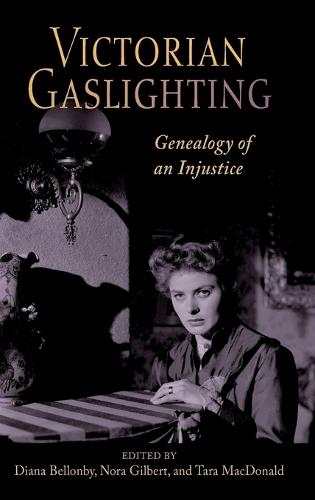
Reads gaslighting as a term, concept, and form of abuse fundamentally tied to the literature and culture of the Victorian British Empire. Victorian Gaslighting is the first literary-cultural history of gaslighting, a term derived from the haunting neo-Victorian play Gas Light (1938), which tells the story of a sadistic husband who manipulates his wife into believing she’s losing her mind. The collection traces the type of emotional abuse we find in the various stage and screen versions of the play back to its nineteenth-century British roots. Gaslighting emerged during an era when the idea of madness was debated, misused, policed, and medicalized like never before—and when the interlocking institutions of patriarchy, slavery, and imperialism sought to convince women, racialized others, and colonized subjects that their own perceptions were not to be trusted. More than anything, as the volume's wide-ranging analyses of both canonical and little-known Victorian texts demonstrate, gaslighting depends on the power to propagate a false narrative. This study clarifies how gaslighting works, then and now, by taking a deep dive into the distinctly Victorian horror story at the heart of this persistent form of injustice.
Full Product Details
Author: Diana Bellonby (Independent Scholar) , Nora Gilbert (Distinguished Teaching Professor and Professor of English, University of North Texas) , Tara MacDonald (Director of the Centre for Feminist Research and Professor of and Women’s and Gender Studies, University of Lethbridge)
Publisher: State University of New York Press
Imprint: State University of New York Press
Dimensions:
Width: 15.20cm
, Height: 2.30cm
, Length: 22.90cm
ISBN: 9798855805918
Pages: 316
Publication Date: 01 March 2026
Audience:
Professional and scholarly
,
College/higher education
,
Professional & Vocational
,
Postgraduate, Research & Scholarly
Format: Hardback
Publisher's Status: Forthcoming
Availability: Not yet available 
This item is yet to be released. You can pre-order this item and we will dispatch it to you upon its release.
Table of Contents
List of Illustrations Acknowledgements Introduction: Gaslighting Before Gaslight Diana Bellonby, Nora Gilbert, and Tara MacDonald I. The Gaslit Mind and Body 1. ""Strange Intonations"": The Foreign Accents of Disabling Mind Control in Trilby, Dracula, and the Two Film Versions of Gaslight Nora Gilbert 2. Spiritual Energies: Gaslighting, Yoga, and Cultures of Healing in Nineteenth-Century India Narin Hassan 3. Obstetric Gaslighting in Olive Schreiner's From Man to Man Tara MacDonald II. Marital and Monetary Manipulations 4. Whose Property Is It Anyway?: Economic Gaslighting in the Victorian Novel Jill Rappoport 5. Gaslighting, Misogynoir, and the Mixed-Race Heiress in The Woman of Colour and Vanity Fair Rosetta Young 6. Charles Dickens as Gaslighter: A Tale of Two Catherines Katherine J. Kim 7. ""Lit by a fury and a thought"": Resistance to Marital Gaslighting in Elizabeth Barrett Browning's Aurora Leigh and Amy Levy's ""Xantippe"" Sarah E. Kersh III. Case Studies in Institutional Gaslighting 8. ""The thralldom of gas"": Capitalist Gaslighting and the Victorian Coal-Gas Industry Grace Franklin 9. Structural Scarcity: Women's Economic Writing and Epistemic Gaslighting Lana L. Dalley 10. ""When evidence takes a supernatural character"": Religious Gaslighting in Elizabeth Gaskell's ""Lois the Witch"" Shalyn Claggett IV. Rape Culture and Rhetorical Control 11. A Matter of Practicality: Mary Prince and Abolitionist Gaslighting Doreen Thierauf 12. ""Old Ladies, Male and Female"": Gaslighting the Reader in Margaret Oliphant's The Perpetual Curate Elizabeth Coggin Womack 13. Gaslighting Vernon Lee: Hysteria, Rape Culture, and the Lesbian Intellectual Diana Bellonby List of Contributors Index
Reviews
""A wonderfully innovative, ambitious, impressive collection. Often the term gaslighting is treated loosely, as if it merely means 'lying.' Victorian Gaslighting resists this over-simplification to offer a powerful paradigm for discussing how aspects of material cultural history—from property law to abolition, from debates about authorship to lighting infrastructure—undermine those who are not in positions of power by insinuating that they are incapable of correctly assessing the dynamics that keep them down. This book will absolutely change the conversation around gaslighting."" — Andrea Kaston Tange, author of Architectural Identities: Domesticity, Literature and the Victorian Middle Classes
Author Information
Diana Bellonby is a Philadelphia-based writer who received her PhD in English from Vanderbilt University. Her work has appeared in Criticism, The Microgenre, Public Books, and other venues. Nora Gilbert is Professor of English at the University of North Texas. She is the author of Better Left Unsaid: Victorian Novels, Hays Code Films, and the Benefits of Censorship and Gone Girls, 1684-1901: Flights of Feminist Resistance in the Eighteenth- and Nineteenth-Century British Novel. Tara MacDonald is Professor of English and women's and gender studies at the University of Lethbridge. She is the author of Narrative, Affect, and Victorian Sensation: Wilful Bodies and The New Man, Masculinity, and Marriage in the Victorian Novel.
Tab Content 6
Author Website:
Countries Available
All regions
|