Overview
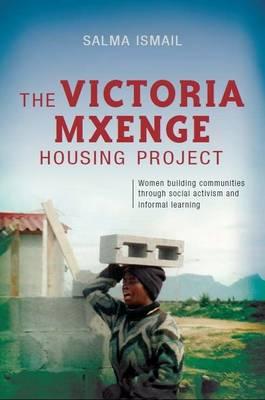
At the beginning of South Africa's democratic change in 1994, the Victoria Mxenge Housing Project was founded, by a group of 30 women who lived in shacks on the barren outskirts of Cape Town. These women had come from rural areas and were poor, vulnerable and semi-literate. Yet they learned how to build, negotiate with the government and NGOS, architects and building experts, and form alliances with homeless social movements locally and internationally. The desolate piece of land they occupied is now a thriving, sustainable community of more than 5 000 houses. Over a period of 10 years the author has tracked the history of the Victoria Mxenge Housing Association, from its start as a development organisation to its evolution into a social movement to its status as a service provider. Through the stories of these women, the reader is given a thorough understanding of the choices a social movement made when caught up in the struggle to mobilise for housing and become service providers in a context where the state did not live up to its social responsibilities. The text weaves together perspectives on agency, identity and the usefulness as well as limitations of popular education. This book plugs a hole in the literature for adult education students and social activists in the developing world. It highlights the value of local and traditional knowledge, experiential learning, learning in an informal context and places an emphasis on how women relate to and interact with knowledge. It taps into the growing international interest in social learning in the context of the growth of social movements.
Full Product Details
Author: Salma Ismail
Publisher: Juta & Company Ltd
Imprint: Juta Legal and Academic Publishers
Dimensions:
Width: 15.20cm
, Height: 1.30cm
, Length: 22.80cm
Weight: 0.249kg
ISBN: 9781919895529
ISBN 10: 1919895523
Pages: 192
Publication Date: 12 January 2014
Audience:
College/higher education
,
Professional and scholarly
,
Undergraduate
,
Postgraduate, Research & Scholarly
Format: Paperback
Publisher's Status: Active
Availability: Available To Order

We have confirmation that this item is in stock with the supplier. It will be ordered in for you and dispatched immediately.
Reviews
'This is an unusual book, rich on so many ways. Most PhD theses start off with a theoretical framework and apply it to a case study. This project reverses the process. Startled into looking deeply into a local project by meeting one of its leaders, Salma Ismail decided simply to find out what was going on and what that 'going on' will teach us. The project and the research came first, the PhD later - and that seems to me to be a significant lesson for those who seek to learn from development projects and social movements.' - Alan Rogers, Compare: A Journal of Comparative and International Education 'The focus on the experience of women, and use of feminist theories of pedagogy, is a welcome addition to the literature on informal and movement learning, both within South Africa and beyond.' - Anne Harley, Adult Education Quarterly
[A]n excellent contribution to the adult education and development literature, to the understanding of social movements, and to recent South African political and social history. Professor John Holford, Robert Peers Chair, University of Nottingham
Author Information
Salma Ismail is a Senior Lecturer at the Centre for Higher Education and Development at the University of Cape Town, South Africa. She convenes and teaches on the Adult Education programmes at undergraduate and postgraduate level.