Overview
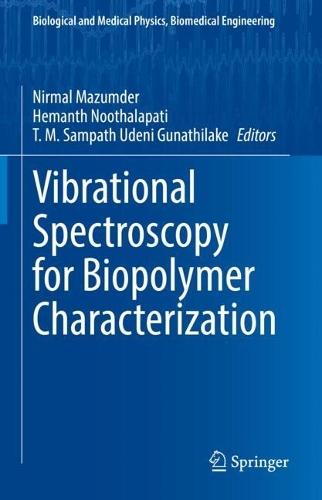
This book provides an in-depth examination of the physicochemical properties of biomolecules and their significance across various industries. It explores how factors like composition, chain structure, linkage patterns, and molecular weight influence properties such as viscosity, solubility, and mechanical strength. Advanced techniques, including Fourier Transform Infrared (FTIR) spectroscopy and Raman spectroscopy, are highlighted as essential tools for characterizing these properties and understanding the structural and functional behaviors of biopolymers. The book emphasizes polysaccharides—abundant, renewable carbohydrates derived from plants, animals, and microorganisms—and their applications in fields such as food science, textiles, drug delivery, and tissue engineering. It also addresses physical, chemical, and physicochemical modifications that enhance the industrial utility of biopolymers. Designed for researchers and professionals, this interdisciplinary book serves as a valuable resource for advancing the study and application of biopolymer characterization techniques.
Full Product Details
Author: Nirmal Mazumder ,
Hemanth Noothalapati ,
T.M. Sampath Udeni Gunathilake
Publisher: Springer Nature Switzerland AG
Imprint: Springer Nature Switzerland AG
ISBN: 9783032153050
ISBN 10: 3032153050
Pages: 279
Publication Date: 29 April 2026
Audience:
Professional and scholarly
,
Professional & Vocational
Format: Hardback
Publisher's Status: Forthcoming
Availability: Not yet available

This item is yet to be released. You can pre-order this item and we will dispatch it to you upon its release.
Author Information
Dr. Nirmal Mazumder is an associate professor in the Department of Biophysics at the Manipal School of Life Sciences, Manipal Academy of Higher Education (MAHE), Manipal, India. He earned his Ph.D. in 2013 from the Institute of Biophotonics at National Yang Ming Chiao Tung University, Taipei, Taiwan, under the mentorship of Prof. Fu-Jen Kao. Between 2013 and 2016, he pursued postdoctoral research at the University of Virginia, USA, and the Italian Institute of Technology, Genoa, Italy. Dr. Mazumder specializes in developing advanced nonlinear optical microscopy techniques, including two-photon fluorescence, second harmonic generation, and coherent anti-Stokes Raman scattering, for biomedical applications. His broader research interests encompass microscopy-spectroscopy development, biophotonics, biomedical devices, smart materials, and microfluidics. He has published over 100 peer-reviewed articles in international journals, 11 books, and 32 book chapters. He also serves as an editor and reviewer for prestigious journals and is an active member of numerous scientific societies. Dr. Sampath Gunathilake is a researcher at the University of Sri Jayewardenepura, Sri Lanka, specializing in biopolymer-based drug delivery systems. In 2019, he completed his Ph.D. in Advanced Materials and Nanomaterials at the University of Malaya, Malaysia, followed by a postdoctoral fellowship. Dr. Gunathilake has authored 25 key publications and focuses on precision medicine through targeted and stimuli-responsive drug delivery systems. He serves as a topic editor for Frontiers in Pharmacology and reviews for leading journals. Dr. Hemanth Noothalapati is an assistant professor in the Faculty of Life and Environmental Sciences at Shimane University, Japan, and an adjunct faculty member in the Department of Chemical Engineering at the Indian Institute of Technology Hyderabad, India. He earned his Ph.D. in Applied Chemistry from National Chiao Tung University (NCTU), Taiwan, in 2013, supported by a prestigious Taiwan Scholarship. After completing a postdoctoral fellowship at NCTU's Ultimate Spectroscopy and Imaging Laboratory, Dr. Noothalapati began his independent research career at Shimane University. His expertise lies in label-free molecular spectroscopy and imaging, employing chemometrics, machine learning, and artificial intelligence to explore applications across biology, medicine, materials science, and environmental studies.