Overview
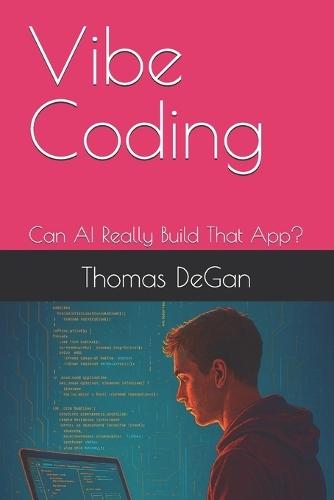
Vibe Coding by Thomas DeGan investigates the capabilities and shortcomings of building software applications using AI-powered development tools. Centered around the concept of ""vibe coding""-where users describe what they want in natural language rather than writing code-the book offers a realistic, experience-based look at what AI can and can't do in the world of software creation. DeGan explains how AI tools enable non-technical founders to prototype and deploy basic applications quickly, often skipping the steep learning curve of traditional programming. Features like user authentication, simple CRUD operations, and responsive UIs can be generated efficiently through prompting platforms like Windsurf, Replit, and Cursor. These tools shine when it comes to rapid iteration and content-focused apps where functionality is relatively standardized. However, the book cautions against overestimating what AI can handle. Complex business logic, performance tuning, robust error handling, and high-security demands are areas where AI frequently falls short. DeGan introduces the idea of a ""Promise vs. Reality Gap,"" where many AI-generated applications look good on the surface but fail to meet the demands of real-world usage, especially as they scale or integrate with other systems. Through two detailed case studies-MyCelestialStory.com and BadDreamDictionary.com-DeGan illustrates both the speed of early development and the hidden costs of iteration, complexity, and unanticipated challenges. These examples show how features that seem simple in theory, such as social sharing or visual customization, can balloon into weeks of refinement or even stall progress entirely. A key takeaway from the book is the warning against the ""solo founder's trap."" Many believe AI eliminates the need for a technical co-founder, but in reality, it simply shifts the workload. Founders still must juggle QA, product strategy, business operations, and the constant refinement of AI-generated outputs. Additionally, AI code can accumulate technical debt quickly, making handoff to a professional development team difficult down the road. Rather than positioning AI as a replacement for developers, Vibe Coding promotes a hybrid strategy: use AI to move fast and test ideas, but bring in traditional development where precision, scalability, and quality matter most. The book encourages aspiring builders to develop a foundational understanding of programming concepts, even if they rely on AI for the bulk of the work, and to plan for long-term maintenance and growth from the start. In conclusion, Vibe Coding offers a grounded yet optimistic view of AI-assisted development. The tools are powerful and empowering, especially for early-stage experimentation. But they are not a silver bullet. Success comes from blending the speed of AI with the judgment and strategy of human developers, always keeping in mind the ultimate goal: building apps that truly work-not just ones that look like they do.
Full Product Details
Author: Thomas Degan
Publisher: Independently Published
Imprint: Independently Published
Volume: 1
Dimensions:
Width: 15.20cm
, Height: 0.90cm
, Length: 22.90cm
Weight: 0.231kg
ISBN: 9798287030254
Pages: 166
Publication Date: 06 June 2025
Audience:
General/trade
,
General
Format: Paperback
Publisher's Status: Active
Availability: Available To Order

We have confirmation that this item is in stock with the supplier. It will be ordered in for you and dispatched immediately.