|
|
|||
|
||||
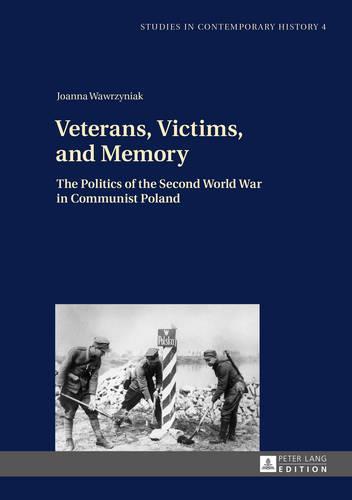
OverviewIn the vast literature on how the Second World War has been remembered in Europe, research into what happened in communist Poland, a country most affected by the war, is surprisingly scarce. The long gestation of Polish narratives of heroism and sacrifice, explored in this book, might help to understand why the country still finds itself in a «mnemonic standoff» with Western Europe, which tends to favour imagining the war in a civil, post-Holocaust, human rights-oriented way. The specific focus of this book is the organized movement of war veterans and former prisoners of Nazi camps from the 1940s until the end of the 1960s, when the core narratives of war became well established. Full Product DetailsAuthor: Machteld Venken , Simon Lewis , Joanna WawrzyniakPublisher: Peter Lang AG Imprint: Peter Lang AG Edition: New edition Volume: 4 Dimensions: Width: 14.80cm , Height: 1.80cm , Length: 21.00cm Weight: 0.430kg ISBN: 9783631640494ISBN 10: 3631640498 Pages: 259 Publication Date: 15 December 2015 Audience: College/higher education , Postgraduate, Research & Scholarly Format: Hardback Publisher's Status: Active Availability: Out of stock The supplier is temporarily out of stock of this item. It will be ordered for you on backorder and shipped when it becomes available. Table of ContentsContents: Communism, Myth and Memory – The Communist Post-war: Organizing Life and Memory – The Myth of Victory (1949–1955) – The Myth of Unity (1956–1959) – The Myth of Innocence (1960–1969) – Epilogue: The Long Shadow of the Communist Politics of Memory.ReviewsAbschliessend bleibt festzuhalten, dass Wawrzyniak uberzeugend und souveran durch die Wandlungen der Geschichtspolitik in der Volksrepublik Polen fuhrt. (Maximilian Becker, sehepunkte 16/2016) Author InformationJoanna Wawrzyniak is Deputy Director of the Institute of Sociology at the University of Warsaw, where she also heads the Social Memory Laboratory. She has published extensively on the relationship between history and memory in Poland, the uses of oral history, and the current state of memory studies in Central-Eastern Europe. Recently she was a visiting fellow at Freiburg Institute for Advanced Studies and at Imre Kertész Kolleg in Jena (Germany). Tab Content 6Author Website:Countries AvailableAll regions |
||||