Overview
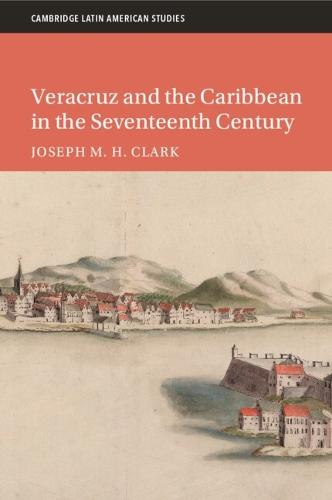
In the seventeenth century, Veracruz was the busiest port in the wealthiest colony in the Americas. People and goods from five continents converged in the city, inserting it firmly into the early modern world's largest global networks. Nevertheless, Veracruz never attained the fame or status of other Atlantic ports. Veracruz and the Caribbean in the Seventeenth Century is the first English-language, book-length study of early modern Veracruz. Weaving elements of environmental, social, and cultural history, it examines both Veracruz's internal dynamics and its external relationships. Chief among Veracruz's relationships were its close ties within the Caribbean. Emphasizing relationships of small-scale trade and migration between Veracruz and Caribbean cities like Havana, Santo Domingo, and Cartagena, Veracruz and the Caribbean shows how the city's residents – especially its large African and Afro-descended communities – were able to form communities and define identities separate from those available in the Mexican mainland.
Full Product Details
Author: Joseph M. H. Clark (University of Kentucky)
Publisher: Cambridge University Press
Imprint: Cambridge University Press
Weight: 0.552kg
ISBN: 9781009180320
ISBN 10: 1009180320
Pages: 340
Publication Date: 13 November 2025
Audience:
General/trade
,
General
Format: Paperback
Publisher's Status: Active
Availability: Manufactured on demand

We will order this item for you from a manufactured on demand supplier.
Reviews
'In this deeply researched and original book, Joe Clark argues for a distinct Mexican-Caribbean urban history. Africans and their descendants formed the majority population of seventeenth century Veracruz; Clark sheds light on their social, cultural, and economic roles in Veracruz and the circum-Caribbean networks of Havana and Cartagena. An important contribution to Mexican, Caribbean, and Atlantic World histories.' Jane Landers, author of Atlantic Creoles in the Age of Revolutions 'This richly documented history of Veracruz gives new meaning to the bound waters of the Gulf of Mexico and the Caribbean Sea. Joe Clark demonstrates the utility of seeing beyond the lines drawn on imperial maps to understand the web of relations that connected Afro-diasporic communities. It is an exceptional achievement.' Tatiana Seijas, author of Asian Slaves in Colonial Mexico: From Chinos to Indians 'This excellent, long-awaited study breaks new ground by examining seventeenth-century Mexico in relation to the Spanish Caribbean. Creatively employing an impressive range of disparate sources, Clark opens multiple new ways of envisioning early colonial Veracruz as a Black and Caribbean space.' David Wheat, author of Atlantic Africa and the Spanish Caribbean, 1570–1640 '…Clark has produced a dynamic history of seventeenth-century Veracruz. Crucially, by moving beyond the geographic framings privileged by elites, he demonstrates the importance of regional, granular perspectives for uncovering the experiences of individuals, especially those of African descent, within a multifaceted Caribbean world.' Casey Schmitt, Hispanic American Historical Review '… a very welcome contribution to Latin American historiography.' Ramona Negrón, International Journal of Maritime History 'Clark's monograph makes a meaningful contribution to the historiographies of New Spain, as well as the Caribbean. His conclusion centers on a map that characterizes the Caribbean as the Mexican archipelago, forcing scholars to think about geography and the ways persistent classifications can - and should - be challenged.' Keith Richards, The Latin Americanist 'This book … forges an original, strategically documented approach to a node connecting Caribbean commercial circuits to the Viceroyalty of New Spain (Mexico). Intelligently and creatively drawing upon archival documentation from diverse repositories, [it] exemplifies the cis-Atlantic approach to history. It engages and enriches recent scholarship, with especially significant attention to the meanings and persistence of ethnic identifications.' Bethany Aram, American Historical Review
Author Information
Joseph M. H. Clark is Assistant Professor of History at the University of Kentucky. His research examines the intersection of Mexican, Caribbean, and Atlantic history in the early modern period, focusing especially on African Diaspora.