Overview
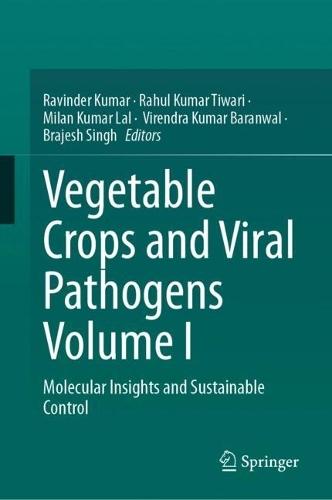
This is Volume 1 of a two-volume set that explores the growing challenge of viral diseases in horticultural crops. While this volume focuses on vegetable crops, Volume 2 complements it by addressing viral threats in fruit crops, together offering a comprehensive understanding of plant virus epidemiology and management in the context of a changing climate. This volume delves into how viruses emerge, spread, and affect the quality and yield of vegetables. It explains the interactions between viruses and their hosts, emphasizing modes of transmission—especially via seeds and insect vectors—and the influence of climate change on viral outbreaks. Readers are introduced to cutting-edge diagnostic and management tools including CRISPR, portable testing kits, virome analysis, and omics-based technologies (genomics, transcriptomics, proteomics, and metabolomics). The book also explores sustainable management strategies such as gene editing, RNA-based sprays, and the use of endophytes and phytohormones. A valuable resource for students, researchers, plant pathologists, horticulturists, and agricultural professionals, this volume provides science-backed insights and practical solutions for managing virus-related challenges in vegetable cultivation.
Full Product Details
Author: Ravinder Kumar ,
Rahul Kumar Tiwari ,
Milan Kumar Lal ,
Virendra Kumar Baranwal
Publisher: Springer Verlag, Singapore
Imprint: Springer Verlag, Singapore
ISBN: 9789819572649
ISBN 10: 9819572649
Pages: 554
Publication Date: 19 April 2026
Audience:
Professional and scholarly
,
Professional & Vocational
Format: Hardback
Publisher's Status: Forthcoming
Availability: Not yet available

This item is yet to be released. You can pre-order this item and we will dispatch it to you upon its release.
Author Information
Dr. Ravinder Kumar is a Senior Scientist in Plant Pathology at ICAR-Indian Agricultural Research Institute, New Delhi. He earned his M.Sc. and Ph.D. in Plant Pathology from Sardar Vallabhbhai Patel University of Agriculture & Technology, Meerut and previously served at the ICAR-Central Potato Research Institute, Shimla. His research focuses on host–pathogen interactions, plant virus epidemiology, and disease management, with major contributions in molecular characterization, genome sequencing, and diagnostics of plant viruses. He has developed advanced diagnostic tools, including multiplex RT-PCR, real-time PCR, LAMP, and RPA. Dr. Kumar has published over 150 research articles, edited 20 books with leading publishers, and serves on the editorial boards of several international journals. Dr Rahul Kumar Tiwari is currently working on melatonin-mediated mitigation of soil and tuber-borne diseases and physiological disorders in crop plants. He has also worked on the signalling mechanism of pathogens, pathogenomics and the management of hemibiotrophic fungi. He has explored the genetic diversity of pathogenic microbes in field and horticultural crops. Additionally, his area of interest is on multiple aspects of pathophysiological alterations in food crops under the influence of diverse biotic and abiotic stresses. He has published more than 130 publications in reputed journals. Dr. Milan Kumar Lal is a plant physiologist specializing in abiotic stress and nutritional aspects of potato and other starchy crops. His research focuses on heat, drought, salinity, and heavy metal stress, as well as plant physiological, biochemical, and molecular responses to biotic stresses caused by fungi, viruses, and bacteria. He also has expertise in nutrition and quality traits of starchy crops, including resistant starch, glycemic index, phytonutrients, bioactive compounds, functional fermented foods and beverages, and processing techniques to enhance nutritional value. His work has resulted in over 180 publications in international peer-reviewed journals. Dr. Virendra Kumar Baranwal is a distinguished plant virologist. He earned his M.Sc. and Ph.D. in Botany (Virology) from Lucknow University and joined the Agricultural Research Service in 1985, and served at CPCRI and NCIPM before joining the Advanced Centre for Plant Virology, IARI, in 1999. He served as Professor (2016–2022) and ICAR–National Professor (2022–2025). He has guided 4 M.Sc. and 20 Ph.D. students and published over 200 peer-reviewed articles. A recipient of the IARI Best Teacher Award, he is a Fellow of NAAS and NASI. His international exposure includes IPM training in Indonesia, DBT–Overseas Associate tenure at The State University of New Jersey, USA, and academic visits to the University of Florida and the University of Queensland. Dr. Baranwal’s major contributions include development of a microarray chip for the detection of over 1,100 plant viruses, infectious clones of banana-infecting badnaviruses, studies on virus resistance in banana, HTS–based virus and viroid genomics, and rapid field-based diagnostics of plant viruses. Dr. Brajesh Singh is a Doctor in Botany and currently serves as Director, ICAR–Central Potato Research Institute, Shimla, and Principal Scientist in the Crop Physiology, Biochemistry and Post-Harvest Technology Division. His research interests focus on horticultural crop storage technologies, post-harvest processing, and nutritional quality assessment, with particular emphasis on improving the value and shelf life of potato crops. He is coordinating programmes on genome editing of potato, post-harvest management, and nutritional enhancement, contributing to sustainable productivity and quality improvement. Dr. Singh has an extensive publication record with over 220 peer-reviewed research articles and is the author of four patents, reflecting his strong commitment to innovation, translational research, and the advancement of potato science in India.