Overview
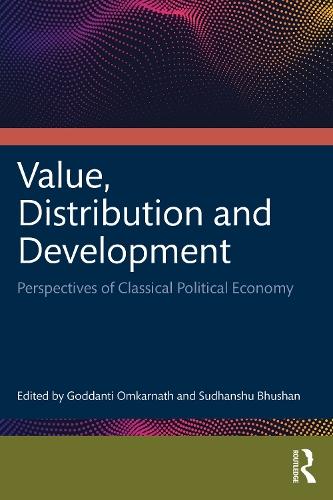
This book explores the crisis of neo-classical economic theory in an attempt to explain developments in the post-war period. It explores two important aspects: strengthening the tradition of classical political economy (CPE) that arose in response to various critiques of neo-classical economic theory and exploring the potential of CPE to deal with issues of development. The advantage of an alternative to mainstream economic theory is that it can explain value, distribution, and developmental issues of capitalist as well as non-capitalist economies around the world. The chapters in this volume—written by eminent economists in honor of Krishna Bharadwaj—present a critique of the structure of neo-classical theory in terms of the scarcity approach and go deeper into the failure of the determination of a uniform rate of profit and limited substitutions of labor and capital. The volume resurrects Sraffa’s system of production determining prices and the rate of profit allowing the possibility of output dynamics to be dealt with separately. Krishna Bharadwaj worked passionately towards these objectives, and this book establishes the foundations of CPE in the light of her writings. The book will be of interest to students, teachers, and researchers of Economics, Economic Theory and Philosophy, Political Economy, Development Dynamics, and History of Economic Thought.
Full Product Details
Author: Goddanti Omkarnath ,
Sudhanshu Bhushan (National Institute of Educational Planning and Administration, New Delhi, India)
Publisher: Taylor & Francis Ltd
Imprint: Routledge
Weight: 0.540kg
ISBN: 9781041051879
ISBN 10: 1041051875
Pages: 276
Publication Date: 25 March 2026
Audience:
College/higher education
,
Professional and scholarly
,
Tertiary & Higher Education
,
Professional & Vocational
Format: Paperback
Publisher's Status: Active
Availability: Not yet available

This item is yet to be released. You can pre-order this item and we will dispatch it to you upon its release.
Author Information
Goddanti Omkarnath is currently Honorary Professor, School of Economics, University of Hyderabad, where he was earlier Professor and Dean. His teaching and research interests have included classical political economy, capital theory, and theoretical approaches to the study of the Indian economy. He has been involved in initiatives on reforming economics education in India. Before joining the university in 2000, Omkarnath served on the faculty of the Centre for Development Studies, Thiruvananthapuram, Kerala. Sudhanshu Bhushan is a former professor and head of the Department of Higher and Professional Education at the National Institute of Educational Planning and Administration (NIEPA), New Delhi. He specializes in internationalization, policy issues, and planning in higher education. His notable works include The Future of Higher Education in India (Ed. 2019), Governance of Higher Education in Bihar (2021), The Evolving Landscape of Higher Education in India: Post-pandemic Policies and Transformations (Ed. 2024) and Critical Explorations in Social Sciences: Essays presented to Utsa Patnaik and Prabhat Patnaik (Eds. Praveen Jha and Sudhanshu Bhushan) (2025). He received the Amartya Sen Award in 2012 for distinguished social science research. He is the editor of Indian Economic Journal.