Overview
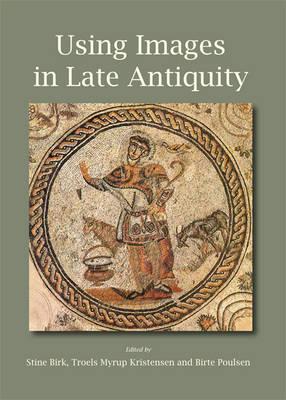
Fifteen papers focus on the active and dynamic uses of images during the first millennium AD. They bring together an international group of scholars who situate the period’s visual practices within their political, religious, and social contexts. The contributors present a diverse range of evidence, including mosaics, sculpture, and architecture from all parts of the Mediterranean, from Spain in the west to Jordan in the east. Contributions span from the depiction of individuals on funerary monuments through monumental epigraphy, Constantine’s expropriation and symbolic re-use of earlier monuments, late antique collections of Classical statuary, and city personifications in mosaics to the topic of civic prosperity during the Theodosian period and dynastic representation during the Umayyad dynasty. Together they provide new insights into the central role of visual culture in the constitution of late antique societies.The editors are all affiliated with the Department of Classical Studies at Aarhus University, Denmark, and were responsible for the collaborative research project “Art and Social Identities in Late Antiquity” (2007-2010).
Full Product Details
Author: Stine Birk ,
Troels Myrup Kristensen ,
Birte Poulsen
Publisher: Oxbow Books
Imprint: Oxbow Books
Dimensions:
Width: 17.00cm
, Height: 1.80cm
, Length: 24.00cm
Weight: 0.816kg
ISBN: 9781782972617
ISBN 10: 1782972617
Pages: 288
Publication Date: 23 April 2014
Audience:
Professional and scholarly
,
Professional & Vocational
Format: Paperback
Publisher's Status: Active
Availability: Available To Order

We have confirmation that this item is in stock with the supplier. It will be ordered in for you and dispatched immediately.
Reviews
The contributions to the present volume also share the conviction that artifacts of the civic world, traditionally studied under the rubric of late Roman art, and those of the ecclesiastical world, traditionally studied as early Christian, speak most eloquently when viewed together as products of a bedrock of shared humanity (in Brown's words). This broad- mindedness constitutes the volume's most obvious strength for an audience of specialists. Furthermore, all of the essays are marked by a laudable clarity of purpose and expression, rendering them suitable for discussion in graduate seminars; many will find their way onto undergraduate syllabi as well. -- Benjamin Anderson Bryn Mawr Classical Review, 2015.01.35 It is clear that this volume is not simply a catch-all for belated submissions of old conference papers. Several authors include bibliography through 2013, while Stine Birk, Lea Stirling and Birte Poulsen here publish continuations or variations on themes they addressed in an earlier volume. -- Alice Christ The Medieval Review The paperback is well produced: the binding of my copy has withstood cavalier treatment, and the grey-scale figures... are consistently legible. This broad- mindedness constitutes the volume's most obvious strength for an audience of specialists. (On the content quality) ... all of the essays are marked by a laudable clarity of purpose and expression, rendering them suitable for discussion in graduate seminars; many will find their way onto undergraduate syllabi as well. -- Benjamin Anderson Bryn Mawr Classical Review, 01/25/15
The contributions to the present volume also share the conviction that artifacts of the civic world, traditionally studied under the rubric of late Roman art, and those of the ecclesiastical world, traditionally studied as early Christian, speak most eloquently when viewed together as products of a bedrock of shared humanity (in Brown's words). This broad- mindedness constitutes the volume's most obvious strength for an audience of specialists. Furthermore, all of the essays are marked by a laudable clarity of purpose and expression, rendering them suitable for discussion in graduate seminars; many will find their way onto undergraduate syllabi as well. -- Benjamin Anderson Bryn Mawr Classical Review, 2015.01.35
"The contributions to the present volume also share the conviction that artifacts of the civic world, traditionally studied under the rubric of ""late Roman"" art, and those of the ecclesiastical world, traditionally studied as ""early Christian,"" speak most eloquently when viewed together as products of a ""bedrock of shared humanity"" (in Brown's words). This broad- mindedness constitutes the volume's most obvious strength for an audience of specialists. Furthermore, all of the essays are marked by a laudable clarity of purpose and expression, rendering them suitable for discussion in graduate seminars; many will find their way onto undergraduate syllabi as well. -- Bryn Mawr Classical Review Bryn Mawr Classical Review Accordingly, this is a useful and often stimulating book, with an ambitious geographicaland chronological scope, but one well supported by case studies on the visual culture of Late Antiquity. -- Medieval Archaeology Medieval Archaeology haeology"
Author Information
Birte Poulsen is Associate Professor at the Department of History and Classical Studies (Classical Archaeology), Aarhus University. She has been the head of the Danish Halikarnassos team since 2016. Her main research interests are art and archaeology of the imperial period and Late Antiquity with special reference to Asia Minor and Italy.