Overview
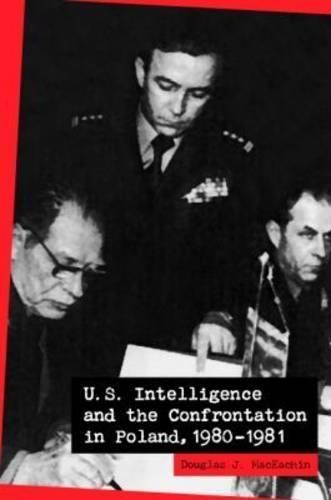
Despite the U.S. government’s sophisticated intelligence capabilities, policy makers repeatedly seemed to be caught off guard when major crises took place during the Cold War. Were these surprises the result of inadequate information, or rather the use made of the information available? In seeking an answer to this question, former CIA analyst Douglas MacEachin carefully examines the crisis in Poland during 1980–81 to determine what information the U.S. government had about Soviet preparations for military intervention and the Polish regime’s plans for martial law, and what prevented that information from being effectively employed Drawing on his experience in intelligence reporting at the time, as well as on recently declassified U.S. documents and materials from Soviet, Polish, and other Eastern European archives, MacEachin contrasts what was known then with what is known now, and seeks to explain why, despite the evidence available to them, U.S. policy makers did not take the threat of a crackdown seriously enough to prevent it. It was the mind-set of those who processed the information, not the lack or accuracy of information, that was the fundamental problem, MacEachin argues. By highlighting this cognitive obstacle, his analysis points the way toward developing practices to overcome it in the future.
Full Product Details
Author: Douglas MacEachin ,
Jeannine O’Grody
Publisher: Pennsylvania State University Press
Imprint: Pennsylvania State University Press
Edition: New edition
Dimensions:
Width: 15.20cm
, Height: 1.90cm
, Length: 22.90cm
Weight: 0.426kg
ISBN: 9780271025285
ISBN 10: 027102528
Pages: 268
Publication Date: 15 August 2002
Audience:
Professional and scholarly
,
Professional & Vocational
Format: Paperback
Publisher's Status: Active
Availability: Out of stock

The supplier is temporarily out of stock of this item. It will be ordered for you on backorder and shipped when it becomes available.
Reviews
The book is an excellent analysis of the current intelligence process at work at the national level. It will be of most value to professional scholars of the intelligence process, graduate students in a seminar environment, and intelligence community professionals. - James L. Waite, Perspectives on Political Science; MacEachin asks the right questions and is not afraid of the answers, U.S. Intelligence and the Confrontation in Poland offers a detailed dissection of the structure and functioning of U.S. intelligence in a crisis - from the unique perspective of someone who was intimately involved. It is also a valuable documentation of a turning point in Cold War history. - Donald P. Steury, History; Douglas MacEachin has provided a valuable insider's account of the performance of the U.S. intelligence community in an important episode of the Cold War. It is a significant addition to the literature on intelligence analysis. - Jeffrey T. Richelson, author of The Wizards of Langley: Inside the CIA's Directorate of Science and Technology; Douglas MacEachin's analysis of the use of intelligence during the Polish crisis of 1980-81 offers a rare insight into how intelligence impacts on policymaking. This book is a valuable contribution to our understanding of the events leading up to the 1981 martial law. - Andrew A. Michta, Rhodes College
Author Information
Douglas J. MacEachin worked for the Central Intelligence Agency for thirty years, rising to the position of Deputy Director of Intelligence.