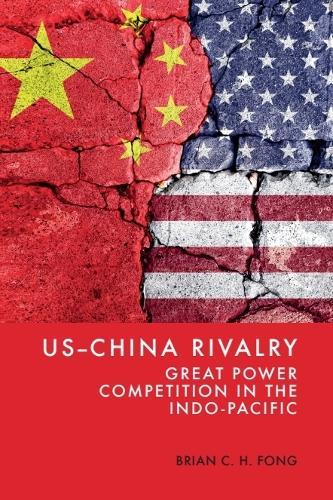
Full Product Details
Author: Brian C. H. Fong (Professor, National Sun Yat-sen University, Taiwan)
Publisher: Edinburgh University Press
Imprint: Edinburgh University Press
ISBN: 9781399534178
ISBN 10: 1399534173
Pages: 344
Publication Date: 31 May 2026
Audience:
General/trade
,
General
Format: Paperback
Publisher's Status: Forthcoming
Availability: Not yet available

This item is yet to be released. You can pre-order this item and we will dispatch it to you upon its release.
Reviews
Armed with a theoretical construct of “neo-offensive realism”, Brian C. H. Fong shows that US-China competition is not only the result of system-level changes in relative power distribution. It is also shaped by the unit-level forces within the two great powers, especially their geopolitical locations and evolving ideologies. This book is a precious resource for all people who want to understand US-China relations. -- Andrew J. Nathan, Columbia University Brian C. H. Fong takes the reader on a detailed interrogation of a series of compelling case studies across the Indo-Pacific region to demonstrate how US-China rivalries could unleash a suite of future scenarios. Fong’s commitment to neo-offensive realism offers a compelling example of why it matters that we take seriously system-level power distribution. -- Klaus Dodds, Royal Holloway University of London Timely and highly relevant in this intensifying era of great power competition between the United States, China and Russia, US-China Rivalry: Great Power Competition in the Indo-Pacific sketches the important features of the increasingly tense Sino-American competitive dyad unfolding across the Indo-Pacific region. Policymakers, diplomats, military leaders, and all with an interest in managing the Sino-American rivalry toward safe-harbour should find this book both informative and an essential read. -- Thomas F. Lynch III, U.S. National Defense University Modifying John Mearsheimer’s ‘offensive realism’, Fong offers a more comprehensive picture of the competitive dynamics of the region. In particular, the book lays out possible future scenarios and discusses specific conditions under which each scenario is more likely to prevail. Cogently written—yet closely walking on the path of the traditional IR theories—the book is also empirically rich and bold in offering insights into the region’s future. It appeals to a broad range of readers. -- Yoichiro Sato, Ritsumeikan Asia Pacific University The book offers a brilliant analysis of the US-China rivalry in the Indo-Pacific. Professor Fong’s groundbreaking contribution to the understanding of the two superpowers’ expanding influence in the region is indeed revealing. It is a must read for academia, graduate students, researchers, diplomatic community and public policy makers. -- B. M. Jain, author of The Geopsychology Theory of International Relations in the 21st Century A methodologically rigorous and theoretically ambitious study that enhances our understanding of U.S.–China relations...Fong’s work is a significant contribution to the field, offering profound insights for scholars and policymakers alike and underscoring U.S.–China competition as one of the defining challenges of the twenty-first century. -- Stefan Messingschlager * Politische Vierteljahresschrift * Brian Fong offers an all-too-uncommon marriage of parsimonious theory and its credible application to empirical reality in what is arguably the world’s most contested, high-stakes region today and for the foreseeable future. His scholarly analysis identifies and traces essential elements that policy-makers face and must understand beyond the fleeting manifestations they perceive in a given context. This is a brilliant and timely book. -- Andrew S. Erickson * Professor of Strategy, China Maritime Studies Institute, U.S. Naval War College * US-China Rivalry is a well-researched and empirically rich study that covers a wide range of cases. While Fong emphasizes system-level forces as the primary drivers of great-power politics, he also demonstrates how unit-level forces can accelerate or slow a state’s responses, reinforcing but not replacing a structural realist explanation. A key contribution of the book is its examination of great-power competition beyond military dynamics over states and quasi-states, particularly through economic means and influence. Fong offers a wealth of empirical detail on where and how great powers compete for influence, while his scenario analysis provides valuable policy insights for the future. -- Yuan-kang Wang * Professor of Political Science at Western Michigan University * Brian Fong has offered a timely contribution to the debates on Asia’s geopolitical future. He usefully contextualizes the United States and China’s twenty-first century rivalry against the past “great games” and great power struggles of the nineteenth and twentieth centuries. Most of all, his neo-offensive realism is a welcome effort to better integrate state-level characteristics into its structural analysis. -- Alice D. Ba * Professor of Political Science and International Relations at the University of Delaware * A timely and impressive volume in terms of its analytical scope and empirical depth. The book’s main strength lies in its effective synthesis of system-level and unit-level factors behind US-China competition by meticulously compiling a wide array of quantitative and qualitative data pertaining to the two great powers’ intensifying rivalry in the Indo-Pacific. Fong’s analysis effectively covers both the military and economic domains in which US-China rivalry takes place in various subregions of the Indo-Pacific, as both nations interact with a wide group of middle, small, associated, and quasi-states of the region. -- Alice D. Ba, Andrew S. Erickson and Yuan-kang Wang * The Jervis Forum *
Armed with a theoretical construct of “neo-offensive realism”, Brian C. H. Fong shows that US-China competition is not only the result of system-level changes in relative power distribution. It is also shaped by the unit-level forces within the two great powers, especially their geopolitical locations and evolving ideologies. This book is a precious resource for all people who want to understand US-China relations. -- Andrew J. Nathan, Columbia University Brian C. H. Fong takes the reader on a detailed interrogation of a series of compelling case studies across the Indo-Pacific region to demonstrate how US-China rivalries could unleash a suite of future scenarios. Fong’s commitment to neo-offensive realism offers a compelling example of why it matters that we take seriously system-level power distribution. -- Klaus Dodds, Royal Holloway University of London Timely and highly relevant in this intensifying era of great power competition between the United States, China and Russia, US-China Rivalry: Great Power Competition in the Indo-Pacific sketches the important features of the increasingly tense Sino-American competitive dyad unfolding across the Indo-Pacific region. Policymakers, diplomats, military leaders, and all with an interest in managing the Sino-American rivalry toward safe-harbour should find this book both informative and an essential read. -- Thomas F. Lynch III, U.S. National Defense University Modifying John Mearsheimer’s ‘offensive realism’, Fong offers a more comprehensive picture of the competitive dynamics of the region. In particular, the book lays out possible future scenarios and discusses specific conditions under which each scenario is more likely to prevail. Cogently written—yet closely walking on the path of the traditional IR theories—the book is also empirically rich and bold in offering insights into the region’s future. It appeals to a broad range of readers. -- Yoichiro Sato, Ritsumeikan Asia Pacific University The book offers a brilliant analysis of the US-China rivalry in the Indo-Pacific. Professor Fong’s groundbreaking contribution to the understanding of the two superpowers’ expanding influence in the region is indeed revealing. It is a must read for academia, graduate students, researchers, diplomatic community and public policy makers. -- B. M. Jain, author of The Geopsychology Theory of International Relations in the 21st Century A methodologically rigorous and theoretically ambitious study that enhances our understanding of U.S.–China relations...Fong’s work is a significant contribution to the field, offering profound insights for scholars and policymakers alike and underscoring U.S.–China competition as one of the defining challenges of the twenty-first century. -- Stefan Messingschlager * Politische Vierteljahresschrift * Brian Fong offers an all-too-uncommon marriage of parsimonious theory and its credible application to empirical reality in what is arguably the world’s most contested, high-stakes region today and for the foreseeable future. His scholarly analysis identifies and traces essential elements that policy-makers face and must understand beyond the fleeting manifestations they perceive in a given context. This is a brilliant and timely book. -- Andrew S. Erickson * Professor of Strategy, China Maritime Studies Institute, U.S. Naval War College * US-China Rivalry is a well-researched and empirically rich study that covers a wide range of cases. While Fong emphasizes system-level forces as the primary drivers of great-power politics, he also demonstrates how unit-level forces can accelerate or slow a state’s responses, reinforcing but not replacing a structural realist explanation. A key contribution of the book is its examination of great-power competition beyond military dynamics over states and quasi-states, particularly through economic means and influence. Fong offers a wealth of empirical detail on where and how great powers compete for influence, while his scenario analysis provides valuable policy insights for the future. -- Yuan-kang Wang * Professor of Political Science at Western Michigan University * Brian Fong has offered a timely contribution to the debates on Asia’s geopolitical future. He usefully contextualizes the United States and China’s twenty-first century rivalry against the past “great games” and great power struggles of the nineteenth and twentieth centuries. Most of all, his neo-offensive realism is a welcome effort to better integrate state-level characteristics into its structural analysis. -- Alice D. Ba * Professor of Political Science and International Relations at the University of Delaware * This outstanding book makes a major contribution to the growing literature on the United States–China competition. Fong superbly integrates system-level and unit-level explanations of state behavior, answering three questions: why, where, and how the United States and China compete in the Indo-Pacific region. Summing Up: Highly recommended. Advanced undergraduates through faculty; professionals. -- M. E. Carranza * CHOICE *
Armed with a theoretical construct of “neo-offensive realism”, Brian C. H. Fong shows that US-China competition is not only the result of system-level changes in relative power distribution. It is also shaped by the unit-level forces within the two great powers, especially their geopolitical locations and evolving ideologies. This book is a precious resource for all people who want to understand US-China relations. -- Andrew J. Nathan, Columbia University Brian C. H. Fong takes the reader on a detailed interrogation of a series of compelling case studies across the Indo-Pacific region to demonstrate how US-China rivalries could unleash a suite of future scenarios. Fong’s commitment to neo-offensive realism offers a compelling example of why it matters that we take seriously system-level power distribution. -- Klaus Dodds, Royal Holloway University of London Timely and highly relevant in this intensifying era of great power competition between the United States, China and Russia, US-China Rivalry: Great Power Competition in the Indo-Pacific sketches the important features of the increasingly tense Sino-American competitive dyad unfolding across the Indo-Pacific region. Policymakers, diplomats, military leaders, and all with an interest in managing the Sino-American rivalry toward safe-harbour should find this book both informative and an essential read. -- Thomas F. Lynch III, U.S. National Defense University Modifying John Mearsheimer’s ‘offensive realism’, Fong offers a more comprehensive picture of the competitive dynamics of the region. In particular, the book lays out possible future scenarios and discusses specific conditions under which each scenario is more likely to prevail. Cogently written—yet closely walking on the path of the traditional IR theories—the book is also empirically rich and bold in offering insights into the region’s future. It appeals to a broad range of readers. -- Yoichiro Sato, Ritsumeikan Asia Pacific University The book offers a brilliant analysis of the US-China rivalry in the Indo-Pacific. Professor Fong’s groundbreaking contribution to the understanding of the two superpowers’ expanding influence in the region is indeed revealing. It is a must read for academia, graduate students, researchers, diplomatic community and public policy makers. -- B. M. Jain, author of The Geopsychology Theory of International Relations in the 21st Century A methodologically rigorous and theoretically ambitious study that enhances our understanding of U.S.–China relations...Fong’s work is a significant contribution to the field, offering profound insights for scholars and policymakers alike and underscoring U.S.–China competition as one of the defining challenges of the twenty-first century. -- Stefan Messingschlager * Politische Vierteljahresschrift * Brian Fong offers an all-too-uncommon marriage of parsimonious theory and its credible application to empirical reality in what is arguably the world’s most contested, high-stakes region today and for the foreseeable future. His scholarly analysis identifies and traces essential elements that policy-makers face and must understand beyond the fleeting manifestations they perceive in a given context. This is a brilliant and timely book. -- Andrew S. Erickson * Professor of Strategy, China Maritime Studies Institute, U.S. Naval War College * US-China Rivalry is a well-researched and empirically rich study that covers a wide range of cases. While Fong emphasizes system-level forces as the primary drivers of great-power politics, he also demonstrates how unit-level forces can accelerate or slow a state’s responses, reinforcing but not replacing a structural realist explanation. A key contribution of the book is its examination of great-power competition beyond military dynamics over states and quasi-states, particularly through economic means and influence. Fong offers a wealth of empirical detail on where and how great powers compete for influence, while his scenario analysis provides valuable policy insights for the future. -- Yuan-kang Wang * Professor of Political Science at Western Michigan University * Brian Fong has offered a timely contribution to the debates on Asia’s geopolitical future. He usefully contextualizes the United States and China’s twenty-first century rivalry against the past “great games” and great power struggles of the nineteenth and twentieth centuries. Most of all, his neo-offensive realism is a welcome effort to better integrate state-level characteristics into its structural analysis. -- Alice D. Ba * Professor of Political Science and International Relations at the University of Delaware *
Author Information
Brian C. H. Fong is Distinguished Professor and Associate Dean of College of Social Sciences at National Sun Yat-sen University (Taiwan).