Overview
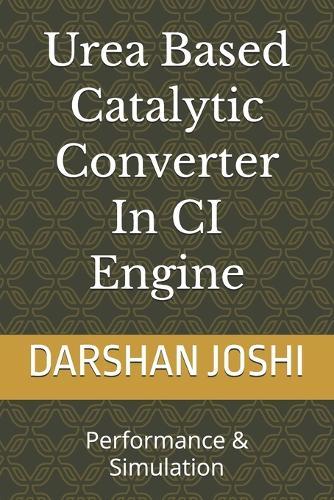
It sounds like you're working on a study or project related to urea-based catalytic converters (commonly used in diesel engines). Let me break this down clearly so you can build a solid understanding-or even structure a report or simulation work. What You're Referring ToA urea-based catalytic converter is part of a system called Selective Catalytic Reduction (SCR), widely used in CI (Compression Ignition) engines, i.e., diesel engines. It reduces harmful nitrogen oxides (NOx) emissions by injecting a urea solution (often called Diesel Exhaust Fluid (DEF)) into the exhaust. Working Principle Injection of Urea Solution DEF (32.5% urea + water) is sprayed into hot exhaust gases. Thermal Decomposition Urea decomposes into ammonia (NH₃) and CO₂ (NH2)2CO→NH3+HNCO(NH_2)_2CO → NH_3 + HNCO(NH2)2CO→NH3+HNCO HNCO+H2O→NH3+CO2HNCO + H_2O → NH_3 + CO_2HNCO+H2O→NH3+CO2 Catalytic Reaction Ammonia reacts with NOx over a catalyst: 4NO+4NH3+O2→4N2+6H2O4NO + 4NH_3 + O_2 → 4N_2 + 6H_2O4NO+4NH3+O2→4N2+6H2O Result Harmful NOx → harmless nitrogen (N₂) and water vapor Performance Parameters to StudyWhen analyzing performance, focus on: 1. NOx Conversion Efficiency Percentage reduction of NOx Typically 70-95% in well-optimized SCR systems 2. Ammonia Slip Excess NH₃ leaving exhaust (undesirable) Controlled using ammonia slip catalysts 3. Temperature Window Optimal: 200°C - 450°C Too low → incomplete decomposition Too high → ammonia oxidation 4. Urea Dosing Rate Critical for efficiency vs emissions trade-off 5. Pressure Drop Affects engine backpressure and fuel efficiency Simulation AspectsFor simulation, researchers often use: ANSYS Fluent GT-Power MATLAB / Simulink Key Models in Simulation: Flow Dynamics (CFD) Exhaust gas velocity, turbulence Spray Modeling Urea droplet size, evaporation Chemical Kinetics Reaction rates of NOx reduction Catalyst Modeling Surface reactions and efficiency Typical Simulation Workflow Geometry creation (exhaust + SCR chamber) Mesh generation Boundary conditions: Exhaust temperature Flow rate NOx concentration Urea injection modeling Reaction mechanism setup Solver execution Post-processing: NOx conversion plots NH₃ slip temperature distribution Key Challenges Urea crystallization at low temperatures Non-uniform ammonia distribution Catalyst aging Real-time control of dosing Applications Heavy-duty trucks Agricultural engines Power generators Marine diesel engines
Full Product Details
Author: Darshan Pravinkumar Joshi
Publisher: Independently Published
Imprint: Independently Published
Dimensions:
Width: 15.20cm
, Height: 0.60cm
, Length: 22.90cm
Weight: 0.163kg
ISBN: 9798259477667
Pages: 116
Publication Date: 30 April 2026
Audience:
General/trade
,
General
Format: Paperback
Publisher's Status: Active
Availability: Available To Order

We have confirmation that this item is in stock with the supplier. It will be ordered in for you and dispatched immediately.