|
|
|||
|
||||
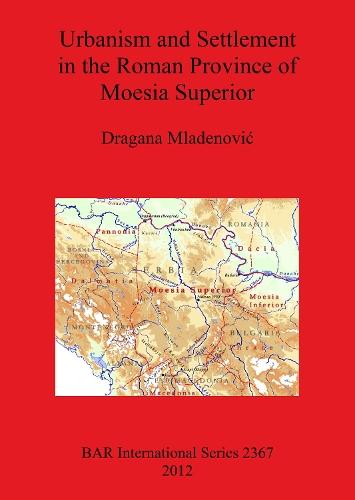
OverviewThe study presented here therefore represents an analysis of just one aspect of observed cultural change, that of settlement patterns, and comprises in the main part of a geo-referenced Site Gazetteer, compiled to study changes in settlement patterns. The data is provided in the main as a platform for further research and analysis, and in the first instance this book thus provides a compilation of primary data with comprehensive bibliographies for further research for those with an interest in the pre-Roman and Roman settlement of the Central Balkans. In the chapters that precede the Gazetteer an analysis of the settlement patterns is presented and discussed, contextualizing the results and providing interpretation. For the reader not familiar with the historical geography of the region the opening sections provide a necessary background with references for further reading. Full Product DetailsAuthor: Dragana MladenoviPublisher: BAR Publishing Imprint: BAR Publishing Volume: 2367 Dimensions: Width: 21.00cm , Height: 1.80cm , Length: 29.70cm Weight: 1.053kg ISBN: 9781407309545ISBN 10: 1407309544 Pages: 264 Publication Date: 15 May 2012 Audience: College/higher education , Postgraduate, Research & Scholarly Format: Paperback Publisher's Status: Active Availability: Available To Order We have confirmation that this item is in stock with the supplier. It will be ordered in for you and dispatched immediately. Table of ContentsReviewsThe central Balkan province of Moesia Superior (more or less the modern Republic of Serbia) does not generally figure in studies of the history and archaeology of the Roman Empire, despite its being the homeland of the Illyrian emperors who refashioned the Roman world in the third century. The pioneering surveys of settlement by Kanitz, Vulic, Garasanin, Maric, and others have rarely impacted on the wider world of late Iron Age and Roman Archaeology, while English-speaking scholars have tended to rely on the syntheses by the Hungarian Andras Mocsy (1970 and 1974). That long-standing deficiency is now remedied in full by this fullscale analysis of the archaeological, historical and epigraphic evidence for Late Iron Age and Roman Moesia Superior. It brings into a sharper definition the changing nature of rural settlement and the problematic role of mining and the military garrison in the central Balkans. In sum, future studies of these and other themes will have a firm foundation on which to rest, that should also serve as a model for adjacent territories where, though abundant, no synthesis of a comparable quality is yet available. John Wilkes, Emeritus Professor of Greek and Roman Archaeology, University College London Blank Author InformationDragana Mladenovic Tab Content 6Author Website:Countries AvailableAll regions |
||||