Overview
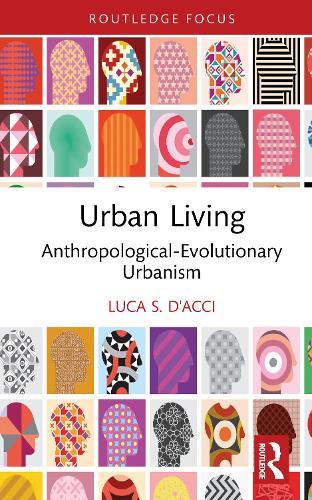
This interdisciplinary book lays the foundations for a new critique of human societies examining how humans, as a species, are suited to live across the rural-urban spectrum. It proposes a new perspective for urban studies, ultimately centred on human nature. Evolutionary perspectives are at the core of the book and are linked to other disciplines such as economic geography, sociology, anthropology, geographical psychology, environmental psychology, genetics, and ontogenetics. The book summarises the academic state of the art of the various fields under discussion, each expressing its own angle which, when holistically presented in the same volume, enriches the integrated understanding of such a multilayered theme. The timing of this book is critical: today, more than ever, we live in urban environments of some description or other and, within the coming decades, large numbers of new dwellers will ""choose"" cities as their permanent place of residence. For this reason, the author argues that urban planning and design must embrace this unique opportunity to build ex-novo urban and non-urban settlements for billions of people in liveable ways. The interdisciplinary approach brings together the study and understanding of cities from diverse disciplines. This topical work therefore offers the reader a new understanding of how – and tentatively, why – living in cities affects humans for better or worse. It indirectly underlines the importance of smaller settlements based on empirical evidence, without necessarily having to escape from the big city, which instead could become more attractive if wisely planned and integrated in the larger multivariate territory. The author provides educated insights for policy and planning, inducing habitats which could be optimal for our wellbeing and progress. Luca S. D'Acci is Associate Professor at the Polytechnic of Turin (DIST), Honorary Fellow at the University of Birmingham (EPS), and Partner (Visiting Professor) at the Erasmus University of Rotterdam (EHERO).
Full Product Details
Author: Luca S. D'Acci
Publisher: Taylor & Francis Ltd
Imprint: Routledge
ISBN: 9781032408606
ISBN 10: 103240860
Pages: 186
Publication Date: 01 May 2026
Audience:
College/higher education
,
Tertiary & Higher Education
Format: Hardback
Publisher's Status: Forthcoming
Availability: Not yet available

This item is yet to be released. You can pre-order this item and we will dispatch it to you upon its release.
Reviews
... a book that has never finished saying what it has to say'... intriguing... essential reflections... emerging theme By the end of this century, most of us will be living in cities of one size or another but they are forever changing in their composition and shape. Their form is never final, Luca D’Acci’s review of multiple forces that coalesce in the places we inhabit which he entitles Anthropological Evolutionary Urbanism, reflects Italo Calvino’s classic dictum of ‘ … a book that has never finished saying what it has to say’. What is intriguing in his treatise is the echo that haunts us down the ages, of phenomenon that is always contingent, hence unpredictable and temporal, which is a theme that we are only slowly beginning to recognise in our search for stable patterns of urban life. This book provides essential reflections on this emerging theme. — Michael Batty (Urban Analyst), CBE FRS FBA, Emeritus Bartlett Professor of Planning at University College London where he is Chair of the Centre for Advanced Spatial Analysis (CASA). Four honorary doctorates and a Vautrin Lud Prize winner (known as the Nobel Prize of Geography). .. well-informed and provocative... These ideas can stimulate progress Luca D’Acci’s latest book, well-informed and provocative, poses important questions about the impact of urban living on mental health, happiness, and the meaning that we create in our lives by making choices and investing in them. It draws on insights from multiple disciplines to make the argument that many of us are happier living in the country, small towns, or small cities than in large ones, and it raises the possibility that we may not, in the future, have to trade those environments for successful careers as technology continues to free us from prior constraints. It is well worth the read. These ideas can stimulate progress. — Stephen C. Stearns (Evolutionary Biologist), Professor Emeritus of Ecology and Evolutionary Biology, Yale University, former President of the European Society for Evolutionary Biology, and ex vice-President of the Society for the Study of Evolution, founding editor of the Journal of Evolutionary Biology and of Evolution, Medicine, and Public Health, and author of Life History Evolution and of Evolutionary Medicine. Honorary doctorate from the University of Zurich. ... novelty, breadth and depth of thinking This book reflects on a personal journey that the author has taken over the last 10 years. It emphasises the importance of scale and diversity in urban form, suggesting that there is no ideal but only differences. A strong case is made for taking an holistic approach that integrates perspectives from a range of social, medical and natural sciences. The book is well worth reading for its novelty, breadth and depth of thinking. — David Banister (Geographer), Professor Emeritus at School of Geography and the Environment, University of Oxford, former Director of the Environmental Change Institute, and of the Transport Studies Unit. Thought-provoking and inspirational, D’Acci is like a ‘Renaissance man’ painting on a big urban canvas with an eye for the human-scale detail Urban Living distils thousands of years of history and millions of years of human evolution into a compelling perspective for the creation of the urban habitat. The book provides a welcome excursion away from the quotidian utilitarianism of much urban research, to step back to ask big philosophical questions, of how to live a good life, urbanistically – or how can we make cities better fitted to us? D’Acci invites us to imagine what scale or kind of settlement we would like to live in – from villages to megacities – drawing from a remarkable breadth of disciplines, from philosophy to neuroscience and evolutionary history. Thought-provoking and inspirational, D’Acci is like a ‘Renaissance man’ painting on a big urban canvas, but with an eye for the personal human-scale detail. — Stephen Marshall (Urbanist), Professor of Urban Morphology and Urban Design at Bartlett School of Planning, University College London. Author of Cities, Design and Evolution. could not be more timely... compelling This book could not be more timely. As cities expand worldwide, understanding how they shape our minds and well-being has become a central challenge. Drawing on the latest findings from neuroscience, psychology, anthropology, and urban studies, Luca D’Acci offers a compelling synthesis of how modern urban life interacts with brains that evolved for very different environments. Rather than idealizing or condemning urbanization, Urban Living integrates diverse evidence into a thoughtful assessment of the opportunities and risks of city life, and how these might be managed through better design and policy. The result is an helpful guide to how humans can thrive in habitats that are, in evolutionary terms, still very new to us. —Andreas Meyer-Lindenberg (Psychiatrist, Neuroscientist), Director of the Central Institute of Mental Health in Mannheim and Professor at Heidelberg University; Editor-in-Chief of Neuroscience Applied and laureate of awards including the ECNP Neuropsychopharmacology Award, Prix Roger de Spoelberch, and Robert Sommer Medal. ... fascinating... great reading What is it like for a great ape - furless, but not fearless - to find itself in a novel environment that in many ways deviates from the environment in which it evolved? Does the new environment impact its well-being or its physical and mental health? ""Urban living”, as we learn from the book by Luca S. D’Acci, is indeed challenging for a creature with our behavioural and genetic make-up. But it is also full of opportunities - otherwise it would not have happened that the majority of members of our species nowadays seem to ""prefer"" urban life over rural. Luca S. D’Acci has reviewed a huge amount of information and digested it for us readers in the form of a fascinating book on urban living from an anthropological and evolutionary perspective. This is great reading that I highly recommend. — Martin Brüne (Psychiatrist, Psychotherapist, and Neurologist), Professor of Psychiatry and Head of the Division of Social Neuropsychiatry and Evolutionary Medicine at the LWL University-Hospital, Ruhr University Bochum. Author of Evolutionary Psychiatry and Psychosomatic Medicine, and co-editor of The Oxford Handbook of Evolutionary Medicine, and of The Evolutionary Roots of Human Brain Diseases. ... pathbreaking... much-needed assessment Darwin’s study of moths in 19th century Birmingham, England proved that evolution did not cease with urbanization. The epigenetic revolution reveals that genes are not simply inherited and expressed but expressed and even changed (via methylation) through interactions with the environment. With global urbanization currently at 58% and rising, the environment for humans is increasingly urban. D’Acci’s pathbreaking book Urban Living offers a much-needed assessment of what scientist have learned about human adaptation, development, and evolution in urban settings. — Douglas .S. Massey (Sociologist), Henry G. Bryant Professor at Princeton University, former President of the American Sociological Association, and 2025 Princess of Asturias Laureate for Social Sciences. Author of Strangers in a Strange Land: Humans in an Urbanizing World. ... ambitious... enduring value Luca D’Acci’s Urban Living is an ambitious interdisciplinary inquiry into how cities shape human life, spanning evolutionary anthropology, psychology, neuroscience, primatology, and sociology. For me, its enduring value is the truth it names: survival is not the same as flourishing. True flourishing calls for cities that join their Neolithic gift—the vibrant intermixing of peoples and ideas—with our older Paleolithic inheritance: nature still visible, tangible, and wild. — Peter H. Kahn, Jr. (Psychologist), Professor of Psychology and Environmental and Forest Sciences, and Director of the Human Interaction with Nature and Technological Systems (HINTS) Lab at the University of Washington. Author of Technological Nature: Adaptation and the Future of Human Life.
... a book that has never finished saying what it has to say'... intriguing... essential reflections... emerging theme By the end of this century, most of us will be living in cities of one size or another but they are forever changing in their composition and shape. Their form is never final, Luca D’Acci’s review of multiple forces that coalesce in the places we inhabit which he entitles Anthropological Evolutionary Urbanism, reflects Italo Calvino’s classic dictum of ‘ … a book that has never finished saying what it has to say’. What is intriguing in his treatise is the echo that haunts us down the ages, of phenomenon that is always contingent, hence unpredictable and temporal, which is a theme that we are only slowly beginning to recognise in our search for stable patterns of urban life. This book provide essential reflections on this emerging theme. Michael Batty (Urban Analyst) CBE FRS FBA, Emeritus Bartlett Professor of Planning at University College London where he is Chair of the Centre for Advanced Spatial Analysis (CASA). Four honorary doctorates and a Vautrin Lud Prize winner (known as the Nobel Prize of Geography). .. well-informed and provocative... These ideas can stimulate progress Luca D’Acci’s latest book, well-informed and provocative, poses important questions about the impact of urban living on mental health, happiness, and the meaning that we create in our lives by making choices and investing in them. It draws on insights from multiple disciplines to make the argument that many of us are happier living in the country, small towns, or small cities than in large ones, and it raises the possibility that we may not, in the future, have to trade those environments for successful careers as technology continues to free us from prior constraints. It is well worth the read. These ideas can stimulate progress. Stephen C. Stearns (Evolutionary Biologist) Professor Emeritus of Ecology and Evolutionary Biology, Yale University, former President of the European Society for Evolutionary Biology, and ex vice-President of the Society for the Study of Evolution, founding editor of the Journal of Evolutionary Biology and of Evolution, Medicine, and Public Health, and author of Life History Evolution and of Evolutionary Medicine. Honorary doctorate from the University of Zurich. ... novelty, breadth and depth of thinking This book reflects on a personal journey that the author has taken over the last 10 years. It emphasises the importance of scale and diversity in urban form, suggesting that there is no ideal but only differences. A strong case is made for taking an holistic approach that integrates perspectives from a range of social, medical and natural sciences. The book is well worth reading for its novelty, breadth and depth of thinking. David Banister (Geographer) Professor Emeritus at School of Geography and the Environment, University of Oxford, former Director of the Environmental Change Institute, and of the Transport Studies Unit. Thought-provoking and inspirational, D’Acci is like a ‘Renaissance man’ painting on a big urban canvas with an eye for the human-scale detail Urban Living distils thousands of years of history and millions of years of human evolution into a compelling perspective for the creation of the urban habitat. The book provides a welcome excursion away from the quotidian utilitarianism of much urban research, to step back to ask big philosophical questions, of how to live a good life, urbanistically – or how can we make cities better fitted to us? D’Acci invites us to imagine what scale or kind of settlement we would like to live in – from villages to megacities – drawing from a remarkable breadth of disciplines, from philosophy to neuroscience and evolutionary history. Thought-provoking and inspirational, D’Acci is like a ‘Renaissance man’ painting on a big urban canvas, but with an eye for the personal human-scale detail. Stephen Marshall (Urbanist) Professor of Urban Morphology and Urban Design at Bartlett School of Planning, University College London. Author of Cities, Design and Evolution. could not be more timely... compelling This book could not be more timely. As cities expand worldwide, understanding how they shape our minds and well-being has become a central challenge. Drawing on the latest findings from neuroscience, psychology, anthropology, and urban studies, Luca D’Acci offers a compelling synthesis of how modern urban life interacts with brains that evolved for very different environments. Rather than idealizing or condemning urbanization, Urban Living integrates diverse evidence into a thoughtful assessment of the opportunities and risks of city life, and how these might be managed through better design and policy. The result is an helpful guide to how humans can thrive in habitats that are, in evolutionary terms, still very new to us. Andreas Meyer-Lindenberg (Psychiatrist, Neuroscientist) Director of the Central Institute of Mental Health in Mannheim and Professor at Heidelberg University; Editor-in-Chief of Neuroscience Applied and laureate of awards including the ECNP Neuropsychopharmacology Award, Prix Roger de Spoelberch, and Robert Sommer Medal. ... fascinating... great reading What is it like for a great ape - furless, but not fearless - to find itself in a novel environment that in many ways deviates from the environment in which it evolved? Does the new environment impact its well-being or its physical and mental health? ""Urban living”, as we learn from the book by Luca S. D’Acci, is indeed challenging for a creature with our behavioural and genetic make-up. But it is also full of opportunities - otherwise it would not have happened that the majority of members of our species nowadays seem to ""prefer"" urban life over rural. Luca S. D’Acci has reviewed a huge amount of information and digested it for us readers in the form of a fascinating book on urban living from an anthropological and evolutionary perspective. This is great reading that I highly recommend. Martin Brüne (Psychiatrist, Psychotherapist, and Neurologist) Professor of Psychiatry and Head of the Division of Social Neuropsychiatry and Evolutionary Medicine at the LWL University-Hospital, Ruhr University Bochum. Author of Evolutionary Psychiatry and Psychosomatic Medicine, and co-editor of The Oxford Handbook of Evolutionary Medicine, and of The Evolutionary Roots of Human Brain Diseases. ... pathbreaking... much-needed assessment Darwin’s study of moths in 19th century Birmingham, England proved that evolution did not cease with urbanization. The epigenetic revolution reveals that genes are not simply inherited and expressed but expressed and even changed (via methylation) through interactions with the environment. With global urbanization currently at 58% and rising, the environment for humans is increasingly urban. D’Acci’s pathbreaking book Urban Living offers a much-needed assessment of what scientist have learned about human adaptation, development, and evolution in urban settings. Douglas .S. Massey (Sociologist) Henry G. Bryant Professor at Princeton University, former President of the American Sociological Association, and 2025 Princess of Asturias Laureate for Social Sciences. Author of Strangers in a Strange Land: Humans in an Urbanizing World. ... ambitious... enduring value Luca D’Acci’s Urban Living is an ambitious interdisciplinary inquiry into how cities shape human life, spanning evolutionary anthropology, psychology, neuroscience, primatology, and sociology. For me, its enduring value is the truth it names: survival is not the same as flourishing. True flourishing calls for cities that join their Neolithic gift—the vibrant intermixing of peoples and ideas—with our older Paleolithic inheritance: nature still visible, tangible, and wild. Peter H. Kahn, Jr. (Psychologist) Professor of Psychology and Environmental and Forest Sciences, and Director of the Human Interaction with Nature and Technological Systems (HINTS) Lab at the University of Washington. Author of Technological Nature: Adaptation and the Future of Human Life.
Author Information
Luca S. D'Acci is Associate Professor at the Polytechnic of Turin (DIST), Honorary Fellow at the University of Birmingham (EPS), and Partner (Visiting Professor) at the Erasmus University of Rotterdam (EHERO).