Overview
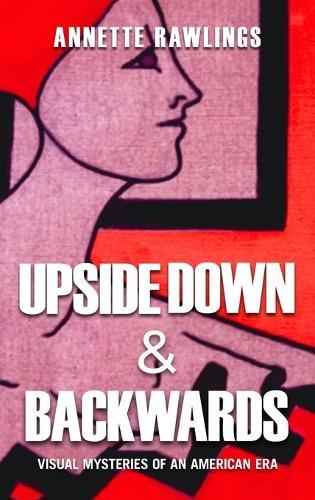
As a product of the 60's, artist Annette Rawlings associated with many of the actors, rock stars, writers and innovators who changed the course of American culture David Crosby, Patti Smith, Tennessee Williams and Timothy Leary, just to name a few. Through experiences with these and other prominent people, Annette became caught up in a creative wave that was greatly influenced by the colors and cultural atmosphere of Miami. The culmination of this creativity is seen in her art and elucidated in her book. Her art reflects such experiences as spending a year in the jungles of Central America and living a year at the Plaza Hotel in New York City. Readers will share the anguish and joys as well as the simplicity and complexity that are portrayed in her art, which has been displayed in such places as the Miami Art Museum, Art Basel, Virginia Miller Galleries and the Louvre in Paris.
Full Product Details
Author: Annette Rawlings
Publisher: Annette Rawlings Books
Imprint: Annette Rawlings Books
Dimensions:
Width: 15.20cm
, Height: 2.50cm
, Length: 22.90cm
Weight: 0.730kg
ISBN: 9781970901085
ISBN 10: 197090108
Pages: 310
Publication Date: 24 April 2026
Audience:
General/trade
,
General
Format: Hardback
Publisher's Status: Active
Availability: Available To Order

We have confirmation that this item is in stock with the supplier. It will be ordered in for you and dispatched immediately.
Author Information
Born at the end of World War II into a highly dysfunctional Southern family, Annette Rawlings experienced a difficult and unstable childhood. Abandoned at birth, she was raised by her grandparents before being reclaimed by her mother at age three. Neglect in her early years led to further hardship, including her kidnapping at age 12, followed by a forced arranged marriage at 16 and homelessness at 17. Despite these challenges, she became a self-made individual defined by resilience and determination.By age 19, Annette was working three jobs while attending two schools full-time-the University of Miami and the New School of Fine Art. Her life reflects a strong pioneer spirit marked by perseverance and fortitude. On her mother's side (Williams), she was told her great-grandfather, Green Williams, fought in the Civil War and had Cherokee ancestry. She is also a DAR (Daughters of the American Revolution) member. On her father's side (Rawlings), family stories linked her lineage to Pulitzer Prize-winning author Marjorie Kinnan Rawlings, known for The Yearling. She was told there was only one Rawlings family that came over, which she believes may help explain her creativity and resilience.As a product of the 1960s, Annette Rawlings was part of a vibrant cultural scene in Coconut Grove, Miami, where she lived and worked. She held a night job at the Gas Light Coffee House and was surrounded by influential artists and creatives. Her neighbor was Tennessee Williams, and actor Kiel Mueller-later known as Kiel Martin of Hill Street Blues-also lived in the area. David Crosby frequently visited the Grove, where he met Joni Mitchell, and later became part of Crosby, Stills & Nash. Fred Neil, who wrote ""Everybody's Talking,"" also lived and performed there. Timothy Leary was known to visit, further contributing to the area's experimental cultural energy.This environment deeply influenced Annette's artistic development. She later spent time in the jungles of Central America and lived for a year at New York's Plaza Hotel. These experiences shaped the emotional depth and visual language of her work, which reflects both simplicity and complexity.Her artistic technique is highly detailed and rooted in traditional Renaissance methods. She stretches linen and secures it with copper tacks, then prepares rabbit skin glue using a double boiler, applying it carefully to seal the surface. She uses handmade oil paints formulated with Renaissance color techniques, applying them with a one-inch brush in a cross-hatching method. Multiple thin layers-sometimes five to seven-are built up depending on color density to achieve an even surface. She finishes her work with copal varnish derived from tree sap, the same natural source that forms amber.Annette avoids using black and white in their pure form. Instead, she uses indigo for black and modifies white with vermillion, chrome yellow, and burnt umber to prevent colors from appearing too harsh or dominant. Her intention is for colors to rest harmoniously beside one another, informed by her study of Renaissance color theory. While her technical process is complex, the simplicity of her work lies in its refined expression of the female form through minimal lines.Nearly everyone she encountered in Coconut Grove supported her creative development, though she also received constructive criticism that helped her grow as an artist. The Grove itself served as an artistic sanctuary from the late 1950s through the early 1980s. The Frost Art Museum in Miami later recognized this creative community through the exhibition Place and Purpose: Art Transformations in Coconut Grove, which featured artists from that era and was shown in the summer of 2021.