Overview
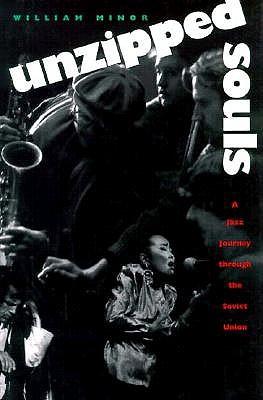
Across 9,000 kilometers and six republics of the former Soviet Union, William Minor embarked on a 'jazz journey' to observe the development of contemporary Russian jazz, as it responded to abundance of cultural changes. A jazz writer and musician himself, Minor sat in on private performances and went backstage at several major festivals, witnessing first-hand the artistic release and creativity of Russian musicians.Throughout his travels, the author interviewed musicians, critics, and fans, and reproduces in his book an intimate sense of their aspirations, struggles, successes; they tell of shared resources, networks, and inventive forums for playing and exchanging information. At the same time, this narrative bespeaks the hard realities of life: the difficulty of getting equipment, the scant number of clubs, and the limited information about the music scene in other parts of the world. Minor's impressions and experiences are a valuable behind-the-scenes look the country and the culture just before the collapse of the communist state.William Minor writes for numerous journals and magazines, including Down Beat , Coda , JazzTimes , and Jazz Forum . He is also a visual artist, professional musician, and instructor in the Humanities Division at Monterey Peninsula College, California.
Full Product Details
Author: William Minor
Publisher: Temple University Press,U.S.
Imprint: Temple University Press,U.S.
Dimensions:
Width: 16.00cm
, Height: 2.30cm
, Length: 23.00cm
Weight: 0.553kg
ISBN: 9781566393249
ISBN 10: 1566393248
Pages: 256
Publication Date: 10 August 1995
Audience:
Professional and scholarly
,
Professional & Vocational
Format: Hardback
Publisher's Status: Active
Availability: Out of stock

The supplier is temporarily out of stock of this item. It will be ordered for you on backorder and shipped when it becomes available.
Reviews
William Minor, taking the reader on a tour of the Soviet jazz circuit in the twilight of communism, personalizes the phenomenon with accounts he gathered from folks who, in the face of seemingly insurmountable obstacles, both participated in carrying off this cultural coup and continue to perpetuate the jazz idiom ... a timely and truly astonishing tale, and, in the author's lucid prose, a charming one as well. --W. Royal Stokes, editor of Jazz Notes
Minor (Humanities/Monterey Peninsula College) combines an unusual set of skills to great advantage in his first book - a knowledge of Russian literature, a background in visual art, and a career as a jazz critic and musician. They've been playing jazz in Russia almost as long as they have in the US, a fact that has been amply documented by jazz historian Frederick Start, a subsidiary character in Minor's book. But what that jazz sounded like with the advent of glasnost was a question that Minor began pondering after hearing some recordings of new Soviet artists. The result, catalogued quite amusingly in this book, was a nine-thousand-kilometer, six-republic, nine-city, two-major-festivals jazz journey through the former Soviet Union. Minor and his wife, Betty, a woman of apparently infinite patience, struck out on their own, away from the package tours and tourists, attending festivals in Moscow and Riga, and interviewing musicians and critics all over the place. The portrait of Soviet jazz that emerges is both heartening and depressing. On the positive side, there are some major talents waiting to be exposed to a wider (i.e., Western) audience. On the negative side, there are shortages of so many basic necessities for making music - reeds for sax players, mouthpieces for brass players - and so many other more basic problems (like huge distances separating musicians from one another) that the promise may go unfulfilled in spite of the hard-won freedoms of the new era. As record producer Leo Feigin tells Minor, You need all this freedom after dinner, not before. Minor tells his story with gentle humor and a great deal of charm, making the book a pleasant journey for the reader as well. (Kirkus Reviews)