Overview
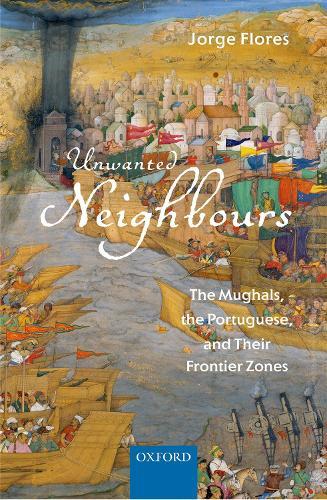
In December 1572 the Mughal emperor Akbar arrived in the port city of Khambayat. Having been raised in distant Kabul, Akbar, in his thirty years, had never been to the ocean. Presumably anxious with the news about the Mughal military campaign in Gujarat, several Portuguese merchants in Khambayat rushed to Akbar's presence. This encounter marked the beginning of a long, complex, and unequal relationship between a continental Muslim empire that was expanding into south India, often looking back to Central Asia, and a European Christian maritime empire whose rulers considered themselves 'kings of the sea'.By the middle of the seventeenth century, these two empires faced each other across thousands of kilometres from Sind to Bijapur, with a supplementary eastern arm in faraway Bengal. Focusing on borderland management, imperial projects, and cross-cultural circulation, this volume delves into the ways in which, between c. 1570 and c. 1640, the Portuguese understood and dealt with their undesirably close neighbours-the Mughals.
Full Product Details
Author: Jorge Flores (Professor, Professor, Early Modern Global Histroy at the European University Institute, Florence, Italy)
Publisher: Oxford University Press
Imprint: Oxford University Press
Dimensions:
Width: 14.80cm
, Height: 2.00cm
, Length: 22.40cm
Weight: 0.490kg
ISBN: 9780199486748
ISBN 10: 0199486743
Pages: 288
Publication Date: 15 November 2018
Audience:
Professional and scholarly
,
Professional & Vocational
Format: Hardback
Publisher's Status: Active
Availability: To order

Stock availability from the supplier is unknown. We will order it for you and ship this item to you once it is received by us.
Reviews
This book draws on a formidable range of Portuguese and Jesuit primary sourcematerial--most of it dating from the late sixteenth through the early seventeenthcenturies--to draw a vivid, highly original picture of the PortugueseEstado da 'India and its relationship with the Mughal empire of that era. * Jorge Flores, Journal of Jesuit Studies *
This book draws on a formidable range of Portuguese and Jesuit primary sourcematerial-most of it dating from the late sixteenth through the early seventeenthcenturies-to draw a vivid, highly original picture of the PortugueseEstado da India and its relationship with the Mughal empire of that era. * Jorge Flores, Journal of Jesuit Studies *
Author Information
Jorge Flores was educated at the University of Lisbon and the New University of Lisbon, Portugal. He is professor of early modern global history at the European University Institute, Florence, Italy. In 2004 he co-curated (with Nuno Vassallo e Silva) the exhibition 'Goa and the Great Mughal' for the Calouste Gulbenkian Museum, Lisbon. He is the author of several books and articles that explore the social and cultural history of the early modern Portuguese Empire in Asia, especially in South Asia and the Central Indian Ocean. Most recently, he has published The Mughal Padshah: A Jesuit Treatise on Emperor Jahangir's Court and Household (2016). Flores is currently preparing the companion volume of Unwanted Neighbours , tentatively titled The Accidental Persianate State: Political Communication between Portuguese Goa and Mughal India.