Overview
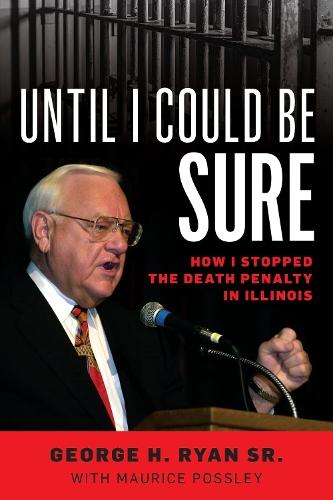
In January 2000, Illinois Governor George Ryan declared a moratorium on executions—the first such action by any governor in the history of the United States. Despite a long history as a death penalty proponent, Ryan was emotionally moved after allowing an execution in 1999. He was also profoundly disturbed by the state’s history—12 men had been executed and 13 had been exonerated since the return of the death penalty in Illinois in 1977. More had been proven innocent than had been executed. Three years later, in 2003, Ryan pardoned four death row inmates based on their actual innocence and then commuted the death sentences of 167 men and women. This was the largest death row commutation in U.S. history. At that time, 12 states and the District of Columbia barred the death penalty. His actions breathed new life into the movement to abolish the death penalty in the United States. Over the next 15 years, Illinois and seven other states would abolish the death penalty—New Jersey, Maryland, New Mexico, Connecticut, Delaware, New York and Washington. Today, the push to reform the criminal justice system has never been stronger in America, a nation that incarcerates more men and women than any other country in the world and also wrongfully convicts hundreds of men and women. Although the number of executions carried out every year continues to drop in the U.S., the death penalty still exists in 31 states. Moreover, in some non-death penalty states, factions seek to reinstate it. Until I Could Be Sure: How I Stopped the Death Penalty in Illinois is, in his own words, the story of George Ryan’s journey from death penalty proponent to death penalty opponent. His story continues to resonate today. He defied the political winds and endured the fury and agony of the families of the victims and the condemned as well as politicians, prosecutors and law enforcement. It is a story of courage and faith. It is a timely reminder of the heroic acts of a Republican Governor who was moved by conscience, his faith and a disturbing factual record of death row exonerations.
Full Product Details
Author: George H. Ryan Sr. ,
Maurice Possley ,
Scott Turow
Publisher: Bloomsbury Publishing Plc
Imprint: Rowman & Littlefield
Dimensions:
Width: 16.10cm
, Height: 2.30cm
, Length: 24.00cm
Weight: 0.585kg
ISBN: 9781538134542
ISBN 10: 1538134543
Pages: 280
Publication Date: 18 September 2020
Audience:
General/trade
,
General
Format: Hardback
Publisher's Status: Active
Availability: Manufactured on demand

We will order this item for you from a manufactured on demand supplier.
Reviews
This book is not only about the death penalty. It is a chronicle that teaches us about integrity, leadership, growth, and the struggle to do the right thing. Those who care to listen will be touched by the lessons from Governor Ryan's journey for decades to come. He leads us on.--Michael L. Radelet, University of Colorado Governor Ryan's actions are a pure beacon of light in a dark era in our nation. His is a resounding voice of conscience in a time of corrosive political maneuvering. As for Gov. Ryan's commutation of the sentences of those on death row - I see this as his most inspiring act of moral courage. He could easily have left the condemned languishing in legal limbo, but he followed his moral stance for a moratorium through to a righteous conclusion for those remaining on death row, freeing them from the anguish and terror of death at the hands of the state. Gov. Ryan's act of moral integrity triumphed over political expediency and has illumined a path for our nation. May we all walk in his light.--Sister Helen Prejean, Author of Dead Man Walking George Ryan's courageous act made our dreams reality. It was, in my view, one of the single most impactful events in propelling the abolition movement forward, making possible the successes we've seen ever since.--Mike Farrell, best known as 'BJ Hunnicutt' of television's legendary M*A*S*H , President of Dealth Penalty Focus, Author of Just Call Me Mike: A Journey to Actor and Activist and Of Mule and Man Illinois put innocence on the map and that is still the most influential issue for many people when it comes to the death penalty.--Richard Dieter, former Executive Director, Death Penalty Information Center Under Governor George Ryan's leadership, Illinois consolidated the forces that diminished the death penalty's use, emboldening the abolition of the death penalty in other states, other governors' moratoria on executions, and prosecutors' decisions across the country to stop using the punishment.--James Liebman, Professor, Columbia Law School, Author of The Wrong Carlos: Anatomy of a Wrongful Execution There's a Greek word--peripeteia-- that describes the moment Governor George Ryan realized everything he believed about the death penalty was wrong. Thirteen innocent men on Illinois' death row had been exonerated and it might only be the beginning. Knowing he would stand alone, George Ryan faced a soul wrenching decision that would shock the nation. It's a story of integrity and a choice made because he believed it was the right thing to do despite life changing odds. This book tells us why he chose the most difficult path. It should be placed on the shelf of every politician in America.--Bill Kurtis, Documentary Producer and Television Anchor
This book is not only about the death penalty. It is a chronicle that teaches us about integrity, leadership, growth, and the struggle to do the right thing. Those who care to listen will be touched by the lessons from Governor Ryan's journey for decades to come. He leads us on. -- Michael L. Radelet, University of Colorado Governor Ryan's actions are a pure beacon of light in a dark era in our nation. His is a resounding voice of conscience in a time of corrosive political maneuvering. As for Gov. Ryan's commutation of the sentences of those on death row - I see this as his most inspiring act of moral courage. He could easily have left the condemned languishing in legal limbo, but he followed his moral stance for a moratorium through to a righteous conclusion for those remaining on death row, freeing them from the anguish and terror of death at the hands of the state. Gov. Ryan's act of moral integrity triumphed over political expediency and has illumined a path for our nation. May we all walk in his light. -- Sister Helen Prejean, Author of Dead Man Walking George Ryan's courageous act made our dreams reality. It was, in my view, one of the single most impactful events in propelling the abolition movement forward, making possible the successes we've seen ever since. -- Mike Farrell, best known as 'BJ Hunnicutt' of television's legendary M*A*S*H , President of Dealth Penalty Focus, Author of Just Call Me Mike: A Journey to Actor and Activist and Of Mule and Man Illinois put innocence on the map and that is still the most influential issue for many people when it comes to the death penalty. -- Richard Dieter, former Executive Director, Death Penalty Information Center Under Governor George Ryan's leadership, Illinois consolidated the forces that diminished the death penalty's use, emboldening the abolition of the death penalty in other states, other governors' moratoria on executions, and prosecutors' decisions across the country to stop using the punishment. -- James Liebman, Professor, Columbia Law School, Author of The Wrong Carlos: Anatomy of a Wrongful Execution
Author Information
George H. Ryan Sr. was the 39th Governor of the State of Illinois. Born in 1934, the son of a pharmacist, Ryan grew up in Kankakee, Illinois. He was first elected to state office in 1972 as an Illinois State Representative. He served two terms as Minority Leader of the House of Representatives and one term as Speaker of the House. He served as Illinois Lieutenant Governor from 1983 to 1991, as Illinois Secretary of State from 1991 to 1999, and then was Governor from 1999 to 2003. Ryan was the first Governor in U.S. history to suspend the death penalty, declaring a moratorium in 2000. In 2003, as he left office, Ryan emptied death row in Illinois by issuing a blanket commutation order. He was indicted in 2003 and convicted of federal corruption charges relating to conduct while he was Illinois Secretary of State. He served nearly six years in prison and was released in 2013. Age 84, Ryan still travels extensively to speak about the death penalty and the criminal justice system, as well as to support humanitarian efforts in Cuba. Maurice Possley is a Pulitzer Prize-winning journalist and author of three non-fiction books. Ryan cited the reportage of Possley and his colleagues at the Chicago Tribune when he declared the moratorium and emptied death row. Possley is now senior researcher for the National Registry of Exonerations, a national database of more than 2,500 wrongful convictions maintained by the University of Michigan Law School, Michigan State University College of Law and University of California Irvine Newkirk Center for Science & Society.