Overview
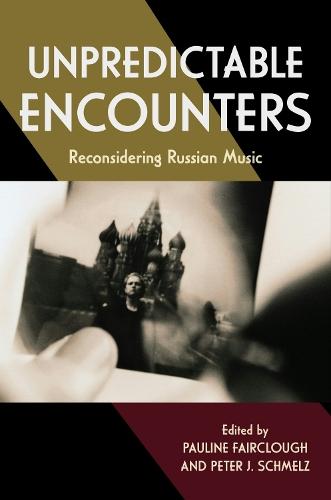
Music has always been profoundly transnational, transcending language barriers and crossing borders in ways that few other cultural artifacts can. In Unpredictable Encounters, leading scholars from around the world examine how Russia's musical culture has undergone this process, interrogating its engagement with other cultures from the 19th century to the present. Dedicated to the memory of the late Richard Taruskin, a leading scholar of Russian and East European music, Unpredictable Encounters considers how individuals, organizations, and cultural artifacts crossed seemingly immutable and impenetrable borders. Its contributors address several fundamental questions: about music as an activity operating along complex transnational networks, including what roles composers, performers, critics, and others played in the exchange of musical information; about music's roles in Russia's ongoing sociocultural and sociopolitical development; and, most broadly, about the methodological and ethical implications of studying Russia's engagement with the world – and vice versa – both musical and otherwise. Written against the backdrop of Russia's full-scale invasion of Ukraine in 2022, the essays in Unpredictable Encounters aim to confront Russia's colonial power and assess the effects of these events on the creation, performance, and reception of Russian music and musicians today.
Full Product Details
Author: Pauline Fairclough ,
Peter J. Schmelz ,
Kevin Bartig ,
Gabrielle Cornish
Publisher: Indiana University Press
Imprint: Indiana University Press
Weight: 0.508kg
ISBN: 9780253075437
ISBN 10: 0253075432
Pages: 350
Publication Date: 31 March 2026
Audience:
College/higher education
,
Postgraduate, Research & Scholarly
Format: Paperback
Publisher's Status: Forthcoming
Availability: Not yet available

This item is yet to be released. You can pre-order this item and we will dispatch it to you upon its release.
Reviews
""A timely intervention in a critical contemporary debate.""—Philip Bullock, author of Rachmaninoff and His World ""Fairclough and Schmelz present this volume as a scholarly answer to the threats to the discipline posed by recent geopolitical events, in particular in the dramatic outbreak of war between Russia and Ukraine. In the introduction, they reflect on the horror of the situation, but also on the effects the conflict might have on the academic study of Russian culture. The editors contend that Russian music studies can no longer be pursued in the same way as before. . . . One can only sympathize with the heartfelt reactions to the terrible situation and with the sincere effort for responsible scholarship in the face of real-life threats. The plea for taking the politics of scholarship as a non-neutral defense of liberal and humanist values seriously will resonate with many readers who sympathize with the specific plight of Russian studies in the present circumstances.""—Francis Maes, author of A History of Russian Music
""A timely intervention in a critical contemporary debate.""—Philip Bullock, author of Rachmaninoff and His World ""Fairclough and Schmelz present this volume as a scholarly answer to the threats to the discipline posed by recent geopolitical events, in particular in the dramatic outbreak of war between Russia and Ukraine. In the introduction, they reflect on the horror of the situation, but also on the effects the conflict might have on the academic study of Russian culture. The editors contend that Russian music studies can no longer be pursued in the same way as before. . . . One can only sympathize with the heartfelt reactions to the terrible situation and with the sincere effort for responsible scholarship in the face of real-life threats. The plea for taking the politics of scholarship as a non-neutral defense of liberal and humanist values seriously will resonate with many readers who sympathize with the specific plight of Russian studies in the present circumstances.""—Francis Maes, author of A History of Russian Music ""Separating a delinquent government from its dazzling, canonized cultural past is a fraught process. This welcome volume, in equal measure commemoration, scholarly sleuthing, and lament, is also a plea to decolonize that imperial bucket we know as 'Russian music'—not to cancel it, but the better to hear its many distinct and competing parts.""—Caryl Emerson, author of The Cambridge Introduction to Russian Literature ""Unpredictable Encounters investigates how music resists, negotiates, and transforms under pressure across the twentieth- and twenty-first-century post-Soviet world. From improvisations in the Soviet underground to the cultural upheavals following 1991, it demonstrates how sound shapes memory, identity, and power—and why these unpredictable encounters remain urgent today. Combining meticulous historical research with penetrating cultural critique, this book reveals music not merely as art, but as a force that challenges authority, crosses boundaries, and illuminates the unexpected currents of human experience.""—Nana Sharikadze, author of An Introduction to Georgian Art Music: Sense-Making Through Music
""A timely intervention in a critical contemporary debate."" – Philip Bullock, author of Rachmaninoff and His World ""Fairclough and Schmelz present this volume as a scholarly answer to the threats to the discipline posed by recent geopolitical events, in particular in the dramatic outbreak of war between Russia and Ukraine. In the introduction, they reflect on the horror of the situation, but also on the effects the conflict might have on the academic study of Russian culture. The editors contend that Russian music studies can no longer be pursued in the same way as before. . . . One can only sympathize with the heartfelt reactions to the terrible situation and with the sincere effort for responsible scholarship in the face of real-life threats. The plea for taking the politics of scholarship as a non-neutral defense of liberal and humanist values seriously will resonate with many readers who sympathize with the specific plight of Russian studies in the present circumstances."" – Francis Maes, author of A History of Russian Music ""Separating a delinquent government from its dazzling, canonized cultural past is a fraught process. This welcome volume, in equal measure commemoration, scholarly sleuthing, and lament, is also a plea to decolonize that imperial bucket we know as 'Russian music' – not to cancel it, but the better to hear its many distinct and competing parts."" – Caryl Emerson, author of The Cambridge Introduction to Russian Literature ""Unpredictable Encounters investigates how music resists, negotiates, and transforms under pressure across the twentieth- and twenty-first-century post-Soviet world. From improvisations in the Soviet underground to the cultural upheavals following 1991, it demonstrates how sound shapes memory, identity, and power – and why these unpredictable encounters remain urgent today. Combining meticulous historical research with penetrating cultural critique, this book reveals music not merely as art, but as a force that challenges authority, crosses boundaries, and illuminates the unexpected currents of human experience.""—Nana Sharikadze, author of An Introduction to Georgian Art Music: Sense-Making Through Music
Author Information
Pauline Fairclough is Professor of Music at the University of Bristol.Peter J. Schmelz is Professor in the Department of Comparative Thought and Literature at Johns Hopkins University and an affiliated faculty member at the Peabody Institute.