Overview
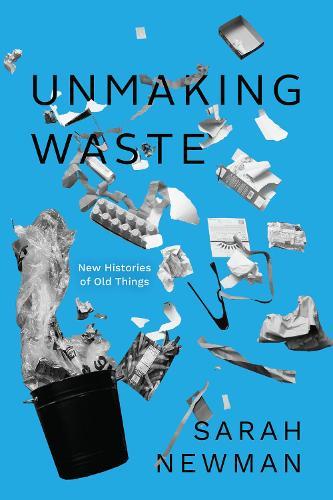
Explores the concept of waste from fresh historical, cultural, and geographical perspectives. Garbage is often assumed to be an inevitable part and problem of human existence. But when did people actually come to think of things as trash, as becoming worthless over time or through use, as having an end? Unmaking Waste tackles these questions through a long-term, cross-cultural approach. Using archaeological finds, historic documents, and ethnographic observations to examine Europe, the United States, and Central America from prehistory to the present, Sarah Newman traces how different ideas about waste took shape in different times and places. Newman examines what is considered waste and how people interact with it, as well as what happens when different perceptions of trash come into contact and conflict. Understandings of waste have shaped forms of reuse and renewal in ancient Mesoamerica, early modern ideas of civility and forced religious conversion in New Spain, and even the modern discipline of archaeology. Newman argues that centuries of assumptions imposed on other places, times, and peoples need to be rethought. The result is not only a broad reconsideration of waste but also new forms of archaeology that do not take garbage for granted. Unmaking Waste reveals that waste is not—and never has been—an obvious or universal concept.
Full Product Details
Author: Sarah Newman
Publisher: The University of Chicago Press
Imprint: University of Chicago Press
Dimensions:
Width: 15.20cm
, Height: 2.30cm
, Length: 22.90cm
Weight: 0.426kg
ISBN: 9780226826394
ISBN 10: 0226826392
Pages: 224
Publication Date: 26 May 2023
Audience:
Professional and scholarly
,
Professional & Vocational
Format: Paperback
Publisher's Status: Active
Availability: Available To Order

We have confirmation that this item is in stock with the supplier. It will be ordered in for you and dispatched immediately.
Reviews
“Newman uses an archaeological lens to pose deep questions for our understanding of human waste management, including our very definitions of what constitutes ‘waste’: the result is a timely and original intervention that will resonate across disciplines and offer fresh perspectives on contemporary environmentalist movements.” * David Wengrow, coauthor of The Dawn of Everything * “‘Trash talk’ at its finest, this epic and engaging book reimagines how we should think about both the history of archaeology and our present-day pollution crisis. Destabilizing taken-for-granted assumptions about garbage, Unmaking Waste excavates multiple understandings of trash and time across centuries of Mesoamerican, European, and Euroamerican history.” * Byron Hamann, author of The Invention of the Colonial Americas *
Newman uses an archaeological lens to pose deep questions for our understanding of human waste management, including our very definitions of what constitutes 'waste': the result is a timely and original intervention that will resonate across disciplines and offer fresh perspectives on contemporary environmentalist movements. * David Wengrow, coauthor of The Dawn of Everything * 'Trash talk' at its finest, this epic and engaging book reimagines how we should think about both the history of archaeology and our present-day pollution crisis. Destabilizing taken-for-granted assumptions about garbage, Unmaking Waste excavates multiple understandings of trash and time across centuries of Mesoamerican, European, and Euroamerican history. * Byron Hamann, author of The Invention of the Colonial Americas *
Author Information
Sarah Newman is assistant professor of anthropology at the University of Chicago.