Overview
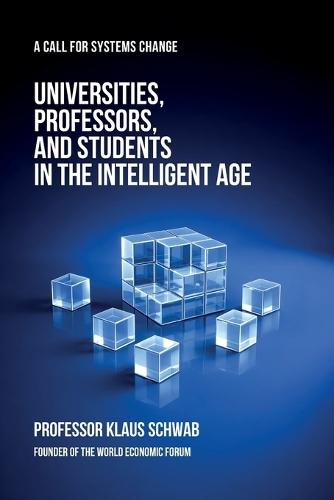
What will universities look like in the age of artificial intelligence? As AI, automation, and digital transformation reshape economies and societies, the future of higher education is being rewritten. Universities are no longer competing only on prestige or research output. They are competing on their ability to help societies learn faster, adapt more effectively, and innovate continuously. In this emerging Intelligent Age, the strength of nations increasingly depends on the knowledge, skills, and creativity of their people. Yet many universities still operate with structures designed for the Industrial Age. Universities, Professors, and Students in the Intelligent Age presents a compelling vision for how higher education must evolve to meet the demands of the 21st century. Drawing on global trends in technology, labor markets, and education policy, the book argues that incremental reform is no longer enough. What is required is systems change, a fundamental rethinking of how universities are organized, governed, funded, and experienced. Written for university leaders, professors, students, policymakers, and anyone concerned with the future of learning, this book explores how higher education can remain a powerful engine of economic growth, social cohesion, and human development in an era of rapid change. From redesigning curricula and redefining the role of professors to empowering students as lifelong learners and strengthening global partnerships, the book offers a practical road map for transforming universities while preserving the humanistic values at the heart of education. In this book, you will discover: How artificial intelligence and emerging technologies are transforming universities and reshaping teaching, research, and academic integrity. Why higher education systems must undergo systemic change to remain competitive and resilient. How the roles of professors and students are evolving, from knowledge transmitters and recipients to collaborators and co-creators. How universities can redesign curricula to develop the cognitive, technological, and socio-emotional skills needed for the future. Why lifelong learning is becoming essential, and how universities can support continuous reskilling and upskilling. How global partnerships and new governance models can strengthen universities in an interconnected world. Why universities play a critical role in addressing global challenges such as climate change, public health, and social inequality. At a moment when education is more important than ever, this book makes a powerful case: universities are not just institutions of learning. They are strategic systems that shape the future of economies, societies, and human potential. The future of universities - and the societies they shape - depends on the decisions we make today. This book provides the ideas, insights, and road map to begin that transformation.
Full Product Details
Author: Klaus Schwab
Publisher: Schwab Academy Sa
Imprint: Schwab Academy Sa
Volume: 4
Dimensions:
Width: 15.20cm
, Height: 2.10cm
, Length: 22.90cm
Weight: 0.535kg
ISBN: 9782970198864
ISBN 10: 297019886
Pages: 402
Publication Date: 18 March 2026
Audience:
General/trade
,
General
Format: Paperback
Publisher's Status: Active
Availability: Available To Order

We have confirmation that this item is in stock with the supplier. It will be ordered in for you and dispatched immediately.
Reviews
""Professor Schwab offers a compelling and forward-looking vision for how higher education must evolve in response to artificial intelligence, digital transformation, and accelerating global complexity. This book is essential reading for university presidents, trustees, policymakers, faculty leaders, and innovators shaping the future of higher education."" - Michael M. Crow, President, Arizona State University ""Professor Schwab's book details how AI will challenge the traditional idea of the university like never before. All concerned with universities will find it useful as they plan how they respond as the future writes itself."" - Shitij Kapur, Vice-Chancellor and President, King's College London ""The themes Professor Schwab raises are both timely and important, and they resonate strongly with many of the questions universities worldwide are actively grappling with."" - H. Deep Saini, President and Vice-Chancellor, McGill University ""Professor Schwab's book is a significant contribution and will greatly influence thinking in policy and strategy development, not only for universities but also for policymakers."" - Letlhokwa Mpedi, Vice-Chancellor and Principal, University of Johannesburg
Author Information
Klaus Schwab founded the World Economic Forum in 1971 as an independent, mission-driven platform for dialogue and cooperation between leaders from business, government, academia, and civil society. Under his leadership, the Forum became the foremost global institution promoting public-private collaboration and shaping key concepts such as stakeholder capitalism and the Fourth Industrial Revolution. Educated at ETH Zurich, the University of Fribourg, and Harvard University, he holds doctorates in engineering and economics and 20 honorary degrees from leading universities worldwide. For over three decades, he taught business policy at the University of Geneva. Together with his wife, Hilde, he established the Schwab Foundation for Social Entrepreneurship to promote innovation and social impact worldwide. In 2025, he launched the Schwab Academy, dedicated to preparing individuals and institutions for leadership, learning, and cooperation in the emerging Intelligent Age.A recipient of numerous national and international honors, Professor Schwab has devoted his life to advancing global understanding, fostering cooperation, and guiding humanity toward a more prosperous and human-centered future.