|
|
|||
|
||||
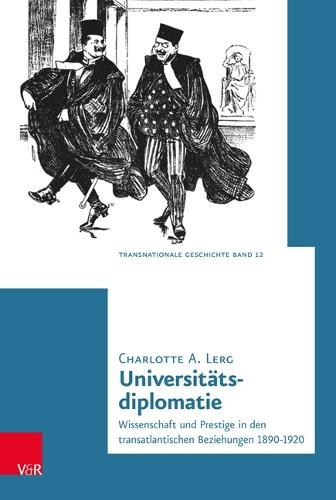
OverviewPrestige and international visibility beyond the confines of the academic world are key reasons for universities to get involved in international relations. Many of the common practices we know today, like honorary degrees, exchange programs or funding special study centres first emerged around the turn to the 20th century, especially in transatlantic relations. While the German and the French governments were vying for political sympathies in the US, newly reformed American research universities were hoping for academic recognition in Europe and social acceptance at home. Thus developed a distinct university-diplomacy, pursued in particular by university presidents, professors and educators as the foreign service was only beginning to professionalize. Even if the First World War deeply affected these networks, especially the links to Germany, they formed the foundation of the structures and strategies that afforded US-universities a crucial role in the cultural diplomacy of the so-called American century. Full Product DetailsAuthor: Charlotte A. Lerg , Charlotte A. LergPublisher: Vandenhoeck & Ruprecht GmbH & Co KG Imprint: Vandenhoeck & Ruprecht GmbH & Co KG Edition: 1. Auflage 2019 ed. Volume: 12 Dimensions: Width: 15.50cm , Height: 0.40cm , Length: 23.20cm ISBN: 9783525310762ISBN 10: 3525310765 Pages: 536 Publication Date: 15 July 2019 Audience: General/trade , General Format: Hardback Publisher's Status: Active Availability: Available To Order We have confirmation that this item is in stock with the supplier. It will be ordered in for you and dispatched immediately. Language: German Table of ContentsReviewsAuthor InformationPD Dr. Charlotte A. Lerg lehrt an der Ruhr-Universität Bochum die Geschichte Nordamerikas PD Dr. Charlotte A. Lerg lehrt an der Ruhr-Universität Bochum die Geschichte Nordamerikas Tab Content 6Author Website:Countries AvailableAll regions |
||||