Overview
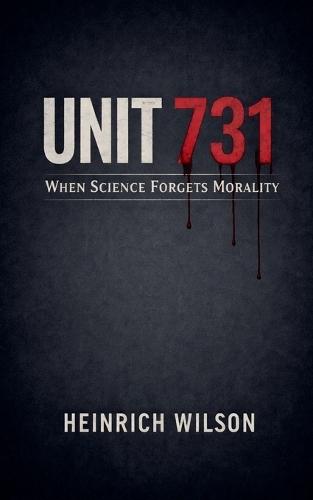
Between 1937 and 1945, the Imperial Japanese Army operated a secret facility in occupied Manchuria where thousands of people were subjected to experiments that defy comprehension. Men, women, and children. No one was spared. They were infected with plague, cholera, and anthrax. They were cut open while fully conscious. They were frozen, burned, and crushed in pressure chambers. They were called logs. Unit 731 was not the work of madmen. It was the work of trained doctors, university educated scientists, and career military officers operating within a system that funded their research, rewarded their results, and never once questioned their methods. The facility at Pingfang was purpose built, industrially equipped, and supported at the highest levels of the Japanese military command. It ran for over a decade. It consumed thousands of lives. And when the war ended, the men who built it walked free. The United States granted them immunity. In exchange for the experimental data produced by years of human suffering, the researchers of Unit 731 were shielded from prosecution, their crimes classified and buried in military archives. They returned to civilian life and became professors, pharmaceutical executives, and respected public health officials. Not one of them ever stood trial. Not one of them ever faced a courtroom. The Soviet Union prosecuted a handful of captured members at a trial that the West dismissed as propaganda. The Japanese government said nothing. The victims received no recognition, no compensation, and no justice. Their names were never recorded. Their families were never told what happened to them. This book tells their story. Not through speculation or dramatization, but through the documented record of what was done, who did it, how it was concealed, and why the world chose to look away. It examines the ideology that made the program possible, the institutional machinery that sustained it, the scientific ambition that drove it, and the political calculations that ensured its perpetrators were never held accountable. Unit 731: When Science Forgets Morality is not an easy book to read. It is not intended to be. It is intended to ensure that the lives destroyed at Pingfang are not forgotten, and that the systems that allowed their destruction are not repeated unchallenged. The facts are enough. They always have been.
Full Product Details
Author: Heinrich Wilson
Publisher: Heinrich Wilson Publishing
Imprint: Heinrich Wilson Publishing
Dimensions:
Width: 12.70cm
, Height: 0.80cm
, Length: 20.30cm
Weight: 0.150kg
ISBN: 9798233307577
Pages: 146
Publication Date: 01 March 2026
Audience:
General/trade
,
General
Format: Paperback
Publisher's Status: Active
Availability: Available To Order

We have confirmation that this item is in stock with the supplier. It will be ordered in for you and dispatched immediately.
Author Information
Heinrich Wilson is a self-styled cosmic provocateur, weaving satire, myth, and a dash of conspiracy into irreverent tales of humanity's greatest screw-ups. Equal parts historian-wannabe and stand-up philosopher, he's spent years digging through dusty legends, UFO files, and corporate press releases-then reassembling them into laugh-out-loud narratives that ask the questions everyone else was too polite to mention. When he's not rewriting the origin story of civilization, you'll find him arguing with algorithms, hunting down misplaced ancient artifacts (or tacos), and plotting the sequel that explores spirits, ghosts, and the ultimate ghost in the machine.