Overview
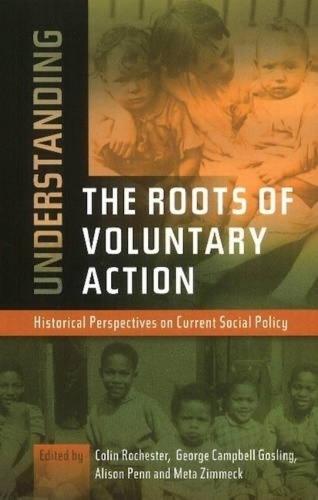
The current debate on the growing role of the voluntary and community or third sector in delivering public and social policy is impoverished by its lack of understanding of the historical events which have shaped the sector and its relationship with the state. This widely anticipated book draws on a range of empirical studies of aspects of the history of voluntary action to illuminate and inform this debate. Chapter contributions range across two centuries and a variety of fields of activity, geographical areas and organisational forms. Four key themes are addressed: The 'moving frontier' between the state and voluntary action; the distribution of roles and functions between them; and the nature of their inter-relationship; The 'springs' of voluntary action -- what makes people get involved in voluntary organisations or support them financially; Organisational challenges for voluntary agencies, including growth, cleaving to their missions and values, and survival; Issues of continuity and change: how and to what extent has the nature of voluntary action and its role in society remained essentially the same despite the changing context? This book is essential reading for all practitioners involved in charities and voluntary and non-profit organisations, for those who work at the interface between government and the third sector and for those who are involved in making and implementing public and social policy.
Full Product Details
Author: Colin Rochester ,
George Campbell Gosling ,
Alison Penn ,
Meta Zimmeck
Publisher: Liverpool University Press
Imprint: Liverpool University Press
Dimensions:
Width: 22.90cm
, Height: 2.00cm
, Length: 15.20cm
Weight: 0.348kg
ISBN: 9781845194246
ISBN 10: 1845194241
Pages: 206
Publication Date: 01 March 2011
Audience:
General/trade
,
General
Format: Paperback
Publisher's Status: Active
Availability: In Print

This item will be ordered in for you from one of our suppliers. Upon receipt, we will promptly dispatch it out to you. For in store availability, please contact us.
Reviews
"""Ever since the Heath Government established the Voluntary Services Unit in the early 1970s, official recognition of the social contribution of voluntarism has been developing. The contribution itself, of course, goes back much further, and long predates the welfare state. But the prominence of the voluntary sector within politician's plans to reshape Britain - the Big Society being but the latest example - has now reached such a point where an appreciation of the sector's long history is crucial to a rounded understanding of contemporary policy. Understanding the Roots of Voluntary Action is an attempt to meet this need. ... The volume had its origins in the Voluntary Action History Society's 2008 Liverpool conference, and is structured around four themes, all of which will be familiar to students of the sector: the 'moving frontier' between the state and voluntary sectors; the motivations for voluntary endeavour; organisational growing pains; and the classic historical focus on continuity and change. Within this framework, there are some superb chapters. Steven Thompson, for example, uses the multi-faceted history of voluntarism in the South Wales coalfield to demonstrate that 'different and even contested conceptions of the role and significance of voluntarism were articulated by different sections of coalfield society' (82). Particularly, the ideological battle within voluntarism, between worker mutualism and employee philanthropy, created a dynamic that pushed sections of the left towards enthusiasm for state provision (91)."" --James McKay, University of Birmingham"
""Ever since the Heath Government established the Voluntary Services Unit in the early 1970s, official recognition of the social contribution of voluntarism has been developing. The contribution itself, of course, goes back much further, and long predates the welfare state. But the prominence of the voluntary sector within politician's plans to reshape Britain - the Big Society being but the latest example - has now reached such a point where an appreciation of the sector's long history is crucial to a rounded understanding of contemporary policy. Understanding the Roots of Voluntary Action is an attempt to meet this need. ... The volume had its origins in the Voluntary Action History Society's 2008 Liverpool conference, and is structured around four themes, all of which will be familiar to students of the sector: the 'moving frontier' between the state and voluntary sectors; the motivations for voluntary endeavour; organisational growing pains; and the classic historical focus on continuity and change. Within this framework, there are some superb chapters. Steven Thompson, for example, uses the multi-faceted history of voluntarism in the South Wales coalfield to demonstrate that 'different and even contested conceptions of the role and significance of voluntarism were articulated by different sections of coalfield society' (82). Particularly, the ideological battle within voluntarism, between worker mutualism and employee philanthropy, created a dynamic that pushed sections of the left towards enthusiasm for state provision (91)."" --James McKay, University of Birmingham
Ever since the Heath Government established the Voluntary Services Unit in the early 1970s, official recognition of the social contribution of voluntarism has been developing. The contribution itself, of course, goes back much further, and long predates the welfare state. But the prominence of the voluntary sector within politician's plans to reshape Britain - the Big Society being but the latest example - has now reached such a point where an appreciation of the sector's long history is crucial to a rounded understanding of contemporary policy. Understanding the Roots of Voluntary Action is an attempt to meet this need. ... The volume had its origins in the Voluntary Action History Society's 2008 Liverpool conference, and is structured around four themes, all of which will be familiar to students of the sector: the 'moving frontier' between the state and voluntary sectors; the motivations for voluntary endeavour; organisational growing pains; and the classic historical focus on continuity and change. Within this framework, there are some superb chapters. Steven Thompson, for example, uses the multi-faceted history of voluntarism in the South Wales coalfield to demonstrate that 'different and even contested conceptions of the role and significance of voluntarism were articulated by different sections of coalfield society' (82). Particularly, the ideological battle within voluntarism, between worker mutualism and employee philanthropy, created a dynamic that pushed sections of the left towards enthusiasm for state provision (91). --James McKay, University of Birmingham
Author Information
The editors of this volume are members of the committee of the Voluntary Action History Society which was formed in 1991 to promote the historical understanding of voluntary organisations and charitable activity among both practitioners and academics. A registered charity since 1995, VAHS organises monthly seminars at the Institute of Historical Research in London as well as international conferences on a biennial basis.