Overview
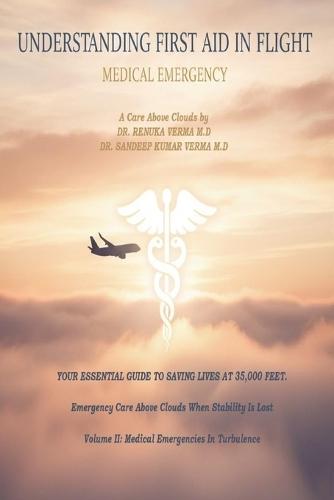
UNDERSTANDING FIRST AID IN FLIGHT Your Essential Guide to Saving Lives at 35,000 Feet Emergency Care Above Clouds When Stability Is Lost Volume II: Medical Emergencies in Turbulence Understanding First Aid in Flight - Volume II confronts one of the most dangerous and least discussed realities of aviation medicine: managing medical emergencies when the aircraft itself is unstable. Severe turbulence transforms the cabin into a moving, unpredictable environment where conventional first aid principles no longer apply. This volume is dedicated to those critical moments when medical urgency collides with loss of stability at cruising altitude-and every action carries heightened risk for both patient and caregiver. The book begins by redefining turbulence not merely as a comfort issue, but as a medical and operational threat multiplier. It explains how sudden altitude changes, violent vertical acceleration, and restricted movement dramatically alter patient assessment, airway management, bleeding control, CPR feasibility, and caregiver safety. Medical emergencies that might be manageable in stable flight-cardiac events, respiratory distress, trauma, syncope-become exponentially more complex when the cabin is in motion. Volume II explores the physiological and biomechanical impacts of turbulence on the human body, including increased injury risk, stress-induced deterioration, hypoxia amplification, and the dangers of unsecured patients and rescuers. It highlights why turbulence itself can cause secondary trauma and why protecting life must begin with preventing additional harm. A core focus of the book is decision-making under instability. It provides structured guidance on when to intervene, when to pause, and when restraint and positioning are safer than active treatment. Readers learn how to prioritize actions, secure the environment, and adapt care using seatbelts, safety straps, limited lighting, and improvised stabilization techniques. The text emphasizes that survival in turbulence often depends more on situational judgment and restraint than on aggressive medical intervention. The book places strong emphasis on cabin crew as coordinated first responders, detailing role allocation, communication strategies, and cockpit coordination during turbulent conditions. It addresses how and when medically trained passengers should be engaged, and how ground medical support decisions are affected when cabin access is limited or impossible. Critical chapters examine CPR and life-support limitations in turbulence, explaining why traditional resuscitation methods may be unsafe or ineffective and how modified approaches can preserve life while minimizing risk. The use of onboard medical equipment, oxygen systems, AEDs, and universal precaution kits is discussed within the context of instability and caregiver protection. Volume II also addresses the operational consequences of medical emergencies during turbulence, including diversion dilemmas, altitude changes as medical interventions, and the complex balance between medical urgency and flight safety. It integrates emerging realities such as climate change, clear-air turbulence, and the increasing frequency of severe turbulence events, underscoring why this knowledge is no longer optional. Written for cabin crew, pilots, aviation medical professionals, safety trainers, and informed passengers, Emergency Care Above Clouds When Stability Is Lost advances aviation first aid into its most extreme domain. This volume does not promise perfect outcomes-it prepares readers to make the safest possible decisions when control is limited, lives are at risk, and the aircraft itself becomes part of the emergency. Together with Volume I, it establishes a new, realistic standard for saving lives when stability disappears at 35,000 feet.
Full Product Details
Author: Dr Renuka Verma ,
Dr Sandeep Kumar Verma
Publisher: Independently Published
Imprint: Independently Published
Dimensions:
Width: 15.20cm
, Height: 0.60cm
, Length: 22.90cm
Weight: 0.168kg
ISBN: 9798242160606
Pages: 118
Publication Date: 02 January 2026
Audience:
General/trade
,
General
Format: Paperback
Publisher's Status: Active
Availability: Available To Order

We have confirmation that this item is in stock with the supplier. It will be ordered in for you and dispatched immediately.