Overview
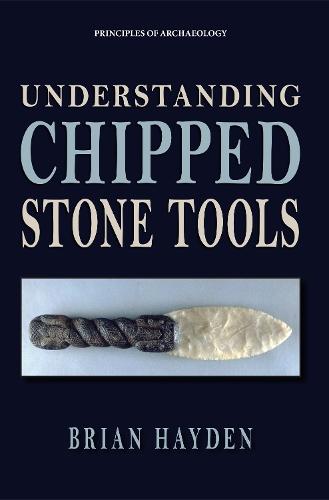
This is a unique and engaging book on prehistoric stone tools. It advocates an experiential approach in which analysts try to understand stone tool designs from the users' perspectives, and employs a universal logic of designing tools to solve practical problems and evaluate possible solutions. However, to do so it is also necessary to understand how stone can be mechanically modified to serve specific functions. The author enlists a rich array of ethnographic observations and his considerable background as a flintknapper to show the basic ways in which stones can be flaked and modified and what these characteristics can reveal about prehistoric problem-solving strategies and design constraints. This is an invaluable primer for anyone contemplating the study of prehistoric stone tools.
Full Product Details
Author: Brian Hayden
Publisher: Eliot Werner Publications Inc
Imprint: Eliot Werner Publications Inc
Dimensions:
Width: 15.00cm
, Height: 0.90cm
, Length: 22.50cm
Weight: 0.256kg
ISBN: 9781734281866
ISBN 10: 1734281863
Pages: 160
Publication Date: 05 September 2022
Audience:
College/higher education
,
Professional and scholarly
,
Tertiary & Higher Education
,
Professional & Vocational
Format: Paperback
Publisher's Status: Active
Availability: In Print

This item will be ordered in for you from one of our suppliers. Upon receipt, we will promptly dispatch it out to you. For in store availability, please contact us.
Reviews
Multiple approaches in different specific areas help the readers to comprehend the integrity of the lithic studies. Additionally, Hayden also shares his personal experiences in this field with students. . . . He avoids using complicated sentence structures. Non-native English speakers can deal with this study readily. Yesilova, Goerkem Cenk, Lithic Technology, September 16, 2022
A sophisticated introduction to basic lithic analysis, written in an informal and engaging style. Employing a design theory perspective and stressing a need for active experimentation, it views lithic artifacts as a solution to substantive problems and sociopolitical realities. An excellent lithics primer. Christopher J. Ellis, University of Western Ontaio In this excellent primer, Hayden uses his extensive background in ethnographic and experimental work to introduce students to stone tools and offers them a framework for how to think about with stone tool technology. I wish I could have written this book! Robert L. Kelly, University of Wyoming The author draws on his lifelong experimentation with lithic materials, ethnographic investigations, and conversations with knappers and archaeologists in compiling this comprehensive primer. Using design theory as the theoretical fulcrum, Hayden provides practical, down-to-earth advice about how to tackle lithic assemblages. Deborah Olausson, Lund University
Author Information
Brian Hayden is an Honorary Research Associate in the Department of Anthropology at the University of British Columbia and Professor Emeritus of Archaeology at Simon Fraser University. He has spent the past thirty years excavating at a large housepit village in the Interior of British Columbia, and has had a longstanding interest in understanding what artifacts can tell us about the societies and cultures that left them behind in the archaeological record.