Overview
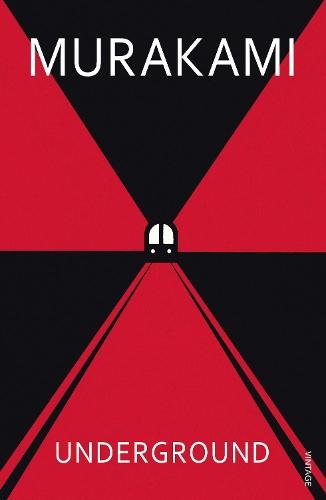
Murakami tells the true story behind an act of terrorism that turned an average Monday morning into a national disaster Murakami tells the true story behind an act of terrorism that turned an average Monday morning into a national disaster. In spite of the perpetrators' intentions, the Tokyo gas attack left only twelve people dead, but thousands were injured and many suffered serious after-effects. Murakami interviews the victims to try and establish precisely what happened on the subway that day. He also interviews members and ex-members of the doomsdays cult responsible, in the hope that they might be able to explain the reason for the attack and how it was that their guru instilled such devotion in his followers. 'Not just an impressive essay in witness literature, but also a unique sounding of the quotidian Japanese mind' Independent
Full Product Details
Author: Haruki Murakami ,
Alfred Birnbaum ,
Philip Gabriel
Publisher: Vintage Publishing
Imprint: Vintage
Edition: New edition
Dimensions:
Width: 13.00cm
, Height: 2.00cm
, Length: 19.70cm
Weight: 0.226kg
ISBN: 9780099461098
ISBN 10: 0099461099
Pages: 320
Publication Date: 04 September 2003
Audience:
College/higher education
,
Tertiary & Higher Education
Format: Paperback
Publisher's Status: Active
Availability: Available To Order

We have confirmation that this item is in stock with the supplier. It will be ordered in for you and dispatched immediately.
Language: Japanese
Reviews
Murakami shares with Alfred Hitchcock a fascination for ordinary people being suddenly plucked by extraordinary circumstances from their daily lives Sunday Telegraph Not just an impressive essay in witness literature, but also a unique sounding of the quotidian Japanese mind Independent A scrupulous and unhistrionic look into the heart of the horror Scotsman The testimonies he assembles are striking. From the very beginning Underground is impossibly moving and unexpectedly engrossing Time Out There is no artifice or pretension in Underground. There is no need for cleverness. What Murakami describes happens to ordinary people in a frighteningly ordinary way. And it is all the more bizarre for that Observer
'Murakami shares with Alfred Hitchcock a fascination for ordinary people being suddenly plucked by extraordinary circumstances from their daily lives' Sunday Telegraph
Murakami shares with Alfred Hitchcock a fascination for ordinary people being suddenly plucked by extraordinary circumstances from their daily lives * Sunday Telegraph * Not just an impressive essay in witness literature, but also a unique sounding of the quotidian Japanese mind * Independent * A scrupulous and unhistrionic look into the heart of the horror * Scotsman * The testimonies he assembles are striking. From the very beginning Underground is impossibly moving and unexpectedly engrossing * Time Out * There is no artifice or pretension in Underground. There is no need for cleverness. What Murakami describes happens to ordinary people in a frighteningly ordinary way. And it is all the more bizarre for that * Observer *
Author Information
In 1978, Haruki Murakami was 29 and running a jazz bar in downtown Tokyo. One April day, the impulse to write a novel came to him suddenly while watching a baseball game. That first novel, Hear the Wind Sing, won a new writers' award and was published the following year. More followed, including A Wild Sheep Chase and Hard-Boiled Wonderland and the End of the World, but it was Norwegian Wood, published in 1987, which turned Murakami from a writer into a phenomenon. His books became bestsellers, were translated into many languages, including English, and the door was thrown wide open to Murakami's unique and addictive fictional universe. Murakami writes with admirable discipline, producing ten pages a day, after which he runs ten kilometres (he began long-distance running in 1982 and has participated in numerous marathons and races), works on translations, and then reads, listens to records and cooks. His passions colour his non-fiction output, from What I Talk About When I Talk About Running to Absolutely On Music, and they also seep into his novels and short stories, providing quotidian moments in his otherwise freewheeling flights of imaginative inquiry. In works such as The Wind-Up Bird Chronicle, 1Q84 and Men Without Women, his distinctive blend of the mysterious and the everyday, of melancholy and humour, continues to enchant readers, ensuring Murakami's place as one of the world's most acclaimed and well-loved writers.