Overview
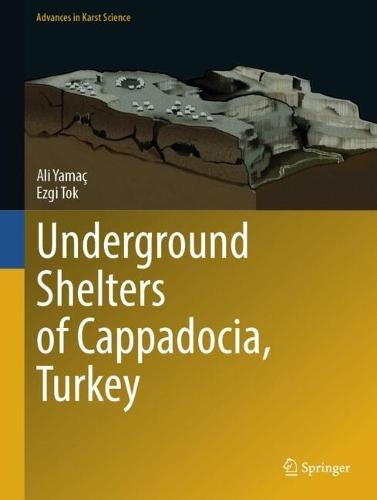
This book provides a comprehensive account of the underground shelters in the Cappadocia region of Central Anatolia. These subterranean defensive structures, which are estimated to have been constructed by the local population between the 7th and 11th centuries AD to protect themselves against Arab raids, have regrettably not been extensively archaeologically and scientifically investigated until now. Nevertheless, these shelters, which are estimated to number in excess of 200, represent a significant and invaluable component of the architectural and cultural history of the region, in a manner analogous to the renowned rock-cut churches of Cappadocia. After providing an overview of the geological and historical background of the region and summarising previous studies on the subject, this book discusses a wide range of issues pertaining to these underground shelters, including excavation techniques, defensive devices, and dating debates. Finally, a list of all the underground shelters identified so far is presented, and 50 important structures selected from among them are described in full detail.
Full Product Details
Author: Ali Yamaç ,
Ezgi Tok
Publisher: Springer Nature Switzerland AG
Imprint: Springer Nature Switzerland AG
ISBN: 9783032160942
ISBN 10: 3032160944
Pages: 145
Publication Date: 26 April 2026
Audience:
College/higher education
,
Postgraduate, Research & Scholarly
Format: Hardback
Publisher's Status: Forthcoming
Availability: Not yet available

This item is yet to be released. You can pre-order this item and we will dispatch it to you upon its release.
Author Information
Ali Yamaç is a Turkish speleologist. He was born in 1957 and has been caving since 1976. During these years he has surveyed and explored hundreds of caves, some of which are the longest and deepest caves in Turkey. He was the president of the Speleological Federation of Turkey in 2007-2009 and the president during the foundation of three different speleological organisations. He was the leader of the team that prepared the cave inventory of Turkey. In addition to his natural cave explorations, he has explored and surveyed numerous rock dwellings and underground cities in different regions of Turkey as part of his artificial cave projects. Beginning with surveys of the underground structures of Hagia Sophia and Topkapi Palace in Istanbul, his artificial cave projects continue with underground structure inventory projects in the provinces of Kayseri and Gaziantep. Both projects have been underway for more than ten years and both have been accepted to the UNESCO World Heritage Tentative List. At the request of the directors of the Nevşehir and Aksaray Archaeological Museums, he has surveyed the underground shelters of Derinkuyu, Mazıkoy, Mazıkoy 2, Tatlarin, Avanos, Golgoli and St. Mercurius; he has also investigated rock-cut settlements and churches on the Euphrates River cliffs as part of the Euphrates River Cliff Settlements Project; and he has surveyed several settlements as part of the Kura River - Ardahan Region Survey. Ezgi Tok is a Turkish speleologist. Her research focuses on microbial life and related components of cave environments. Since 2016, she has been exploring several karst caves in Turkey to determine microbial diversity, ecosystem functioning of microbial populations, and their relationship with psychochemical conditions in the cave ecosystem. Her research also investigates the influence of surface atmospheric conditions on the subsurface microclimate. Her current project is the first cave microbiology study in Turkey comparing caves from different climatic regions with different environmental conditions. She has been caving since 2009 and has participated in several national and international speleological expeditions in Turkey and abroad, such as the Lion of Crete expedition, the 2nd deepest cave in Greece, and the Keş and Çem cave expeditions, the 6th and 10th deepest caves in Turkey. She had surveyed and mapped several caves of Turkey, among which İnsuyu Cave, which is the longest and Kocain Cave, which is the largest chamber of Turkey are particularly important. In addition to these works, she has also participated in artificial cave projects. She has surveyed and mapped several underground shelters in Cappadocia and dozens of rock cut structures as part of underground structure inventory projects in the provinces of Kayseri and Gaziantep.