Awards
- Winner of 15th Annual Modest Reixach Prize 2016 (Spain)
Overview
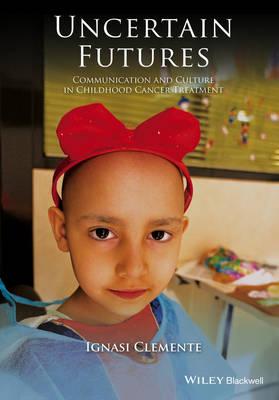
This book examines children and young people’s attempts to participate in conversations about their own treatment throughout uncertain cancer trajectories, including the events leading up to diagnosis, treatment, remission, relapse, and cure or death. Clearly and compellingly written, Clemente relies on a new multi-layered method to identify six cancer communication strategies Illustrates that communication is central to how children, parents, and healthcare professionals constitute, influence, and make sense of the social worlds they inhabit—or that they want to inhabit Provides ethnographic case studies of childhood cancer patients in Spain, using children's own words Examines the challenges of how to talk to and how to encourage patients' involvement in reatment discussions In his critique of the “telling” versus “not telling” debates, Clemente argues that communication should be adjusted to the children’s own needs, and that children's own questions can indicate how much or little they want to be involved Uncertain Futures is the winner of the 15th Annual Modest Reixach Prize.
Full Product Details
Author: Ignasi Clemente (Hunter College, City University of New York)
Publisher: John Wiley and Sons Ltd
Imprint: Wiley-Blackwell
Dimensions:
Width: 17.00cm
, Height: 1.80cm
, Length: 24.60cm
Weight: 0.522kg
ISBN: 9781118909713
ISBN 10: 1118909712
Pages: 248
Publication Date: 09 October 2015
Audience:
Professional and scholarly
,
Professional & Vocational
Format: Hardback
Publisher's Status: Active
Availability: Out of stock

The supplier is temporarily out of stock of this item. It will be ordered for you on backorder and shipped when it becomes available.
Reviews
...opens up broader margins of reflection about how medical diagnoses, and in general medical communication, are delivered and negotiated and provides the reader with extensive references with which the theoretical discussion is constantly confronted and challenged...Clemente is surely paving the way toward a more fertile and effective collaboration between medical and linguistic anthropology... - Letizia Bonanno, AAA Book Forum, 2016 Clemente opens our minds and hearts to the everyday lives of children with cancer, their parents and clinicians as they interact with one another, indeed as they carry on, in the face of numerous uncertainties. Myra Bluebond-Langner, University College, London and Rutgers University Ignasi Clemente's book deserves to be read by all who are concerned with the state of health care communication, whether involving cancer or other serious illness, patients who are children or adults, and communications in hospitals, clinics or other medical settings. Douglas Maynard, University of Wisconsin Uncertain Futures insightfully explores the delicate balance between silence and discussion, and sheds light on how the illness extends beyond the patient as parents rearrange their lives to love and care for their children in extremely difficult circumstances. Marjorie Goodwin, University of California, Los Angeles
...opens up broader margins of reflection about how medical diagnoses, and in general medical communication, are delivered and negotiated and provides the reader with extensive references with which the theoretical discussion is constantly confronted and challenged...Clemente is surely paving the way toward a more fertile and effective collaboration between medical and linguistic anthropology... - Letizia Bonanno, AAA Book Forum, 2016 Clemente opens our minds and hearts to the everyday lives of children with cancer, their parents and clinicians as they interact with one another, indeed as they carry on, in the face of numerous uncertainties. Myra Bluebond-Langner, University College, London and Rutgers University Ignasi Clemente's book deserves to be read by all who are concerned with the state of health care communication, whether involving cancer or other serious illness, patients who are children or adults, and communications in hospitals, clinics or other medical settings. Douglas Maynard, University of Wisconsin Uncertain Futures insightfully explores the delicate balance between silence and discussion, and sheds light on how the illness extends beyond the patient as parents rearrange their lives to love and care for their children in extremely difficult circumstances. Marjorie Goodwin, University of California, Los Angeles
Clemente s work undoubtedly opens up broader margins of reflection about how medical diagnoses, and in general medical communication, are delivered and negotiated and provides the reader with extensive references with which the theoretical discussion is constantly confronted and challenged. -Letizia Bonanno, Anthropology News. Uncertain Futures is a complex text which actively engages with the legacies informing the author s framing of the lives of young cancer patients and their relatives. In so doing, Clemente is surely paving the way toward a more fertile and effective collaboration between medical and linguistic anthropology, which might mutually benefit from theoretical contamination. -Letizia Bonanno, Anthropology News. Uncertain Futures definitely provides original insight on how patienthood and childhood are experienced when illness reshapes the terms and meanings of time and hope for both children and their kin. -Letizia Bonanno, Anthropology News.
Author Information
Ignasi Clemente is Assistant Professor in the Department of Anthropology at Hunter College, CUNY, USA. His research interests include sociocultural and communicative aspects of pain and suffering, childhood studies, and embodied communication. His research on chronically ill children has been published in journals including Social Science and Medicine, Sociology of Health and Illness, and Communication and Medicine. Among others, he has contributed to the Oxford Textbook of Paediatric Pain (2013), the Handbook of Conversation Analysis (Wiley-Blackwell, 2013), Healthcare Settings: Policy, Participation and New Technologies (Wiley-Blackwell, 2010), and the Blackwell Guide to Research Methods in Bilingualism (Blackwell, 2008).