|
|
|||
|
||||
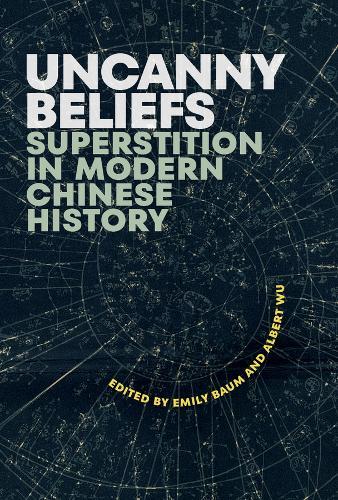
OverviewIn the early twentieth century, scholars around the world believed that ""superstition"" belonged to a bygone era. Yet despite their confident predictions, superstitious beliefs have endured. Perhaps nowhere has the history of superstition been more prolonged and tumultuous than in China. From the late nineteenth century to the present day, intellectuals and politicians have denigrated practices like divination, ancestor worship, and geomancy as unbefitting of a modern nation, and governing regimes have launched a succession of campaigns to replace superstitious thinking with science and rationality. Efforts to eliminate such practices from public life, however, have regularly encountered resistance from people who continue to find meaning in them. Uncanny Beliefs seeks to understand what ""superstition"" has meant in modern China-and questions why superstitious thinking has remained such an urgent target of state intervention. Through a range of temporal and thematic perspectives, the chapters in this volume link the study of superstition to the histories of science, religion, gender, state building, and popular culture. In doing so, they collectively broaden our understanding of modern Chinese history by revealing the complex entanglements of superstition with religion, modernity, authority, and everyday life. Full Product DetailsAuthor: Emily Baum , Albert WuPublisher: Harvard University Press Imprint: Harvard University Press ISBN: 9780674303409ISBN 10: 0674303407 Pages: 346 Publication Date: 07 April 2026 Audience: Professional and scholarly , Professional & Vocational Format: Paperback Publisher's Status: Forthcoming Availability: Awaiting stock Table of ContentsReviewsAuthor InformationEmily Baum is Professor of History at the University of California, Irvine. Albert Wu is Associate Research Fellow at the Institute of History and Philology, Academia Sinica, Taipei, Taiwan. Tab Content 6Author Website:Countries AvailableAll regions |
||||