Overview
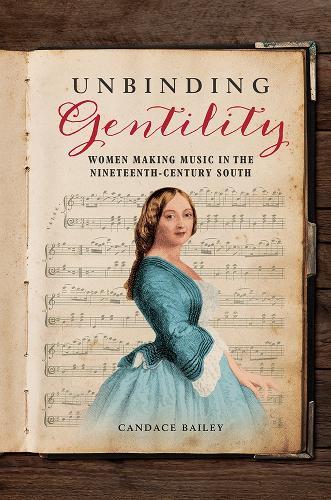
A Choice Outstanding Academic Title for 2022 Hearing southern women in the pauses of history Southern women of all classes, races, and walks of life practiced music during and after the Civil War. Candace L. Bailey examines the history of southern women through the lens of these musical pursuits, uncovering the ways that music's transmission, education, circulation, and repertory help us understand its meaning in the women's culture of the time. Bailey pays particular attention to the space between music as an ideal accomplishment—part of how people expected women to perform gentility—and a real practice—what women actually did. At the same time, her ethnographic reading of binder's volumes, letters and diaries, and a wealth of other archival material informs new and vital interpretations of women's place in southern culture. A fascinating collective portrait of women's artistic and personal lives, Unbinding Gentility challenges entrenched assumptions about nineteenth century music and the experiences of the southern women who made it.
Full Product Details
Author: Candace Bailey
Publisher: University of Illinois Press
Imprint: University of Illinois Press
Dimensions:
Width: 15.60cm
, Height: 2.50cm
, Length: 23.50cm
Weight: 0.513kg
ISBN: 9780252085741
ISBN 10: 0252085744
Pages: 304
Publication Date: 13 April 2021
Audience:
Professional and scholarly
,
Professional & Vocational
Format: Paperback
Publisher's Status: Active
Availability: Manufactured on demand

We will order this item for you from a manufactured on demand supplier.
Reviews
Bailey's work offers valuable new insight into the relationship between performance, music, and society during a pivotal period in US history. . . . Unbinding Gentility is a meticulously detailed study that does much to deepen, complicate, and ultimately expand our understanding of women's musical lives in the nineteenth-century South. --Women and Music Candace Bailey has written an impressive book that achieves its stated aim to challenge assumptions about music-making by women in the nineteenth-century United States. . . . Unbinding Gentility is a model of creative archival archaeology. . . . This deeply researched, gracefully written, and deftly organized book deserves the widest possible readership. --Music and Letters Unbinding Gentility dismantles facile stereotypes about women's music making in the nineteenth century in order to explore the complex intersections of women's musical practices and social class, race, and region. Women whose experiences have been silenced or caricatured come to life in this richly researched and substantial history of the US South. Bailey reveals how gentility was no predictor of social or economic status, that accomplishment was not solely the domain of white elite women, and that there is much we still need to learn from the material culture of women's musical lives. --Glenda Goodman, author of Cultivated by Hand: Amateur Musicians in the Early American Republic The author's archival work and the number of women musicians' lives she has unearthed are remarkable. An extremely worthwhile contribution, particularly in its treatment of the changing nature of women's repertoire and the rise of professional women musicians. --Marian Wilson Kimber, author of The Elocutionists: Women, Music, and the Spoken Word
The author's archival work and the number of women musicians' lives she has unearthed are remarkable. An extremely worthwhile contribution, particularly in its treatment of the changing nature of women's repertoire and the rise of professional women musicians. --Marian Wilson Kimber, author of The Elocutionists: Women, Music, and the Spoken Word Unbinding Gentility dismantles facile stereotypes about women's music making in the nineteenth century in order to explore the complex intersections of women's musical practices and social class, race, and region. Women whose experiences have been silenced or caricatured come to life in this richly researched and substantial history of the US South. Bailey reveals how gentility was no predictor of social or economic status, that accomplishment was not solely the domain of white elite women, and that there is much we still need to learn from the material culture of women's musical lives. --Glenda Goodman, author of Cultivated by Hand: Amateur Musicians in the Early American Republic
Unbinding Gentility dismantles facile stereotypes about women's music making in the nineteenth century in order to explore the complex intersections of women's musical practices and social class, race, and region. Women whose experiences have been silenced or caricatured come to life in this richly researched and substantial history of the US South. Bailey reveals how gentility was no predictor of social or economic status, that accomplishment was not solely the domain of white elite women, and that there is much we still need to learn from the material culture of women's musical lives. --Glenda Goodman, author of Cultivated by Hand: Amateur Musicians in the Early American Republic The author's archival work and the number of women musicians' lives she has unearthed are remarkable. An extremely worthwhile contribution, particularly in its treatment of the changing nature of women's repertoire and the rise of professional women musicians. --Marian Wilson Kimber, author of The Elocutionists: Women, Music, and the Spoken Word
""An important contribution to the field of American music history. This well-written and meticulously researched volume breaks new ground in the understanding of the role that music played in shaping the lives and social positions of Southern women across race and class boundaries."" --Music References Services Quarterly ""Bailey's work offers valuable new insight into the relationship between performance, music, and society during a pivotal period in US history. . . . Unbinding Gentility is a meticulously detailed study that does much to deepen, complicate, and ultimately expand our understanding of women's musical lives in the nineteenth-century South."" --Women and Music ""Candace Bailey has written an impressive book that achieves its stated aim to challenge assumptions about music-making by women in the nineteenth-century United States. . . . Unbinding Gentility is a model of creative archival archaeology. . . . This deeply researched, gracefully written, and deftly organized book deserves the widest possible readership."" --Music and Letters ""Unbinding Gentility dismantles facile stereotypes about women's music making in the nineteenth century in order to explore the complex intersections of women's musical practices and social class, race, and region. Women whose experiences have been silenced or caricatured come to life in this richly researched and substantial history of the US South. Bailey reveals how gentility was no predictor of social or economic status, that accomplishment was not solely the domain of white elite women, and that there is much we still need to learn from the material culture of women's musical lives.""--Glenda Goodman, author of Cultivated by Hand: Amateur Musicians in the Early American Republic
"""Bailey's work offers valuable new insight into the relationship between performance, music, and society during a pivotal period in US history. . . . Unbinding Gentility is a meticulously detailed study that does much to deepen, complicate, and ultimately expand our understanding of women's musical lives in the nineteenth-century South."" --Women and Music ""Candace Bailey has written an impressive book that achieves its stated aim to challenge assumptions about music-making by women in the nineteenth-century United States. . . . Unbinding Gentility is a model of creative archival archaeology. . . . This deeply researched, gracefully written, and deftly organized book deserves the widest possible readership."" --Music and Letters ""Unbinding Gentility dismantles facile stereotypes about women's music making in the nineteenth century in order to explore the complex intersections of women's musical practices and social class, race, and region. Women whose experiences have been silenced or caricatured come to life in this richly researched and substantial history of the US South. Bailey reveals how gentility was no predictor of social or economic status, that accomplishment was not solely the domain of white elite women, and that there is much we still need to learn from the material culture of women's musical lives.""--Glenda Goodman, author of Cultivated by Hand: Amateur Musicians in the Early American Republic ""The author's archival work and the number of women musicians' lives she has unearthed are remarkable. An extremely worthwhile contribution, particularly in its treatment of the changing nature of women's repertoire and the rise of professional women musicians.""--Marian Wilson Kimber, author of The Elocutionists: Women, Music, and the Spoken Word"
"""An important contribution to the field of American music history. This well-written and meticulously researched volume breaks new ground in the understanding of the role that music played in shaping the lives and social positions of Southern women across race and class boundaries."" --Music References Services Quarterly ""Bailey's work offers valuable new insight into the relationship between performance, music, and society during a pivotal period in US history. . . . Unbinding Gentility is a meticulously detailed study that does much to deepen, complicate, and ultimately expand our understanding of women's musical lives in the nineteenth-century South."" --Women and Music ""Candace Bailey has written an impressive book that achieves its stated aim to challenge assumptions about music-making by women in the nineteenth-century United States. . . . Unbinding Gentility is a model of creative archival archaeology. . . . This deeply researched, gracefully written, and deftly organized book deserves the widest possible readership."" --Music and Letters"
Author Information
Candace Bailey is a professor of music at North Carolina Central University. She is the author of Music and the Southern Belle: From Accomplished Lady to Confederate Composer and Charleston Belles Abroad: The Music Collections of Harriet Lowndes, Henrietta Aiken, and Louisa Rebecca McCord.