Overview
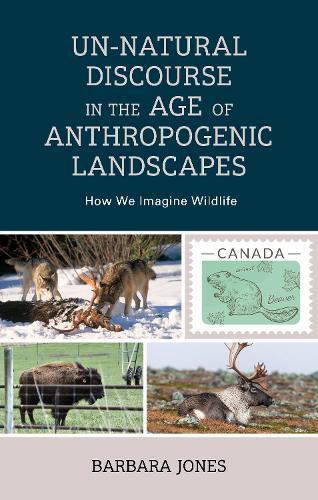
Our relationship with wildlife and wild spaces is moving away from one of dominion over nature to one that strives for coexistence; yet this coexistence is typically fragmented and with many wildlife species relies on tautologies that reinforce unnatural and culturally defined metaphors and stories that keep us outside of nature. To assist in identifying common ground amidst competing users of our shared landscapes, Un-Natural Discourse in the Age of Anthropogenic Landscapes: How We Imagine Wildlife considers how the language we use can challenge our ability to coexist with wild nature. When we say a bison is livestock we diminish its wildness, while a beaver as a pest marginalizes it to exist outside of our Anthropogenic landscapes or to not exist at all. By calling the woodland caribou the gray ghost we have made it invisible so when it disappeared from the lower forty-eight United States, its absence was hardly acknowledged. Anti-predator hype defines the gray wolf as vermin and the federally protected grizzly as ferocious or as a conflict bear to maintain and encourage a low social tolerance for those species. Since language forms meaning, Barbara Jones argues how by relying on unnatural discourse to relate to the natural world, coexistence becomes much more difficult to achieve.
Full Product Details
Author: Barbara Jones
Publisher: Bloomsbury Publishing Plc
Imprint: Lexington Books
Weight: 0.454kg
ISBN: 9781666914801
ISBN 10: 1666914800
Pages: 232
Publication Date: 15 February 2025
Audience:
Professional and scholarly
,
Professional & Vocational
Format: Hardback
Publisher's Status: Active
Availability: In Print

This item will be ordered in for you from one of our suppliers. Upon receipt, we will promptly dispatch it out to you. For in store availability, please contact us.
Reviews
ldquo;Language is too often an overlooked point of leverage in wildlife struggles. In ldquo;Un-natural Discourserdquo; Barbara shows how terms like ldquo;invasiverdquo; or ldquo;nuisance wildliferdquo; can preclude conversation. In contrast, she notes, advocates actively reclaiming the narrative with terms like ldquo;ecosystem servicesrdquo; and ldquo;restorationrdquo; can effectively reshape the outcome as well.rdquo;--Heidi Perryman, Ph.D. Jones skillfully combines multi-sited ethnography with a history of past and current perspectives on human-wildlife interactions in her call to reimagine how we perceive human relationships with wildlife and their ecosystems before it is too late. Un-Natural Discourse will prove prescient for how future human societies will merge with the lives of their non-human neighbors.--Anthony Balzano, Sussex County Community College Todayrsquo;s wildlife face unprecedented challenges as humanity changes the way, where, and how they can live at ever faster rates. Barbara Jones#39;s Un-natural Discourse in the Age of Anthropogenic Landscapes: How We Imagine Wildlife offers fact-based stories of these wildlife difficulties and sometimes not so happy endings to reveal their causes, how our human dominance perspective is changing and the chance for a mutual way forward for all living things.--Gregg Servheen, Retired Wildlife Biologist and Natural Resource Manager
Author Information
Barbara K. Jones has made her career out of both teaching anthropology and researching human perceptions of nature