Overview
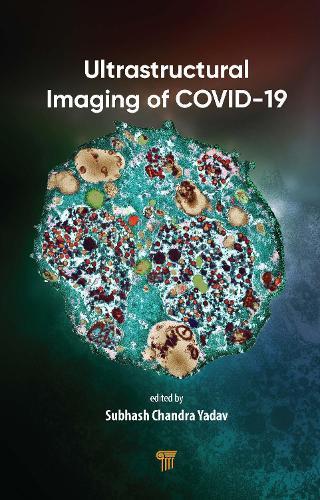
This book provides a core understanding of the COVID-19 disease through ultrastructural imaging, using light microscopy, immunofluorescence, and scanning and transmission electron microscopy of samples from COVID-19 patients at different stages of the disease. It provides direct evidence of the impact of the SARS-CoV-2 virus on the cellular level in different age groups, disease stages, and comorbidities. The book explores advanced imaging techniques to enhance understanding of ultrastructural changes and provides a comprehensive overview of SARS-CoV-2-induced ultrastructural alterations in various respiratory tract cells. It summarizes key ultrastructural findings observed in SARS-CoV-2-infected cells, highlighting morphological and subcellular modifications, and features high-resolution images to illustrate virus-induced structural changes effectively. The book includes contributions from academicians, scientists, and emerging researchers, ensuring an accessible yet in-depth presentation of the subject, and is a useful tool for everyone interested in understanding COVID-19.
Full Product Details
Author: Subhash Chandra Yadav
Publisher: Jenny Stanford Publishing
Imprint: Jenny Stanford Publishing
ISBN: 9789815352009
ISBN 10: 9815352008
Pages: 530
Publication Date: 07 April 2026
Audience:
College/higher education
,
Professional and scholarly
,
Tertiary & Higher Education
,
Professional & Vocational
Format: Hardback
Publisher's Status: Forthcoming
Availability: Not yet available

This item is yet to be released. You can pre-order this item and we will dispatch it to you upon its release.
Author Information
Subhash Chandra Yadav is an assistant professor of electron microscopy and nanotechnology at the All India Institute of Medical Sciences (AIIMS), New Delhi, India, since June 2015 and is currently working as an additional professor. He earned his PhD from the Institute of Medical Sciences, Banaras Hindu University (BHU), Varanasi, India. He has been a visiting researcher at Free University (FU) Berlin, Germany, and a postdoctoral fellow at the Indian Institute of Science (IISc), Bengaluru, India, and the University of Tennessee Medical Center, Knoxville, TN, USA. He has worked as a scientist in charge of the electron microscopy facility at the Institute of Himalayan Bioresource Technology (CSIR-IHBT) in Palampur, India, and the TERI-Deakin University Nanobiotechnology Centre. He has also been a visiting professor at Stanford University, USA. Dr Yadav has significantly utilized electron microscopy for the last 18 years to develop cost-effective and visual nanodiagnostic devices for prostate and cervical cancer and the BK virus, various nanoformulations for value addition, and targeted delivery vehicles. He worked extensively during the COVID-19 pandemic to explore the ultrastructural impact of SARS-CoV-2 infection in patients with acute respiratory distress syndrome (ARDS), including young and old patients with and without comorbidities, such as diabetes, liver and kidney disease, and malignancy.